Electrical Energy
By R. W. Hurst, Editor
Electrical energy is the total amount of work delivered by electric charge as it moves through a circuit over time. It is measured in watt-hours and kilowatt-hours and determines how much usable output an electrical system can actually provide.
Most people encounter electrical energy only as a billing number, but it quietly governs how long backup systems run, how storage systems are sized, and how electrical performance is compared across technologies. When electrical energy is confused with electrical power, projects are misjudged, efficiency claims become unreliable, and system expectations drift away from reality.
Electrical energy is not something that sits inside a wire. It is transferred through electric fields that push charge through a circuit, allowing devices to convert that transfer into light, motion, heat, or digital operation. The physics is subtle, but the design and cost consequences are not.
Understanding electrical energy correctly, therefore, affects how electrical systems are specified, compared, paid for, and trusted.
Electrical Energy: What It Is, What It Powers, and Why It Is Often Misunderstood
Electrical energy describes the work that can be transferred by an electric charge as it responds to a voltage in a circuit. Unlike mechanical or chemical energy, it can be transmitted over long distances, converted rapidly, and redirected into almost any useful form. This flexibility is why electrical energy underpins modern infrastructure, from lighting and communications to manufacturing and transportation.
What makes electrical energy so valuable is how easily it can be generated, transmitted, and converted. Power plants turn mechanical, chemical, or solar energy into electricity, which travels across long distances with relatively low losses before being transformed into the form needed at the point of use. Once it reaches a home or facility, the same flow of charge can be directed to produce light, motion, heat, or digital signals, depending on the device.
Electrical energy is best understood as a transfer process rather than something stored inside a wire. The energy moves as the electric field pushes charge through a circuit, allowing the system to respond almost instantly. This is why flipping a switch produces light immediately, even though individual electrons move slowly.
The sections that follow explain how electric fields, voltage, and current work together to generate electrical energy and how this energy powers nearly every aspect of modern society. For a broader understanding, visit how electricity works to see how it is generated, transmitted, and used across power grids and homes.
How Electric Fields Transfer Energy Between Charges
The idea that energy is transferred through an electric field traces back to the work of Michael Faraday. An electric field surrounds charged objects and exerts forces between them, much as a gravitational field exerts forces between masses. The key difference is that electric forces depend on charge, not mass, and they can either attract or repel.
When two charges have the same sign, they repel each other. When they have opposite signs, they pull toward each other. The strength of that interaction depends on the amount of charge involved and the distance between the charges. As distance increases, the force drops quickly.
In electrical systems, these electric fields are what move energy through conductors. When a circuit is energized, the field establishes itself almost instantly along the conductor, transferring energy to the load. This explains how electrical energy can respond so quickly, even though the charge carriers themselves drift slowly. The amount of energy transferred is closely related to the electrical load, which determines the demand placed on the system.
Electrical Energy and Voltage Explained
Voltage describes the electrical potential difference between two points in a circuit. It represents the energy available to move a charge from one location to another. In practical terms, voltage is what provides the “push” that drives current through a conductor.
Electrical energy depends on this difference in potential. Without voltage, charge does not move, and no energy is delivered. Higher voltage means more energy is available per unit of charge, which is why voltage levels are carefully chosen for generation, transmission, and utilization.
This concept is often compared to pressure in a fluid system. Just as pressure differences cause water to flow, voltage differences cause electrical energy to flow. Understanding how voltage influences current is essential to understanding how electrical energy is transferred through circuits and equipment.
To understand how voltage influences electrical energy, it's essential to grasp how a potential difference drives current through a circuit.
Electric Current: Flow of Charge That Powers Technology
Current is the rate of flow of electric charge through a conductor and is measured in amperes. In metallic conductors, this flow is carried primarily by electrons. In other applications, such as electrolysis, current can consist of ions moving through a liquid. Alternating current and direct current each transfer electrical energy differently, depending on the application.
While the individual charge carriers move relatively slowly, the electric field that transfers energy travels through the circuit at nearly the speed of light. This is why electrical systems respond almost instantly to switching actions.
Electrical systems use both direct current and alternating current. Direct current flows in a single direction and is common in electronics and battery-powered systems. Alternating current reverses direction periodically and is used in power distribution because it allows voltage levels to be changed efficiently.

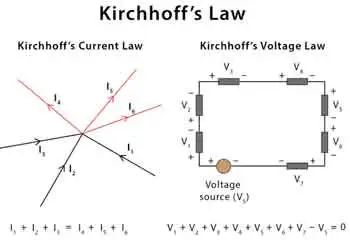

Ohm’s Law describes the relationship between voltage, current, and resistance, showing how these factors interact to determine the amount of electrical energy that flows through a circuit. Changes in electrical resistance affect energy loss and heat generation, which is why conductor sizing and material selection matter. Ohm's Law is an important relationship that describes the behaviour of energy and relates it to voltage.
By convention, the current direction is described as flowing from the positive to the negative terminal. This conventional current model is used for consistency in analysis, even though actual electron motion occurs in the opposite direction. The convention simplifies circuit analysis and remains standard practice.
Related Articles
_1497176406.webp)