How Electricity Works

By R.W. Hurst, Editor

How Electricity Works

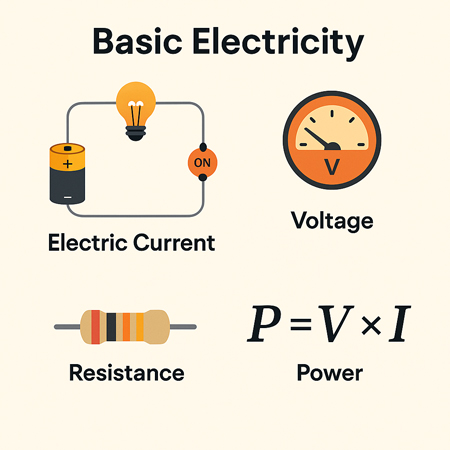
Electricity works by moving electrons through a conductor, creating an electric current. Power stations generate electricity, which travels through wires to homes and businesses. This flow powers devices, lights, and machines, making modern life possible through electric energy and circuits.


Explain How Electricity Works

What Is Electricity and Where Does It Come From?

Electricity energy is as common to us as running water in many areas, especially in industrialized countries. Despite this, there is a great deal of ignorance about this mysterious force and its origin. 

  • The concept of voltage is central to how electricity flows, as it represents the electrical pressure that pushes electrons through a circuit.

  • Understanding alternating current is essential, as it's the form of electricity most commonly delivered to homes and businesses.


Atomic Structure and the Nature of Electric Charge

If you can picture an atom as a sphere, imagine in the nucleus, in the centre, that contains at least one proton and at least one neutron. The proton is positively charged. In orbit around the nucleus is at least one electron, which is negatively charged. The reason they have these opposite charges takes us deep into the realm of quantum physics. We know that the neutron is made up of quarks and the electron is an elementary particle (it is not made up of anything and is a particle in its own right), but the reason why they have opposite charges is a matter beyond my meagre capabilities and, in any case, this area is at the fringes of human knowledge.


Electron Movement and Free Charge in Conductive Materials

Atoms may contain several protons and electrons. This variation is what distinguishes one element from another. Although described as sub-atomic particles, electrons have the properties of both particles and waves when it comes to fields of magnetism in electric circuits. In theory, at least, they could be both at the same time. If you want to know what materials conduct electricity well, see our overview of conductors, which explains how they allow electrons to move freely.

If an atom has no electric charge, i.e. it is neutral, then it contains the same number of protons as electrons. In some materials, most notably metals, the electrons' orbits around the nucleus are quite loose, allowing them to spin away from the atom. When this happens, the atom becomes positively charged because protons are in the majority within the atom. A free electron can join another atom. When this occurs, then the new host atom becomes negatively charged because the electrons are in the majority (assuming the atom was neutral in the first place). Devices like ammeters and multimeters are essential for measuring electrical current and diagnosing circuit performance.


Potential Difference and the Creation of Electric Current

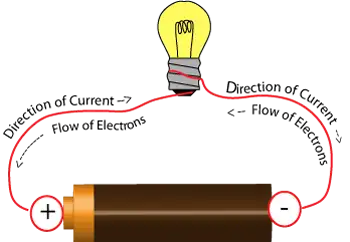
There are many views about the subject. If you ask science experts on YouTube to show how static electricity works, they will report that opposites attract. The greater the difference between the number of electrons and protons, the greater the attraction will be. This is called a potential difference. If we can therefore manage to produce a negative charge at one end of a copper wire and a positive charge at the other end, free electrons would move towards the positive end. As electrons leave those atoms nearest the positive end, they leave behind positively charged atoms. Electrons from neighbouring atoms will be attracted towards these positive atoms, thus creating yet more positive atoms in their wake. This continuing transfer of electrons is called current. The greater the potential difference, or voltage, measured in its unit, the greater the force of the flow of electrons, or current.


Understanding Direct and Alternating Current (DC vs AC)

Electric power can be supplied as direct current (e.g. from car batteries for lighting) or as alternating current (e.g. household mains). To explore the differences between current types, read our guide on the difference between AC and DC, which explains why each type is used in different applications.


How Transformers Adjust Voltage for Power Distribution

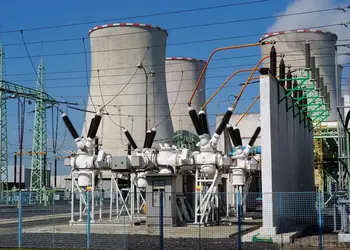
Often, an electrical product requires a different voltage from the one supplied by the mains electric power. In these cases, a transformer rating is required. The use of transformers is very common along power lines and in electrical devices. In addition to the step-up transformers that increase voltage, transformers can also reduce voltage. These step-down transformers can be found at utility substations where the very high voltages required to push electrons through long transmission wires are reduced for local consumption.


Related Articles
 

Related News

What is Energy?

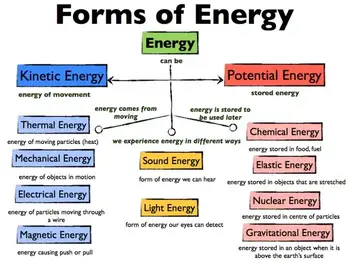
Energy is the capacity to do work, powering motion, heat, and electricity. It exists in many forms—kinetic, potential, chemical, thermal, and renewable—transforming constantly to sustain life, industry, and the universe itself.   What is Energy? To fully understand what energy is, it helps to start with Basic Electricity, which explains the foundation of how electrical systems operate in daily life. It can be created or released through chemical reactions, nuclear reactions, and electromagnetic waves. Energy is classified into various types based on its origin, nature, and form, including mechanical, thermal, chemical, electrical, radiant, gravitational, nuclear, and sound. With the rise of…
View more

What is a Busbar?

A busbar is a rigid conductor, typically made of copper or aluminum, that serves as a common connection point for multiple circuits within electrical enclosures. It provides a low-resistance path for high current, reduces wiring complexity, and improves thermal and mechanical stability in power distribution systems.   What is a Busbar: Overview In an electrical system, power is not only controlled by breakers and switches. It is physically guided by the conductors that carry it between those devices. The busbar exists to perform that role with precision, stability, and predictability. A busbar is a rigid conductor, typically made of copper…
View more

What is Current Electricity?

Current electricity is the continuous movement of electric charge through a closed circuit, driven by voltage and measured as current. It is the form of electricity that powers lighting, motors, electronics, and every operating electrical system, whether supplied as alternating current or direct current. When current electricity is misunderstood, systems are misdesigned, protection devices are misapplied, and failures are misdiagnosed. Current is not merely “flow.” It determines heating, magnetic effects, mechanical force, and whether a circuit operates safely or destructively. Small errors in how current is interpreted can lead to nuisance tripping, equipment damage, or serious electrical hazards. Understanding current…
View more

What is Considered High Voltage? HV Applications Explained

What is considered high voltage? Per IEC/IEEE, voltages above 1 kV AC or 1.5 kV DC; linked to insulation coordination, arc-flash risk, transmission lines, substations, switchgear ratings, clearance/creepage distances, and dielectric breakdown in power systems.   What Is Considered High Voltage? What is Considered High Voltage?In the world of electrical engineering, understanding voltage levels is crucial. So you might be asked to define high voltage. But what is considered HV? This article explores the definition, classification, and applications of HV and the safety concerns and precautions that come with it. For foundational context, the concept of voltage underpins how these…
View more

What is Impedance? Explained

Impedance is the total opposition a circuit presents to alternating current, combining resistance and reactance to control how voltage, current, and power behave in AC systems. It is measured in ohms and varies with frequency, component type, and circuit design. When impedance is misunderstood or ignored, circuits do not behave as expected. Voltage drops appear where they should not, currents shift out of phase, protective devices respond unpredictably, and power delivery becomes inefficient or unstable. In real installations, this is not an academic issue. It shows up as overheating conductors, mis-sized equipment, poor power factor, nuisance tripping, and distorted waveforms…
View more

How Is Electricity Generated?

It is produced by converting various energy sources, such as fossil fuels, nuclear, solar, wind, or hydro, into electrical energy using turbines and generators. These systems harness mechanical or chemical energy and transform it into usable power.   Understanding Electricity Generation Electricity generation is the lifeblood of modern civilization, powering homes, industries, hospitals, transportation systems, and digital infrastructure. But behind the flip of a switch lies a vast and complex process that transforms raw energy into electrical power. At its core, electricity is generated by converting various forms of energy, mechanical, thermal, chemical, or radiant, into a flow of electric…
View more

Sign Up for Electricity Forum’s Newsletter

Stay informed with our FREE Newsletter — get the latest news, breakthrough technologies, and expert insights, delivered straight to your inbox.

Electricity Today T&D Magazine Subscribe for FREE

Stay informed with the latest T&D policies and technologies.
  • Timely insights from industry experts
  • Practical solutions T&D engineers
  • Free access to every issue

Live Online & In-person Group Training

Advantages To Instructor-Led Training – Instructor-Led Course, Customized Training, Multiple Locations, Economical, CEU Credits, Course Discounts.

Request For Quotation

Whether you would prefer Live Online or In-Person instruction, our electrical training courses can be tailored to meet your company's specific requirements and delivered to your employees in one location or at various locations.