Utility Transformers
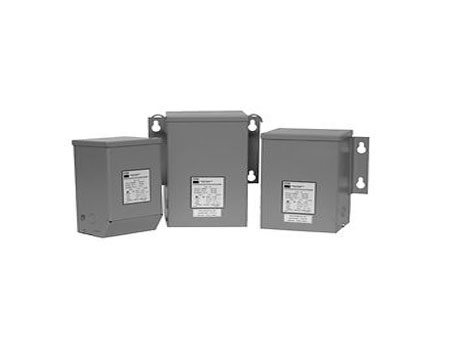
Buck Boost Transformer

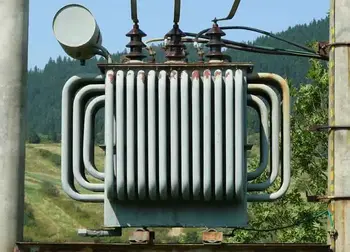
A buck boost transformer adjusts voltage by increasing or decreasing it within a small range to match equipment needs. It improves voltage stability, energy efficiency, and protects sensitive electrical systems from over-voltage or under-voltage issues.   Buck-Boost Transformer Fundamentals Electrical Transformer Maintenance Training Substation Maintenance Training Request a Free Training Quotation   Purpose, Design, and Applications It can either increase (boost) or decrease (buck) voltage by a small amount—typically between 5% and 20%—to ensure that equipment receives stable and optimal power. This precise voltage control helps bridge the gap between supply voltage and the operational requirements of devices, reducing the risk…
View more

Download Our FREE Utility Transformers Handbook
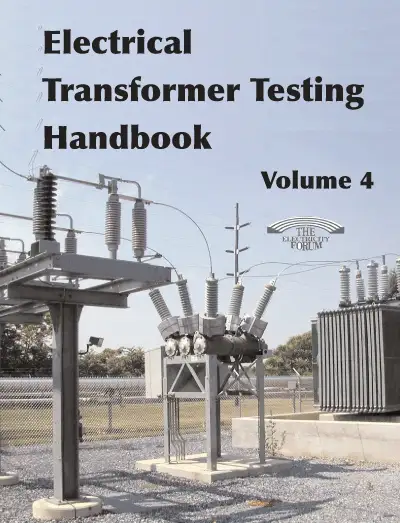
Electrical Transformer Testing Handbook Vol. 4

This 130 page handbook examines many of the crucial steps needed to test and maintain transformers.

Volume 4 of this handbook explores a wide range of testing methodologies, from routine diagnostic tests to more advanced techniques aimed at detecting subtle faults and signs of wear. It covers essential topics such as insulation resistance testing, power factor testing, load testing, oil quality analysis, and partial discharge testing, providing detailed explanations of each procedure and its importance in identifying potential issues early. The handbook also highlights the latest advancements in testing technology and tools that enhance testing accuracy and efficiency.

This volume is designed for engineers, technicians, and maintenance professionals who are directly involved in the testing and upkeep of electrical transformers across various sectors, including power generation, transmission, and industrial applications. By combining theoretical knowledge with practical, hands-on advice, Volume 4 ensures that professionals are equipped with the necessary expertise to perform comprehensive transformer assessments and diagnose issues that could impact system performance and safety.

With a focus on best practices, safety standards, and industry trends, the Electrical Transformer Testing Handbook, Volume 4 is a critical resource for anyone seeking to maintain optimal transformer performance, reduce risk, and safeguard the integrity of electrical networks.

Latest Utility Transformers Articles
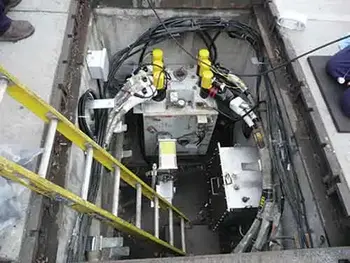
Underground Transformer Explained
An underground transformer provides safe, efficient, and reliable voltage distribution in urban areas. Designed for compact installation, they reduce visual impact, enhance safety, and support power quality while integrating seamlessly with modern utility networks.   Underground Transformer Overview and Best Practices In the intricate network of our electrical grid, transformers play a crucial role in converting high voltages from transmission lines to lower voltages suitable for distribution to homes and businesses. While the sight of towering overhead transformers atop utility poles is familiar to most, the underground transformer — including pad-mounted transformers, vault transformers, and submersible transformers — is a…
View more

3 Phase Transformers

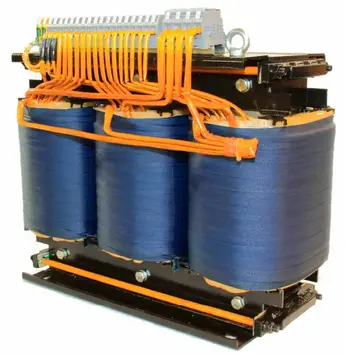
3 phase transformers step voltage up or down using delta or wye connections. Built with laminated cores and robust insulation, they balance loads, improve efficiency, and serve industrial, utility, and pad-mounted distribution applications.   Understanding 3-Phase Transformers: Principles and Applications Although three single-phase transformers can be connected to form a bank, purpose-built three-phase units are more efficient. They require less material, are more compact, and are lighter for the same kVA rating. For these reasons, they are the standard choice for large-scale applications. This makes them a preferred choice for large-scale applications. For a broader understanding of how these units fit…
View more

AC Transformer - Static Electrical Device
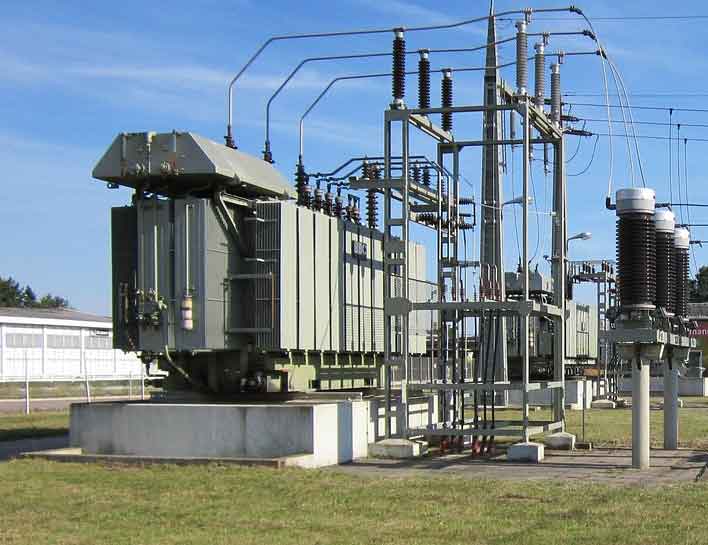
An AC transformer transfers alternating current between circuits at different voltage levels using electromagnetic induction. It's essential for safe and efficient voltage conversion in power distribution, electronics, and industrial systems.   AC Transformer Explained Electrical Transformer Maintenance Training Substation Maintenance Training Request a Free Training Quotation This ingenious process leverages the fluctuating nature of alternating current (AC) to induce a voltage in a secondary circuit, effectively changing the voltage level without altering the frequency. There's no such thing as a DC transformer. This is because direct current (DC), which flows in one direction, cannot create the changing magnetic field necessary…
View more

Evaluation of Transformers To Assess Performance
Evaluation of transformers benchmarks model performance using metrics across NLP and vision tasks, measuring accuracy, robustness, generalization, fairness, latency, and efficiency on standardized datasets for classification, generation, retrieval, and question answering.   Key Concepts of Evaluation of Transformers Evaluation of transformers is a critical practice for electrical engineering and maintenance professionals, as it ensures optimal performance, reliability, and safety of electrical power systems. Proper evaluation helps identify potential issues such as insulation degradation, core losses, and winding faults before they escalate into costly failures or unplanned downtime. This process also plays a vital role in extending transformer lifespan, reducing maintenance…
View more

Advancements in DGA Data Quality

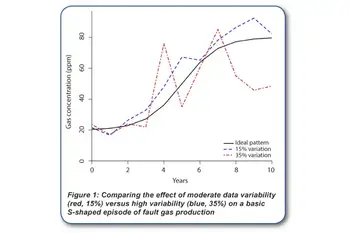
Advancements in DGA data quality strengthen transformer diagnostics through disciplined oil sampling, sensor calibration, laboratory consistency, and data governance. Reliable gas trends reduce false alarms and support confident condition assessment.   Why Advancements in DGA Data Quality Matter When transformer diagnostics fail, the cause is often not interpretation, but trust. Dissolved gas analysis depends on trend credibility, not just concentration values. Without consistent sampling, stable measurement practices, and disciplined data handling, even the most advanced diagnostic models operate on uncertain ground. Advancements in DGA data quality focus on protecting that foundation. They address how gas data is captured, preserved, normalized,…
View more

Medium Voltage Transformer

A medium voltage transformer converts electrical energy between 1 kV and 35 kV, ensuring efficient power distribution in commercial, utility, and industrial systems. It plays a vital role in voltage regulation, energy efficiency, and protection of downstream equipment.   How a Medium Voltage Transformer Works Electrical Transformer Maintenance Training Substation Maintenance Training Request a Free Training Quotation The medium voltage transformer is the unsung workhorse of our electrical infrastructure, playing a pivotal role in delivering electricity to homes, businesses, and industries. Operating within the medium voltage range, typically between 2.4 kV and 69 kV, this device is crucial for reducing…
View more
Read All Utility Transformers Articles

Utility Transformers News


Utility Transformers Articles From ET Magazine

The Role of Transformer Oil Alternatives in Improving Safety and  Environmental Sustainability

The Role of Transformer Oil Alternatives in Improving Safety and Environmental Sustainability

The Growing Need for Safer and Greener Transformer Oils Transformer oil plays a vital role in the operation and longevity of power transformers, providing insulation, cooling, and arc suppression. Traditionally, mineral oil has been the industry standard due to its effective dielectric properties and cost-efficiency. However, growing concerns about fire safety, environmental impact, and sustainability have driven the search for alternative transformer oils. Synthetic esters, natural esters (vegetable-based oils), and silicone fluids are emerging as viable substitutes, offering enhanced fire resistance and biodegradability while maintaining reliable performance. As utilities transition to greener and safer solutions, the role of transformer oil…
View more
Enhancing Transformer Resilience: Fire Barriers and Safety Measures in Modern Substations

Enhancing Transformer Resilience: Fire Barriers and Safety Measures in Modern Substations

The Growing Concern of Transformer Fire Risks An Electrical Substation Transformer is a critical component of modern substations, playing a vital role in the transmission and distribution of electricity. However, due to the high-voltage operations, flammable insulation materials, and exposure to extreme weather conditions, transformers are at significant risk of fire and explosions. A solid foundation for transformer safety starts with thoughtful electrical substation design, ensuring layout and equipment placement mitigate fire risk. The consequences of transformer fires can be severe, leading to equipment damage, power outages, environmental hazards, and, in some cases, loss of life. As utilities expand their grids…
View more
Navigating the Transformer Supply Crunch: Strategies for Utilities Amidst Global Shortages

Navigating the Transformer Supply Crunch: Strategies for Utilities Amidst Global Shortages

The Growing Transformer Supply Crisis The global transformer supply chain is facing unprecedented challenges, with utilities worldwide struggling to procure essential equipment due to material shortages, manufacturing delays, and logistical constraints. Transformers are the backbone of electrical transmission and distribution networks, and their scarcity poses significant risks to grid reliability, infrastructure expansion, and system resilience. As demand continues to outpace supply, utilities must adopt strategic approaches to mitigate risks, ensure the timely acquisition of transformers, and maintain operational stability. Factors Driving the Transformer Shortage Several factors contribute to the current transformer supply crunch. Raw material shortages, particularly of electrical steel,…
View more
MITIGATING TRANSFORMER FAILURES: ADVANCED MONITORING AND MAINTENANCE STRATEGIES

MITIGATING TRANSFORMER FAILURES: ADVANCED MONITORING AND MAINTENANCE STRATEGIES

Power transformers are critical assets in electrical transmission and distribution networks. Their failure can lead to widespread outages, costly downtime, and potential safety hazards. As transformers age and operate under varying electrical and environmental stresses, degradation becomes inevitable. However, through advanced monitoring techniques like Dissolved Gas Analysis (DGA) and Frequency Response Analysis (FRA), utilities can proactively identify early signs of failure, enabling preventive maintenance and extending transformer service life. Dissolved Gas Analysis (DGA): A Window into Transformer Health DGA is a well-established diagnostic method used to detect transformer insulation and oil degradation by analyzing the gases dissolved in transformer oil.…
View more

Sign Up for Electricity Forum’s Utility Transformers Newsletter

Stay informed with our FREE Utility Transformers Newsletter — get the latest news, breakthrough technologies, and expert insights, delivered straight to your inbox.

Electricity Today T&D Magazine Subscribe for FREE

Stay informed with the latest T&D policies and technologies.
  • Timely insights from industry experts
  • Practical solutions T&D engineers
  • Free access to every issue

Download the 2026 Electrical Training Catalog

Explore 50+ live, expert-led electrical training courses –

  • Interactive
  • Flexible
  • CEU-cerified