Direct Current Explained
By R.W. Hurst, Editor
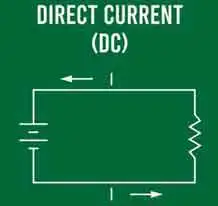
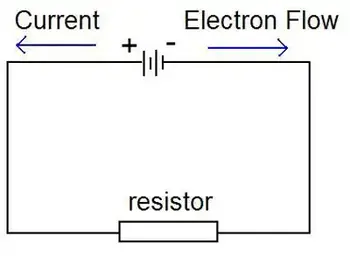
Direct current (DC) is a steady flow of electric charge in one direction, widely used in batteries, electronics, and power supply systems. Unlike alternating current, it provides constant voltage, making it vital for circuits, devices, and renewable energy applications.
Direct Current Explained
Direct current (DC) plays an essential role in electrical power. It is a type of electrical flow where the flow of electric charge remains constant and does not change direction. DC differs from alternating current (AC), periodically reversing direction as the voltages and amperage vary with time. Direct current is often compared with alternating current, which reverses direction periodically and dominates modern transmission systems.
One of the most well-known proponents of direct current was Thomas Edison, who competed with George Westinghouse, an advocate for alternating current, in the late 19th century. Their competition, known as the "War of the Currents," ultimately led to the widespread adoption of AC systems, which are more suitable for long-distance, high-voltage transmission. However, this does not diminish the importance and numerous applications of direct current in modern technology. To better understand how DC works, it helps to review basic electricity concepts such as charge, voltage, and resistance.
A direct current power supply, often found in electronic devices, converts AC power from the power grid into DC power. This conversion process ensures a constant voltage that meets the device's requirements. The conversion is achieved through transformers, rectifiers, and capacitors, which stabilize the voltage and smooth out the electrical signal.
Direct current has various advantages and disadvantages. One of its main advantages is the ability to provide stable, constant power, essential for devices such as computers, smartphones, and other sensitive electronics. Additionally, DC power has lower losses in the form of heat dissipation compared to AC power. On the other hand, a significant disadvantage of DC is its limited capacity for long-distance power transmission. It requires larger conductors to maintain efficiency, and the power loss becomes substantial over long distances. The difference between AC and DC has shaped the history of electricity since the “War of the Currents” between Edison and Westinghouse.
DC motors and generators operate through the principle of electromagnetism. A DC motor converts electrical energy into mechanical energy, while a generator turns mechanical energy into electrical energy. The interaction between a magnetic field and the flow of amperage within conductive wires generates a force, causing the motor's rotor to rotate. In the case of a generator, the mechanical motion induces a flow within the conductive wires.
Battery technology heavily relies on direct current, as batteries store and discharge energy in DC power. This is one reason electric vehicles (EVs) use DC motors and batteries for propulsion. In addition, the growing trend towards renewable energy sources, such as solar panels and wind turbines, further highlights the importance of DC power, as these sources initially generate DC power before converting it to AC for grid integration. For a broader context, you can explore electricity fundamentals, which cover both direct and alternating current and their applications.
Both AC and DC currents can be converted and transmitted through specialized equipment. For example, AC can be converted into DC using rectifiers, while DC can be converted back into AC through inverters. The conversion between these two forms of electricity enables the integration of renewable energy sources into the existing power grid. Additionally, it enables the efficient use of energy storage systems, such as batteries. Many renewable energy systems generate DC first, making them a form of alternative electricity that is later converted to AC for grid use.
DC voltage conversion involves changing the voltage level of a direct current without altering its form. This is typically achieved through DC converters, which either step up (increase) or step down (decrease) the voltage. In many electronic devices, DC converters provide the correct voltage levels required for different components to function optimally.
Direct current can be calculated using Ohm's Law, which states that voltage (V) equals the product of flow (I) and resistance (R). The formula is V = I × R. This fundamental principle is crucial for understanding and analyzing electrical circuits, including those involving direct current.
DC is directly related to electrical resistance, since Ohm’s Law determines how voltage, cpnduction, and resistance interact in a circuit.
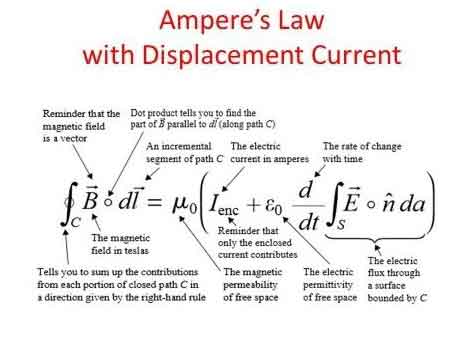
Devices like rectifiers and inverters rely on principles explained in Ampere’s Law and Biot-Savart Law, which describe the relationship between electricity and magnetism.
Frequently Asked Questions
What is the best formula to calculate DC electrical stream?
Ohm's Law is the fundamental principle governing the relationship between voltage, flow, and resistance in an electrical circuit. It is named after German physicist Georg Simon Ohm, who formulated the law in the early 19th century. Ohm's Law can be used to calculate direct (DC) electrical current when the voltage and resistance are known.
The formula for Ohm's Law is:
V = I × R
Where:
V = Voltage (volts)
I = Current (amperes or amps)
R = Resistance (ohms)
This formula can be rearranged to calculate the current (I) when voltage (V) and resistance (R) are given:
I = V / R
Using this formula, we can determine the DC electrical energy flowing through a circuit when the voltage across the circuit and the resistance of the circuit are known.
For example, consider a simple DC circuit with a 12-volt voltage source and a 6-ohm resistor. Using the formula for calculating current, we can determine the amperage flowing through the circuit:
I = V / R
I = 12 V / 6 Ω
I = 2 A
Thus, the DC electrical amperage flowing through the circuit is 2 amperes.


To calculate DC electrical stream, apply Ohm's Law by dividing the voltage (V) by the resistance (R) to determine the current (I) in amperes. Ohm's Law is a fundamental principle in electrical engineering, serving as the basis for understanding and analyzing electrical circuits, including those involving direct current.
Are there fewer losses with the direct current than with the alternating current?
Whether there are fewer losses with direct current (DC) than alternating current (AC) depends on the specific application and context. In certain scenarios, DC can have fewer losses, while AC might be more efficient in others. Below are some examples to illustrate this point:
Transmission losses: In long-distance high-voltage power transmission, direct high-voltage current (HVDC) transmission lines can have fewer losses than traditional AC transmission lines. This is because DC transmission lines do not suffer from reactive power losses or the skin effect (which causes higher resistance in AC lines due to the stream flowing mainly on the conductor's surface). Moreover, HVDC lines can be more efficient over long distances as they require only two conductors, while three are needed for AC transmission lines.
Electronic devices: When it comes to electronic devices like computers and smartphones, as well as other sensitive equipment, DC power is often preferred because it provides stable, constant power, resulting in lower losses in the form of heat dissipation. However, these devices need a conversion from the AC power supplied by the grid to the DC power they require. The conversion process may introduce some losses, but DC can be more efficient for these applications once the power is converted.
Electric power transmission over short distances: AC is typically more efficient than DC for shorter distances and lower voltage levels. AC voltage can be easily transformed to different levels using transformers, which are relatively simple and low-loss devices. In contrast, converting DC voltage levels requires more complex and potentially lossy power electronic converters.
The efficiency of direct and alternating currents depends on the specific application and context. For example, DC power can have fewer losses in some cases, such as HVDC transmission lines and sensitive electronic devices. On the other hand, AC is more efficient for short-distance and lower voltage-level transmission, mainly due to the ease of transforming voltage levels using transformers.
Is direct current safer than alternating current?
The safety of direct current (DC) and alternating current (AC) depends on several factors, including voltage, stream levels, and the specific application. However, it is essential to remember that both types of current can be hazardous under specific conditions.
Both charge flow types are generally considered safe when comparing the safety of DC and AC at low voltages and amps. However, some differences in the physiological effects of DC and AC on the human body can make one type of amperage more hazardous than the other under certain conditions:
Muscle contraction: AC can cause muscle contractions that may make it difficult for a person to release a live wire or conductor. In contrast, DC can also cause muscle contractions, but typically only when making or breaking contact with the conductor. This means that once a person is in contact with a DC source, the muscles may not contract continuously, making it easier to let go.

Ventricular fibrillation: AC has a higher probability of causing ventricular fibrillation (a life-threatening heart rhythm disturbance) than DC at the same energy levels. The frequency of AC power, typically 50 or 60 Hz, can interfere with the electrical signals in the heart, leading to this dangerous condition. DC is less likely to cause ventricular fibrillation because it lacks a frequency component.
Skin resistance: Human skin has a higher resistance to DC than to AC, which can result in less amperage flowing through the body when exposed to DC compared to AC at the same voltage levels. However, this difference in resistance is mostly relevant at low voltages, and the risk of injury still exists when dealing with high-voltage DC sources.
Although there are some differences in the effects of DC and AC on the human body, it is essential to understand that both types of amperage can be dangerous when not handled properly. Therefore, safety precautions must always be taken when working with electrical systems, whether they involve direct or alternating current.
Ultimately, the safety of direct and alternating currents depends on the specific situation and proper handling of electrical systems. However, by following established safety protocols, potential risks associated with both types of amperage can be minimized.
Related Articles

_1497174879.webp)