History of Electricity
By R.W. Hurst, Editor
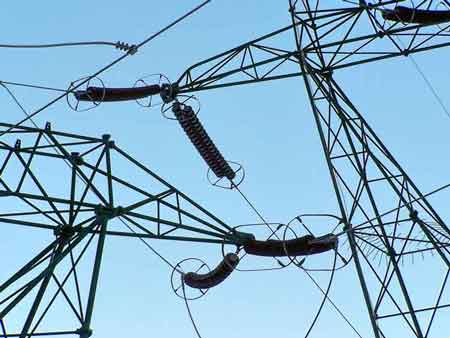
History of electricity explains how early studies of static charge and lightning led to batteries, generators, power grids, and modern electrical systems that reshaped communication, industry, and daily life.
The history of electricity is the story of how human curiosity slowly turned mystery into mastery. What began as wonder at lightning, static sparks, and magnetic attraction grew into careful experimentation, practical invention, and eventually the electrical systems that power modern life.
Fundamentals of the History of Electricity
Early observations of electrical effects did not come from laboratories but from everyday experience. A crackle from rubbed amber, a sudden shock from dry clothing, or the spectacle of lightning all hinted at unseen forces at work. For centuries, these effects inspired awe more than understanding.
Around 600 BC, the Greek philosopher Thales of Miletus recorded that amber rubbed with fur could attract small objects. It was a modest observation, yet it marked the first documented step toward electrical science. Much later, in the early 1600s, William Gilbert advanced this curiosity into a method. In his work De Magnete, he distinguished electrical attraction from magnetism and argued for experimentation over speculation. His approach helped shape the scientific mindset that electricity demanded. Our comprehensive electricity history guide breaks down major inventions and the rise of electrical infrastructure.
See the full timeline of key discoveries in electricity for a chronological overview of major milestones.
Curiosity Turns to Science
By the 18th century, electrical investigation had become more systematic. Scientists across Europe explored how electrical forces behaved, often debating what electricity actually was. Many learners imagine this period as a leap straight from lightning to light bulbs, but progress was incremental, built on repeated experiments and competing explanations.
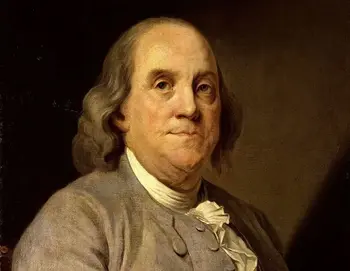
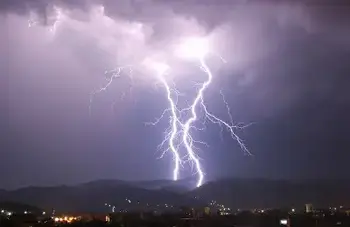
Benjamin Franklin played a key role by showing that lightning was electrical in nature. His work helped frame electricity as a natural force governed by physical laws rather than supernatural causes. At the same time, experiments in Italy revealed puzzling effects that further advanced understanding. Learn how Ben Franklin discovered electricity through his iconic kite experiment and helped define lightning as an electrical force. For a deeper dive into Franklin’s work, see our dedicated article on Ben Franklin and electricity, which outlines his groundbreaking theories.
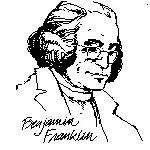
Benjamin Franklin
Meanwhile, in Italy, a different kind of electrical mystery was unfolding. In 1786, Luigi Galvani discovered that a dead frog’s leg twitched when touched with a metal scalpel. He believed this was “animal electricity”, a life force stored in living tissue.
But Alessandro Volta disagreed. He argued that the twitch was caused by two dissimilar metals and moisture, which created a chemical reaction that produced an electric current. To prove it, he invented the voltaic pile, the first true battery—a steady, flowing source of electrical energy that could be used in experiments.
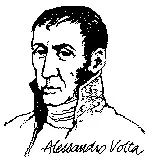
Alessandro Volta
This rivalry—Galvani’s biological theory versus Volta’s chemical one—marked a turning point. For the first time, electrical energy could be created, stored, and controlled. Franklin had shown that electrical energy was a natural force; Volta showed it could become a practical power source. And with that, electric energy began its transformation from phenomenon to technology. Compare how electricity was discovered with who invented electricity and its impact on shaping the modern world.
During the 20th century, advances in electrical science built on discoveries that stretched back to the ancient world, including the greek word for amber, which gave rise to the study of electric charge. Early breakthroughs such as the electric battery helped scientists understand how currents could be produced and controlled, while Michael Faraday’s experiments revealed the relationship between electricity and magnetism that underpins modern power generation. These foundations eventually led to practical inventions like the incandescent light bulb, marking the transition from scientific curiosity to widespread technological change.
Lighting, Power, and the Electrical Grid
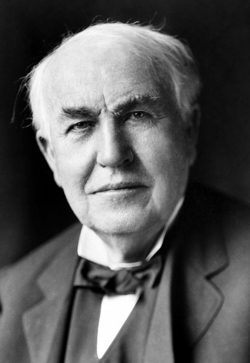
The ability to produce a steady current paved the way for practical applications. In the late 19th century, Thomas Edison developed an improved incandescent lamp and built one of the first centralized power stations. His systems used direct current, which worked well over short distances but had limitations for long-distance transmission.
Read about how Thomas Edison revolutionized electricity by building the first power distribution system in New York City.
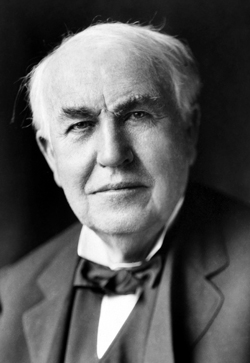
Thomas Edison
Nikola Tesla and George Westinghouse
Nikola Tesla proposed an alternative based on alternating current. Supported by George Westinghouse, his system enabled power transmission over long distances with reduced losses. The rivalry between these approaches, known as the War of Currents, ended with alternating current forming the basis of modern power grids.
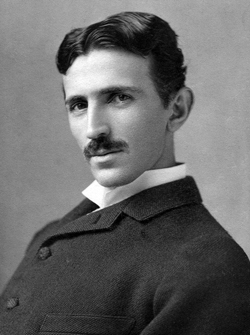
Nikola Tesla
With widespread electrification, cities changed. Factories extended working hours, streets were illuminated, and homes gained new conveniences. Electric power reshaped daily rhythms and economic life worldwide.
Electricity and the Communication Revolution
Electric power also transformed communication. The telegraph enabled messages to travel instantly across great distances. The telephone followed, carrying voices over wired networks. Later discoveries showed that electric currents could generate electromagnetic waves, enabling wireless communication.
Radio, broadcasting, and eventually digital electronics all emerged from these insights. Modern communication technologies trace their origins to the same electrical principles first explored in early experiments.
The Invisible Infrastructure of Modern Life
Today, electricity operates largely out of sight. Power plants, transmission lines, substations, and transformers form an interconnected system that quietly supports modern society. Most people notice this infrastructure only when it fails.
Electricity powers medical equipment, transportation, data centers, and everyday devices. It is no longer viewed as a discovery but as an essential service, woven into the fabric of civilization.

From the first spark of curiosity to the vast grids of today, the history of electricity is a story of gradual understanding and lasting transformation. What began as a mystery became measurement, then mastery, and finally the foundation of modern life.
Related Articles