Home Electricity - Electrical Energy Information

Home Electricity

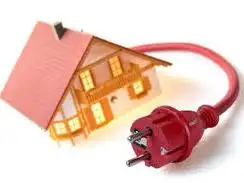
Home electricity powers lighting, appliances, and electronics using energy from the grid or renewable sources like solar. Understanding usage, safety, and efficiency helps reduce costs and improve performance in daily life.


Home Electricity: Real-World Examples and Uses

How Electricity Enters and Flows Through Your Home

Electricity originates from a distant power station, fueled by coal, natural gas, nuclear power, or renewable sources, and is transformed into high-voltage energy for long-distance transmission. Along the way, transformers step this voltage down to safe, usable levels. When it reaches your home, the electricity flows through a service line to a main panel, where circuit breakers distribute it to branch circuits that power every room and outlet.

In the United States, most residential circuits provide about 120 volts of alternating current (AC) at 60 Hz. Voltage measures the energy per unit charge: 120 volts means 120 joules of energy are transported by each coulomb of charge. One coulomb per second equals one ampere, so an appliance drawing 1 ampere at 120 volts consumes energy at 120 watts—120 joules per second.


How Appliances Use Electrical Energy

When you switch on an appliance, it allows 120 volts of potential to push current through the device—similar to using water pressure to move water through a pipe. As electric charge flows, energy is transformed into useful work like heating, lighting, or mechanical motion. Voltage gradually drops to nearly zero by the time the current exits the appliance.

This “spent” charge is carried back to your electrical panel via the neutral wire and ultimately to the ground through the grounding system. The ground serves as a vast reservoir, stabilizing voltages and protecting users in the event of a fault.


Understanding Home Wiring and Safety

In a standard polarized receptacle, the smaller prong connects to the hot wire (120 volts), and the wider prong to the neutral (0 volts). The hot wire delivers the current; the neutral completes the circuit back to the panel. A separate ground wire exists for safety—it’s not part of the working circuit but protects against electric shock if a fault occurs.

Most wall outlets contain two receptacles (a duplex) wired in parallel. This means two appliances plugged in will receive the same 120-volt supply but can draw different amounts of current. Parallel wiring is standard throughout the home, allowing consistent voltage distribution while accommodating various electrical loads.


Where the Energy Comes From and Where It Goes

Electricity used at home ultimately comes from generators that elevate the voltage of electric charge before it travels across the grid. After powering your home, the now low-energy charge returns to the ground. This closed-loop system—from the earth to the generator and back—enables efficient energy use and the safe disposal of spent charge.

Whether your electricity comes from traditional utilities or rooftop solar panels, the underlying principles remain the same: raise voltage at the source, deliver it efficiently, use it safely, and return it to ground. Understanding these concepts helps homeowners stay informed, reduce waste, and use electricity more safely and effectively.


Related Articles


Related News

Electrical Resistance

Electrical resistance is the property of a material or connection that limits current flow and converts part of that energy into heat. It directly determines voltage drop, power loss, conductor temperature, and overall power system efficiency. When resistance is misunderstood or ignored, power systems do not simply become inefficient. They become unstable. Excess resistance raises conductor temperature, accelerates insulation aging, distorts voltage delivery, and reduces usable load capacity long before visible failure occurs. For engineers, electricians, and system designers, resistance is not an abstract constant. It is the factor that governs wire sizing, termination quality, joint reliability, fault behavior, and…
View more

Sources of Electricity Explained

Sources of electricity include fossil fuels, nuclear power, and renewable energy like solar, wind, and hydro. These energy sources provide reliable electricity generation, powering homes, industries, and grids while shaping modern energy systems and sustainability goals.   How Sources of Electricity Work In the modern world, electricity plays a crucial role in our daily lives. As a result, it has become an essential commodity, from powering our homes to running industries. But have you ever wondered where it comes from? Electric power can be generated from various sources with unique characteristics, benefits, and drawbacks. In this article, we'll delve into…
View more

Water Electricity

Water electricity refers to electrical power generated using water, primarily through hydroelectric systems. It converts the kinetic energy of moving or falling water into electricity, providing a renewable and sustainable energy source with low carbon emissions and high efficiency.   Water Electricity Explained: What You Need to Know  Most hydroelectric power is generated from the potential energy of dammed water, which drives a water turbine and generator. Less common variations utilize water's kinetic energy or undammed sources, such as tidal power. Hydroelectricity is a renewable energy source. The energy extracted from water depends not only on the volume but on…
View more

Electricity Prices Explained

Electricity prices reflect tariffs, kWh rates, time-of-use schedules, peak demand charges, and grid congestion, driven by generation costs, transmission losses, and load profiles in power systems and industrial electrical engineering.   The Complete Guide to Electricity Prices Electricity prices, or rates, are usually determined by electric utilities and the governmental organizations that oversee them. The fees an electric utility company charges its customers for service aer based on electricity prices set by government, except in the case where they cost electricity prices on a deregulated basis. In that case, electricity prices are determined by marketplace factors such as supply and…
View more

Ohm's Law Formula

The Ohm's Law formula is a cornerstone of electrical engineering, serving as a basis for analyzing and designing electric circuits. Its applications range from determining the appropriate values of electrical components to predicting the behaviour of complex systems. By exploring the relationship between voltage, current, and resistance and their connections with other fundamental laws in electromagnetism, we can gain a deeper understanding of the principles that govern the flow of electricity and its conversion into other forms of energy. Ohm's Law states that the relationship between voltage, current, and resistance. This law, named after its discoverer Georg Simon Ohm, has…
View more

Electrical Terms Explained

Electrical terms define the essential language of electricity, covering concepts like voltage, current, resistance, and circuits. Understanding these terms helps electricians, engineers, and students communicate clearly, troubleshoot safely, and apply standards in residential, commercial, or industrial settings.   Quick Reference: Electrical Terms Electricity powers the systems that run our homes, businesses, and industries, yet the language used by electrical professionals can often seem complex or technical to those outside the field. Understanding common electrical terms is essential for anyone working in or learning about electrical systems, whether in engineering, construction, maintenance, or education. This comprehensive glossary of electrical terms is…
View more

Sign Up for Electricity Forum’s Newsletter

Stay informed with our FREE Newsletter — get the latest news, breakthrough technologies, and expert insights, delivered straight to your inbox.

Electricity Today T&D Magazine Subscribe for FREE

Stay informed with the latest T&D policies and technologies.
  • Timely insights from industry experts
  • Practical solutions T&D engineers
  • Free access to every issue

Download the 2026 Electrical Training Catalog

Explore 50+ live, expert-led electrical training courses –

  • Interactive
  • Flexible
  • CEU-cerified