What is Ohm's Law?
By William Conklin, Associate Editor
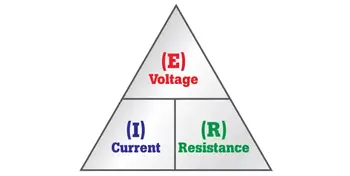
Ohm’s Law explains the relationship between voltage, current, and resistance in electrical circuits. Using a simple formula, it helps predict current flow, calculate voltage drop, size conductors, and troubleshoot both AC and DC electrical systems.
What is Ohm's Law as a Fundamental Principle
When asking what is Ohm’s Law, it is useful to compare it with other fundamental rules like Kirchhoff’s Law and Ampere’s Law, which expand circuit analysis beyond a single equation.
Ohm’s Law describes the simple relationship between voltage, current, and resistance in any electrical circuit. It shows why current rises when voltage increases, why resistance limits the flow of electricity, and how these three quantities determine the behavior of real equipment and wiring.
What makes Ohm’s Law valuable is its practicality. Electricians use it to size conductors, troubleshoot voltage drop, and determine whether devices are drawing the correct amount of current. Engineers rely on it to design safe circuits, protect sensitive components, and calculate expected performance in AC and DC systems. Even beginners can apply it because the law reduces electrical behavior to one clear idea: if you know two values, you can always find the third.
The sections that follow explain where the formula comes from, how to use it in real circuits, and why it remains essential from small electronics to large power systems.
Who was Georg Ohm?
Georg Simon Ohm was a German physicist born in 1789 who was fascinated by the behaviour of electricity, a field then poorly understood. Through careful experimentation, he observed that current through a conductor changes predictably when voltage or resistance is adjusted. In 1827, he published his findings, showing that voltage, current, and resistance are mathematically related.
Although his work was initially criticized and ignored by many of his contemporaries, it later proved to be essential to the development of electrical science. Electrical students, when asking: "What is Ohm's Law?" have learned to appreciate his contribution to the history of electricity and power development in the modern world. As electrical systems expanded into telegraphy, lighting, and power distribution, engineers quickly realized that Ohm’s observations made circuit behaviour understandable and repeatable. In recognition of his contribution, the unit of resistance was named the ohm. Today, Ohm’s Law remains one of the first principles taught in electricity because it explains how circuits behave in the real world, not just in theory.
Georg Simon Ohm
What is Ohm’s Law Formula
At the heart of the law is a simple but powerful equation:
V = I × R
-
V is voltage, measured in volts (V)
-
I is current, measured in amperes (A)
-
R is resistance, measured in ohms (Ω)
Rearranging the formula gives I = V/R and R = V/I, allowing you to solve for any unknown value when the other two are known. This flexibility allows engineers to calculate required resistor values, predict circuit performance, and confirm safe operating conditions.
In both DC and AC systems, the law provides the same basic relationship. In AC, where current and voltage vary with time, resistance is replaced by impedance, but the proportionality remains the same.
The Ohm’s Law equation explains how the amount of electric current flowing through a circuit depends on the applied voltage and resistance. Current is directly proportional to voltage and inversely proportional to resistance, illustrating how electrical charge flows under various conditions. To maintain consistency in calculations, the law employs standard units: volts (V) for voltage, amperes (A) for current, and ohms (Ω) for resistance. Since Ohm’s Law formula defines the relationship between these values, it directly connects to related concepts such as electrical resistance and voltage.
Understanding the Formula
The strength of Ohm’s Law lies in its versatility. With just two known values, the third can be calculated, turning raw measurements into useful information. For an engineer, this might mean calculating the resistor needed to protect a sensitive device. For a technician, it may indicate whether a failing motor is caused by excess resistance or a low supply voltage.
How Ohm’s Law Works in Real Systems
In the field, Ohm’s Law is used far more often than people realize. When a motor trips a breaker, a technician may measure the supply voltage and current to see whether resistance has increased due to a failing winding. When lights dim on a long cable run, the voltage drop can be predicted using the same relationship.
Understanding how current behaves under different load conditions is easier when you also review what is current electricity, especially when diagnosing overloads or unbalanced circuits.
The voltage values used in Ohm’s Law calculations are covered in more detail on our what is voltage page, including why certain voltage levels are chosen for residential, commercial, and industrial systems.
Each of these tasks depends on the same simple equation first described nearly two centuries ago. Applying Ohm’s Law often involves calculating current in DC circuits and comparing it with alternating current systems, where impedance replaces simple resistance.
Modern Applications of Ohm’s Law
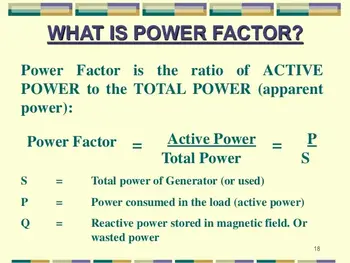
Far from being outdated, Ohm’s Law remains central to modern technology. In electronics, it ensures safe current levels in devices from smartphones to medical equipment. In renewable energy, it governs the design and balance of solar panels and wind turbines. In automotive and electric vehicle systems, battery management and charging depend on accurate application of the law. Even in telecommunications, it ensures signals travel efficiently across cables and transmission lines. In power engineering, Ohm’s Law, along with Watts Law and power factor, determines efficiency, energy use, and safe operating conditions.



These examples demonstrate that the law is not a relic of early science but an active tool guiding the design and operation of contemporary systems.
AC Circuits, Impedance, and System Complexity
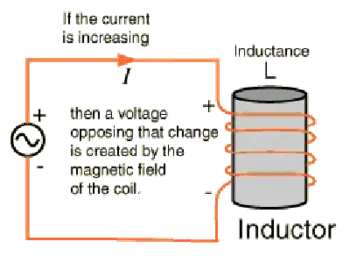
In direct current circuits, resistance is usually stable and predictable. In alternating current systems, the situation becomes more complex due to inductance and capacitance. Even so, Ohm’s Law still applies, with resistance expanded into a broader concept.
In AC systems, Ohm’s Law extends to include impedance, as described in what is impedance, which combines resistance, inductance, and capacitance into a single opposition to current flow.
For complex circuit networks, technicians and engineers also rely on Kirchhoff’s Law to apply Ohm’s Law across multiple branches and loops, especially in control panels, power distribution systems, and electronic circuits.
Resistance, Conductivity, and Real-World Limits
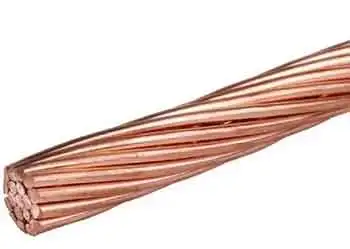
Resistance is a material’s opposition to current flow, while conductivity — its inverse — describes how freely charge moves. Conductors, such as copper and aluminum, are prized for their high conductivity, while insulators, like rubber and glass, prevent unwanted current flow.
In reality, resistance can change with temperature, pressure, and frequency, making some devices nonlinear. Semiconductors, diodes, and transistors do not always follow Ohm’s Law precisely. In AC systems, resistance is replaced by impedance, which also accounts for inductance and capacitance. Despite these complexities, the proportional relationship between voltage and current remains an essential approximation for analysis and design. Exploring basic electricity and related principles of electricity and magnetism shows why Ohm’s Law remains a cornerstone of both theoretical study and practical engineering.
Why Ohm’s Law Still Matters Today
Despite advances in electronics and power systems, Ohm’s Law has not become obsolete. It remains the starting point for understanding why circuits behave the way they do, why equipment fails, and how electrical energy is controlled safely.
For a broader foundation that ties these ideas together, our basic electricity guide explains how Ohm’s Law relates to voltage, current, resistance, and power in a practical way.
Frequently Asked Questions
Can Ohm’s Law be used in real troubleshooting?
Yes. It is commonly used to identify open circuits, excessive resistance, undervoltage conditions, and overloaded conductors.
What is Ohm’s Law and does it apply to all devices?
It applies directly to resistive circuits. Some electronic components behave nonlinearly, but Ohm’s Law is still a useful approximation in most analyses.
Why is Ohm’s Law important for safety?
Because it allows current levels to be predicted. Excess current causes overheating, insulation damage, and fire risk, all of which can be avoided when circuits are designed correctly.
Related Articles