Course Announcement

Emergency Generator Training - Standby Power Systems

Emergency generator training provides practical instruction in standby generator operation, backup power systems, automatic transfer switches, generator maintenance, load management, safety practices, and power system reliability for industrial and commercial facilities.

This 12-hour instructor-led course is designed to help organizations identify the significant savings achievable through proper emergency generator design, installation, testing, and maintenance.

Why Take Emergency Generator Training?

Modern infrastructure, such as hospitals, data centres, industrial facilities and commercial buildings, often cannot tolerate power outages. To ensure reliable electrical redundancy, standby generators are installed. This emergency and standby power systems course covers how generators operate and how they integrate into overall electrical systems, with emphasis on emergency standby power.

Emergency standby power systems are installed to maintain critical operations when a normal power source fails, but poor design or maintenance can create hazards if not properly managed. Many facilities are legally required to provide standby power under NFPA codes, especially when life-safety systems require emergency power. Selecting the correct power supply and backup type is essential, as each system is designed for specific applications based on which equipment requires emergency power during outages.

You’ll learn how emergency generator standby power systems are used for emergency standby power, prime power, and grid-connected or micro-grid applications. Our course examines generator operation, supporting equipment (transfer switches, switchgear, auxiliary components), and real-world applications across different sectors. We focus especially on standby generation: how it kicks in when utility power fails, and how it supports critical loads.

Through practical examples and interactive sessions, the course teaches installation requirements, operation, maintenance, and testing of generator sets. You’ll understand how to read vendor drawings, size and specify generators, and manage generator energy, including synchronizing parallel sources and load-sharing, auxiliary systems, and heat recovery applications.


Course Overview

Specific requirements and recommendations for the installation, operation and maintenance of backup power generation equipment. Where to find critical information from professional sources such as the EGSA, IEEE, NFPA, NECA and NETA.

What backup system and emergency plan are best suited for your critical power system?

  • How to read and understand vendor drawings and technical information for generators.
  • How generators operate
  • Supporting electrical equipment such as transfer switches, switchgear, and emergency power distribution
  • Auxiliary generator equipment such as fuel tanks, silencers, ventilation, control equipment, gas detectio,n etc.
  • How to work with parallel energy source:s Synchronizing procedures and load sharing.
  • How to troubleshoot using a logical, systematic approach to isolate and repair generator problems
  • Generator energy management and heat recovery applications


Learning Outcomes

  • Understand how generators operate and the auxiliary equipment required to support their operation.
  • Understand how generators can be integrated within an entire electrical distribution system.
  • Learn about the different types of generators, including emergency standby, prime power, and continuous power.
  • Learn about the different engine drivers and their applications.
  • Learn how to size and specify generators.
  • Gain the background needed to operate, maintain and test the various types of generator sets used in on-site power production. Common examples of facilities that heavily rely upon these systems include: data centers, hospitals, banks, airports, water treatment facilities, manufacturing and industrial plants, schools, sports stadiums, and commercial office buildings. As the need for reliable electrical power continues to grow, many firms are turning to on-site generators.
  • Understand the practical application of operations and maintenance of standby and on-site power generation.
  • Learn about thermal applications of power generators, such as cogeneration and combined-cycle operation.



Live online course schedule

January 29–30, 2026
10:00 am - 4:30 pm ET
May 28–29, 2026
10:00 am - 4:30 pm ET
September 21–22, 2026
10:00 am - 4:30 pm ET

Sign Up For Our Electrical Training Newsletter – Stay Informed!

Newsletter
What you'll receive:
New course launches and schedules
Exclusive discounts and free resources
Practical tools, quizzes, and Free downloads

Who should attend

This Emergency Generator Training course is ideal for professionals responsible for on-site emergency power systems or working in facilities where uninterrupted power is critical. Anyone with an interest in emergency or standby generators will benefit.

This course is well-suited for:

  • Electrical engineers and consulting engineers

  • Electrical maintenance technicians, supervisors, and managers

  • Plant, facility, and building engineers

  • Plant and facility managers and superintendents

  • Electricians and mechanics

  • Stationary engineers

  • Emergency preparedness and compliance personnel

  • Multi-craft and cross-trained maintenance staff

  • Anyone seeking a practical introduction to emergency and standby power generation systems


What you will get

1
1.2 Continuing Education Unit (CEU) credits
EIC Logo
2
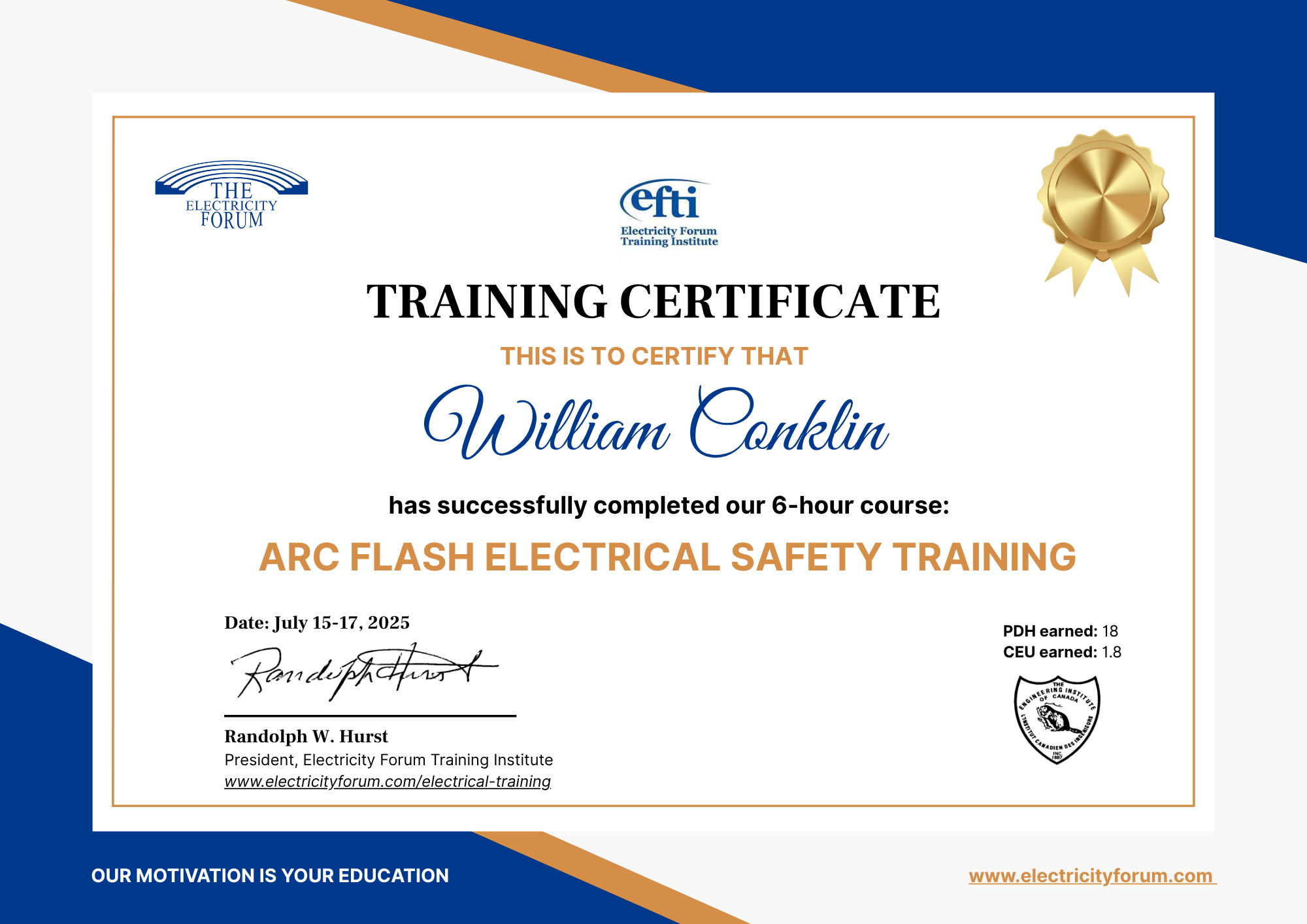
Emergency Generator Training - Standby Power Systems Certificate
Training Certificate
3
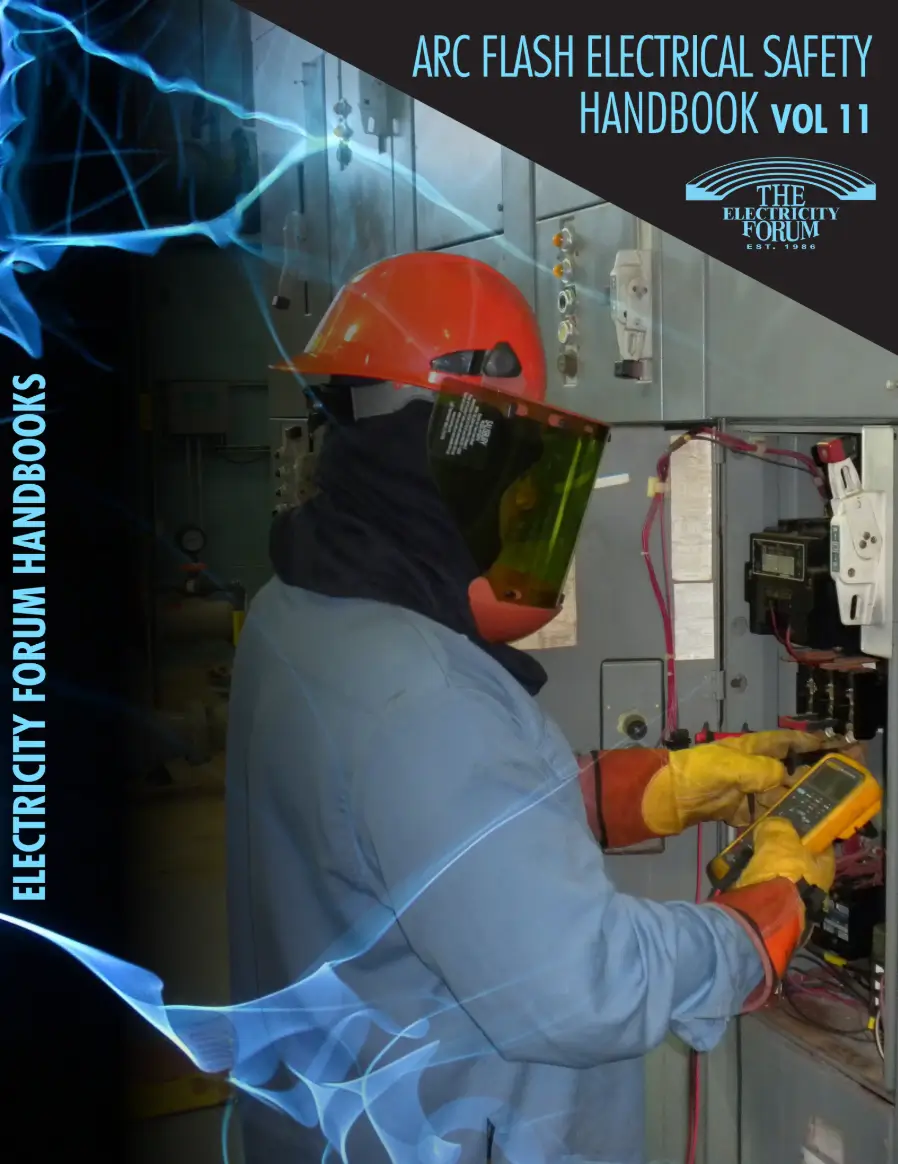
100-page Arc Flash/Electrical Safety Handbook (Value $20)
Electrical Safety Handbook
4
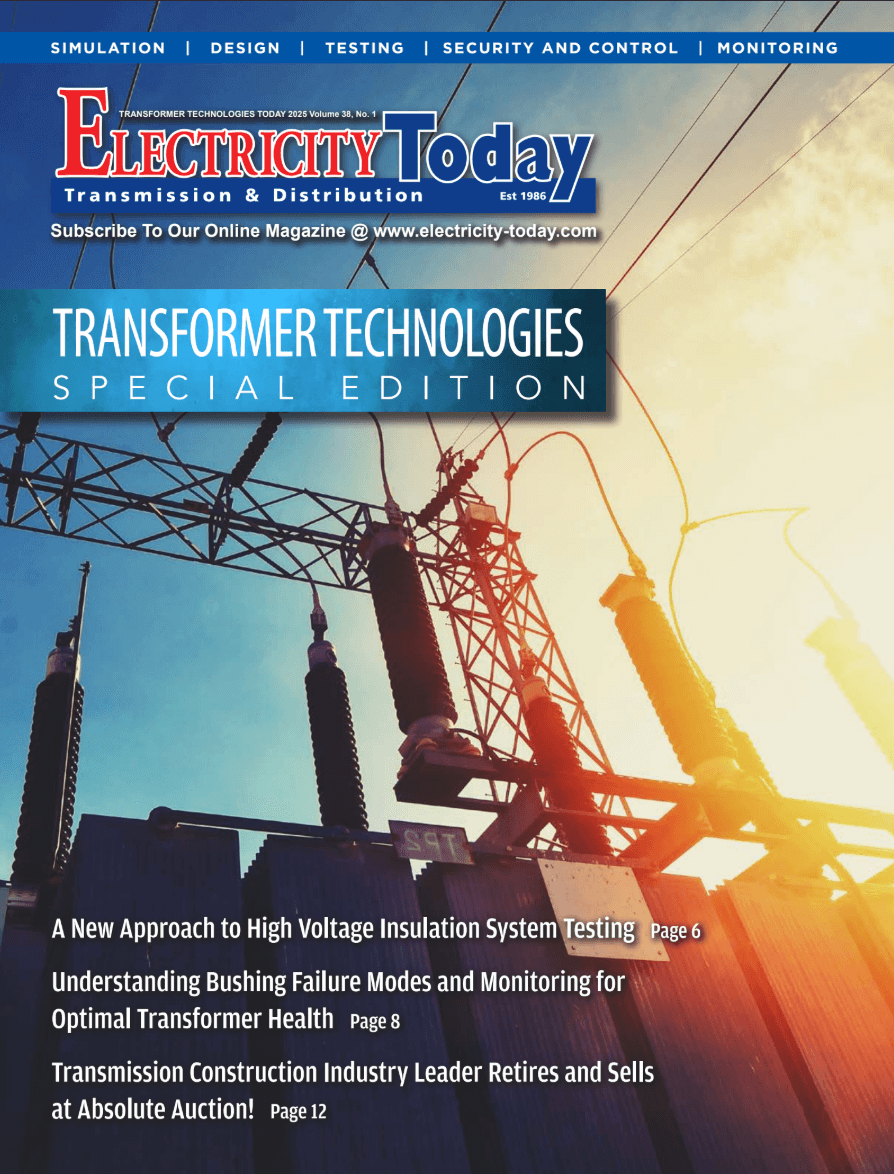
Free magazine subscription (Value $25)
Free Magazine Subscription
5
$50 coupon toward any future Electricity Forum event
Coupon
6
Course presentations in PDF format
Course Presentation

Emergency Generator Training Course Outline


DAY ONE

1. Introduction To Generators

  • Introduction to generators
  • Purpose of electric generators
  • Application of electric generators, i.e. power plants, microgrids, prime power, off-grid, standby and backup power
  • Standby vs Prime Power vs Continuous-rated generators
  • Generator Drivers (Gas Reciprocating Engine, Gas Turbine, Steam Generation, Hydro)
  • Renewable generation


2. Generator Basic Electrical Fundamentals

  • Electrical fundamentals
  • How electricity is produced and controlled in generators and batteries
  • Understanding single-phase and three-phase generator wiring configurations
  • Understanding Generator Nameplate Data


3. Generator Types and Construction

  • Stator
  • Mechanical Components
  • Wye Configuration
  • Delta Configuration
  • Types of Rotors
  • Salient Pole
  • Cylindrical Pole
  • Types of Bearings and Lubrication Systems
  • Sinusoidal Voltage Output
  • Motor vs Generator Comparison
  • Three-phase Generators
  • Components
  • Operation


4. Generator and Engine Controls

  • Paralleling and Non-Paralleling Governor Control
  • Purposes of Generator Excitation
  • Power to the Rotating Electromagnetic Field
  • Locking Rotor to Stator
  • Means of Regulating Voltage
  • Types of Generator Excitation
  • DC Exciters
  • Static Excitation
  • Brushless Excitation
  • Concept of Response Time vs Voltage Levels
  • Voltage regulator function
  • Voltage regulator components
  • Voltage regulator operation
  • Reactive Power Control for Parallel Operations
  • Auxiliary regulator functions
  • Voltage regulator troubleshooting
  • On-site Generator Controls, including PLCs and SCADA Systems


5.  Generator Auxiliary Power Requirements

  • Pre/Post Lube Pumps
  • Starter Motors
  • Battery Chargers
  • Cooling Fans


6.  Generator Emissions

  • Government requirements
  • Specifying generators
  • Emission Controls


7. Auxiliary Systems

  • Fuel Systems
  • Cooling Systems
  • Exhaust Systems
  • Vibration Attenuation
  • Sound Attenuation
  • Engine Starting Systems
  • Load Banks
  • Emissions Control
  • Silencers
  • Ventilation
  • Fuel Tanks


8. Generator Protection

  • Short circuit protection
  • Ground fault protection
  • Overload protection
  • Thermal protection
  • Overspeed protection
  • Low field excitation or loss of field excitation protection
  • Generator motoring protection
  • Protection against unbalanced faults
  • Overexcitation protection
  • Reverse Power Protection
  • Volts Per Herts Protection
  • Synch-Check
  • Over/Under Voltage Protection
  • Over/Under Frequency Protection
  • Differential Protection
  • Rate Of Change of Frequency Protection


9.  Generator Grounding

  • Why do generators require grounding?
  • Neutral Grounding Resistors
  • Standby generator grounding vs parallel generator grounding
  • Considerations for parallel generator grounding


 10. Generator Applications

  • Emergency Power Systems
  • Legally Required Standby Systems
  • Optional Standby Systems
  • Applicable Codes and Standards


DAY TWO


11. Generator Loading And Control

  • Effects of various types of loads on generator control: lighting, motors, UPS Systems
  • Parallel operation
  • Protection and transfer of power


12. The Gas, Natural Gas And Diesel Engines As Prime Movers

  • Prime mover types and fuel considerations
  • Mechanical systems operation: fuel, intake air, lube oil, cooling, governors
  • Typical manufacturers, ratings and operation of diesel generator sets.
  • Diesel vs Gas generators.


13. Transfer Switch Equipment

  • Types and applications of transfer switch equipment
  • The Automatic Transfer Switch (ATS)
  • Loss of utility power scenarios
  • Load shedding operations
  • Bypass operation
  • Protection considerations
  • Transfer switch equipment maintenance: Safer
  • Utility re-transfer scenarios
  • Open vs closed transition switches


14  Emergency and Standby Generator Architecture

  • Manual Transfer Switch
  • Auto Transfer Switch
  • Main-Tie-Main architecture
  • Micro-grid
  • Generator Paralleling Switchgear Application
  • Parallel Operation of Generators


15. Generator Transients and Operation

  • Starting a generator
  • Transferring load
  • Motor Starting
  • Load pickup
  • Load Rejection
  • Harmonics and Generators
  • Generator Sizing


16. Emergency Busses

  • What is an emergency bus?
  • What loads are typically placed on an emergency bus?
  • Power transfer to an emergency bus
  • Re-transferring to the utility


17. Troubleshooting And Maintenance Of Standby Generators

  • Recommended maintenance practices from: IEEE, NFPA, NETA, EGSA
  • Recommended Generator Maintenance Practices
  • Developing a Logical Systematic Approach to Troubleshooting
  • Common Generator Problems
  • Electrical Testing of Generators
  • Starting Battery maintenance
  • Troubleshooting frequency control problems
  • Troubleshooting voltage control problems
  • Troubleshooting grounding problems


18. Basic Generator Installation Requirements

  • Marking requirements
  • Overcurrent protection
  • Selecting and sizing Cables and Conductors for generator output
  • Protecting live parts
  • Loads supplied – practical applications


19. Review Of Safety Issues With Emergency And Standby Power Generation

  • The importance of code and standard requirements
  • The three hazards to protect against
  • Selection of Personal Protective Equipment (PPE) for work on Standby Power Systems
  • Safe work practices to follow Safer


20.  Generatior Synchronization

  • What is synchronization
  • Why is synchronization required
  • How to synchronize
  • Scenarios where generator synchronization may be required
  • Synchronization switchgear and equipment
  • Droop vs Isochronous Operation


21.  Generator Thermal Applications

  • Reciprocating engines vs gas turbines
  • Combined Heat and Power
  • Co-Generation
  • Heat Recovery and Steam Generation
  • Combined Cycle Power Generation


22.  On-Grid Generator Applications

  • Synchronizing to the grid
  • Parallel operation with a utility
  • Exporting power
  • Types of export power applications


COURSE SCHEDULE:

Both days:

Start: 10 a.m. Eastern Time
Finish: 4:30 p.m. Eastern Time


EFTI Logo

Live online course registration fees & CEU credits

The registration fee for this course is $699.

Regular price
$699
Discounted price
$599 (with coupon: save $100)

What you will get

1
1.2 Continuing Education Unit (CEU) credits
EIC Logo
2
Emergency Generator Training - Standby Power Systems Certificate
Training Certificate
3
100-page Arc Flash/Electrical Safety Handbook (Value $20)
Electrical Safety Handbook
4
Free magazine subscription (Value $25)
Free Magazine Subscription
5
$50 coupon toward any future Electricity Forum event
Coupon
6
Course presentations in PDF format
Course Presentation

Download free discount coupon

1

Enter Your Information

Fill out the form below with your name and email address.

2

Receive Your Coupon

Check your email for a message with a link to your $50 discount coupon.

3

Register for the Course

Use the coupon code when you sign up for the Advanced Electrical Safety Training course to save $50 off the regular price.

Discount Coupon

Group Offer
Register 3, Get 1 Free

Register 3 delegates at the full price of $249 each and get the 4th registration free! Perfect for companies, safety departments, and teams looking to train multiple employees at once.

1st $249
2nd $249
3rd $249
4th FREE

Earn Continuing Education Unit (CEU) Credits

  • Successful completion of this course qualifies delegates to receive a certificate of course completion with indicated CEUs.
  • CEUs are granted by the Engineering Institute of Canada.
  • One CEU is equivalent to 10 professional development hours of instruction.
  • This course earns 0.6 CEUs.
EIC Logo

Request a free training quote – Live Online & In-Person Group Training

Whether you choose live online or in-person instruction, our electrical training can be customized to your needs and delivered to your team at one or multiple locations.

Interactive – Real-Time Q&A
Tailored – Built To Your Needs
Flexible – Join From Any Location
Cost-Saving – No Travel Expenses
Certified – Earn CEU Credits
Discounted – Multi-Course Savings

Our instructors will work with you to assess your team's skills and tailor the training to match your requirements.


Complete this handy form and I will send you a FREE written Quotation on any electrical training you need! Or send me an email and I will contact you to discuss your electrical training requirements Today!

R.W. HURST
PRESIDENT, THE ELECTRICITY FORUM TRAINING INSTITUTE
randy@electricityforum.com

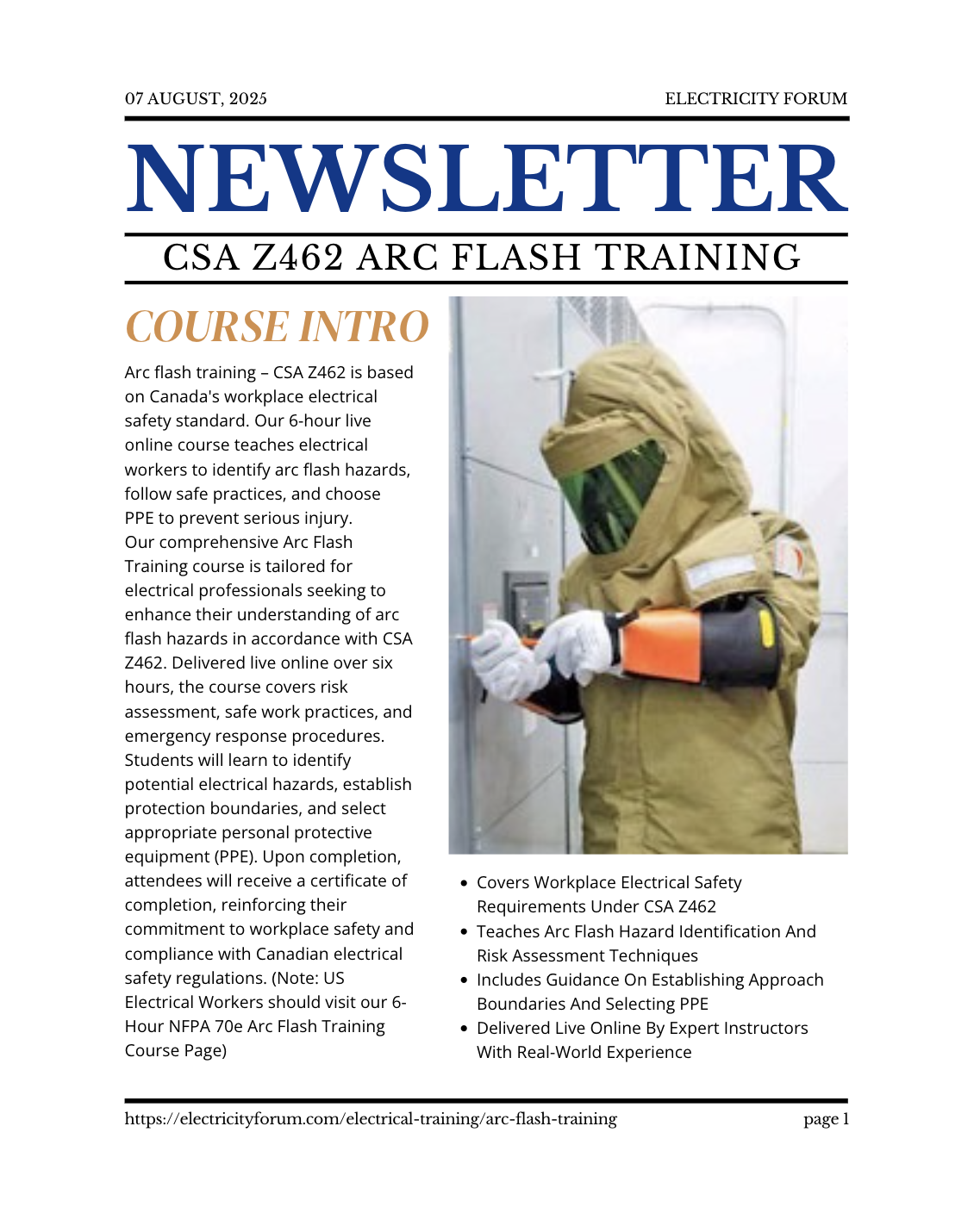
Get the 2026 Live Online Training Catalog

Explore 50+ live, expert-led electrical training courses – interactive, flexible, CEU-certified.

Download Catalog
Training Catalog Preview

Download Course Brochure

Get detailed information about this course in our comprehensive brochure.

Download Brochure (PDF)

Download free discount coupon

1

Enter Your Information

Fill out the form below with your name and email address.

2

Receive Your Coupon

Check your email for a message with a link to your $50 discount coupon.

3

Register for the Course

Use the coupon code when you sign up for the Advanced Electrical Safety Training course to save $50 off the regular price.

Discount Coupon

Group Offer
Register 3, Get 1 Free

Register 3 delegates at the full price of $249 each and get the 4th registration free! Perfect for companies, safety departments, and teams looking to train multiple employees at once.

1st $249
2nd $249
3rd $249
4th FREE

Download our FREE Electrical Training Catalog

Explore our comprehensive training programs and find the perfect course for your professional development.

Training Catalog