Electricity Terms Explained
Electricity terms explain voltage, current, resistance, impedance, power factor, frequency, AC/DC, circuits, transformers, and load. Master key definitions to analyze systems, size conductors, mitigate harmonics, and ensure safety compliance.
Understanding Electricity Terms in Electrical Safety
Here are the top 50 commonly used electricity terms that are essential for understanding electrical systems, devices, and concepts: For a broader glossary with context and examples, see the curated list at Electrical Terms by Electricity Forum for deeper reference.
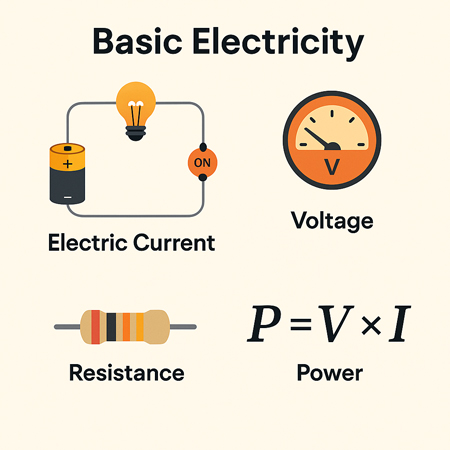
Voltage (V) – The electrical potential difference between two points in a circuit. Understanding how potential difference relates to the nature of electricity is clarified in this overview of what electricity is and how it behaves.
Current (I) – The flow of electric charge, measured in amperes (A). A concise explanation of electricity as a physical phenomenon is given in this definition of electricity for foundational understanding.
Resistance (R) – Opposition to current flow, measured in ohms (Ω).
Power (P) – The rate of doing work or transferring energy, measured in watts (W).
Ohm's Law – The relationship between voltage, current, and resistance. For a step-by-step refresher on the relationships among voltage, current, and resistance, explore this basic electricity guide to connect theory with practical examples.
Alternating Current (AC) – Electric current that reverses direction periodically.
Direct Current (DC) – Electric current that flows in one direction only. For a side-by-side comparison of waveform behavior, applications, and conversion methods, review the differences between AC and DC to strengthen conceptual understanding.
Frequency (f) – The number of cycles per second in AC, measured in hertz (Hz).
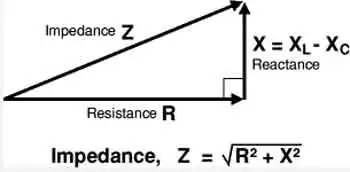
Impedance (Z) – The total opposition to current flow in an AC circuit, combining resistance and reactance, measured in ohms.
Capacitance (C) – The ability to store electrical energy in an electric field, measured in farads (F).
Inductance (L) – The ability of a conductor to induce a voltage when current changes, measured in henries (H).
Power Factor (PF) – The ratio of real power to apparent power, indicating the efficiency of a system.
Real Power (P) – The actual power consumed to perform work, measured in watts.
Apparent Power (S) – The total power in a system, combining real and reactive power, measured in volt-amperes (VA).
Reactive Power (Q) – Power in AC circuits that does not perform useful work, measured in volt-amperes reactive (VAR).
Load – The device or equipment that consumes electrical power.
Short Circuit – An abnormal connection between two points in a circuit, causing excessive current flow. To ground this topic in fundamentals, revisit what an electrical circuit is before examining fault conditions.
Overload – A condition where a circuit or device exceeds its rated current capacity.
Circuit Breaker – A protective device that interrupts the flow of current when an overload or short circuit occurs.
Fuse – A protective device that melts to break the circuit when excessive current flows.
Grounding (Earthing) – Connecting parts of an electrical system to the Earth to ensure safety.
Transformer – A device that transfers electrical energy between two or more circuits through electromagnetic induction.
Conductor – A material that allows the flow of electrical current, typically copper or aluminum.
Insulator – A material that resists the flow of electric current, such as rubber or plastic.
Phase – The distribution of alternating current electricity into separate waveforms, often used in three-phase power systems.
Watt (W) – The unit of power, equivalent to one joule per second.
Kilowatt (kW) – A unit of power equal to 1,000 watts.
Megawatt (MW) – A unit of power equal to 1 million watts.
Voltage Drop – The reduction in voltage across a component or conductor in an electrical circuit.
Arc Flash – A dangerous condition associated with the release of energy caused by an electric arc.
Resistor – A component that opposes the flow of current, used to control voltage and current in circuits.
Diode – A semiconductor device that allows current to flow in one direction only.
Rectifier – A device that converts AC to DC.
Inverter – A device that converts DC to AC.
Contactor – An electrically controlled switch used to control a power circuit.
Relay – A switch operated by an electromagnet, used for controlling circuits.
Switchgear – Equipment used to switch, control, and protect electrical circuits.
Distribution System – The system of wires and equipment that delivers electricity from substations to consumers.
Neutral – A conductor that carries current back to the source in an electrical system.
Busbar – A conductor used to distribute power from one source to multiple circuits.
Overcurrent Protection – Devices like fuses and circuit breakers designed to protect circuits from excessive current.
Phase Angle – The angular displacement between voltage and current waveforms in AC circuits.
Power Supply – A device that provides the necessary electrical power to a circuit or device.
Generator – A device that converts mechanical energy into electrical energy. This ties directly to how electrical energy is produced, transferred, and ultimately consumed.
Motor – A device that converts electrical energy into mechanical energy.
Frequency Converter – A device that changes the frequency of AC power.
Power Grid – A network of transmission lines, substations, and power stations for distributing electricity.
Service Panel – The central distribution point for electrical circuits in a building, containing circuit breakers or fuses.
Utility Transformer – A transformer that steps down high voltage for distribution to consumers.
Harmonics – Distortions in the electrical waveform that can affect power quality.
These terms cover a wide range of concepts from basic electrical theory to components and safety practices in electrical systems.