Electricity Definition
By R.W. Hurst, Editor
Electricity definition outlines the flow of electric charge as current under voltage in circuits, governed by electric fields, resistance, and power, enabling AC/DC transmission, electromagnetism, conduction in conductors, and energy conversion across systems.
Why Understanding the Electricity Definition Is Important
Electricity Definition: Electricity is a fundamental concept in physics that refers to the flow of electric charge through a conductor. It is an essential aspect of modern life and powers most devices we use daily. It can be generated in various ways. Several basic characteristics are used to measure it, including voltage, current, and resistance. Therefore, understanding an electricity definition and its basic concept is crucial for appreciating technological advances and conserving electrical energy for the future. For an accessible primer on the topic, the overview of what electricity is provides examples and key definitions.
The term refers to the flow of a charge, either as a static charge or as current. In a static charge, a charge builds up on the surface of an object, such as a balloon rubbed on a woollen sweater. Current refers to the flow of charge through a conductor, such as a wire or a circuit. Current is typically carried by electrons, which are negatively charged particles that orbit the nucleus of an atom.
To understand how moving charges behave in practical circuits, the overview of current electricity clarifies conduction, drift velocity, and measurement.
It can be generated in many ways, such as by burning fossil fuels, nuclear reactions, and renewable sources, such as solar and wind power. But, regardless of the source, power always involves the movement of charged particles through conductors from the source of generation to end use consumption. Additional distinctions among sources and phenomena are outlined under types of electricity for clearer terminology.
Electrical circuits are systems that allow the flow of an electric charge through a closed loop. Circuits can be either DC or AC, requiring an energy source like a battery or generator. The components of a circuit include a power source, conductors, switches, and loads, such as light bulbs or motors.
Beginners may find the core ideas of voltage, current, and resistance concisely reviewed in basic electricity before diving into circuit analysis.
Electric power is the rate at which energy is transferred. It is measured in watts and is equal to the product of voltage and current. Power can be transmitted over long distances through power lines, which are used to power most devices we use daily.
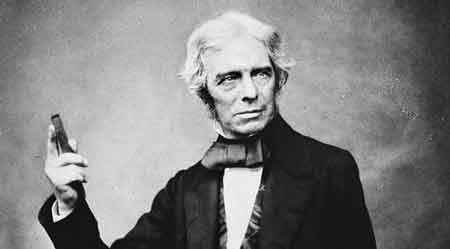
One of the earliest recorded discoveries was made by the English physicist William Gilbert, who observed that different materials have different properties. In the 18th century, the American statesman and scientist Benjamin Franklin conducted experiments that led to the understanding that lightning is a form of power. He also discovered that power has positive and negative charges.
Several basic electric power concepts describe electric power, including voltage, current, and resistance. Voltage is the force that drives the flow of a charge, while current is the actual flow of a charge. Resistance is the property that opposes the flow of charge and is measured in ohms. Ohm's Law states that the current through a conductor between two points is directly proportional to the voltage across the two points.
Electricity can be stored in batteries and capacitors, which store energy in a field. Electronic circuits often use capacitors to filter noise and provide a stable source of power.
Electricity consumption is the energy a device or system uses over a given period. It is measured in kilowatt-hours (kWh), a crucial aspect of managing and conserving energy. Reducing power consumption not only saves money but also helps reduce greenhouse gas emissions and other negative impacts on the environment.
AC vs. DC electricity
AC (alternating current) is a type of electrical power in which the direction of the current periodically reverses. This type of power is used in most systems today, including power grids and household appliances. On the other hand, DC (direct current) is a steady flow of charge in one direction. DC is used in batteries, electronic devices, and dc motors.
Electrical energy
Energy is the energy carried by a current. It is the product of the voltage, current, and time for which the current flows. For formulas, units, and examples in context, see electrical energy explained with practical applications.
Electric charge
A charge is a fundamental property of matter, both positive and negative. Opposite charges attract each other, while like charges repel each other.
Electric potential
Electric potential is the amount of potential energy per unit charge at a given point in space. It is measured in volts and is fundamental to understanding circuits.
- Electric fields: A field is a region around a charged object where a force is exerted on other charged objects. Fields are created by charges and are responsible for the attraction or repulsion of charged objects.
- Electrical properties: Properties describe voltage, current, and resistance characteristics. These properties are essential for designing and analyzing circuits and systems.
- Electricity in daily life: It has become an integral part of our daily lives, powering most of our devices. From lighting our homes to running our cars and charging our smartphones, we depend on it to function. As a result, using power has revolutionized many aspects of modern life and has made our lives more comfortable and convenient.
- Electricity storage: The ability to store energy is crucial for ensuring a stable and reliable power supply. Batteries and capacitors are two common devices used to store energy.
- Static electricity: Static is the buildup of a charge on the surface of an object. It is often created by friction, such as when you rub a balloon on your hair and can cause objects to stick together or repel each other.
What is AC electricity?
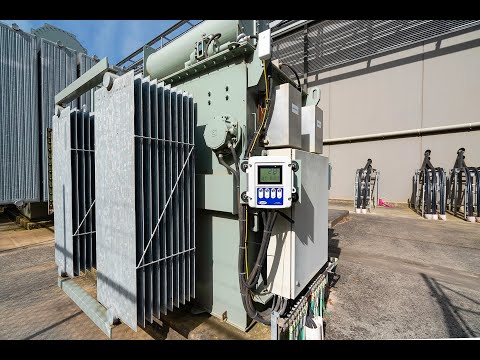
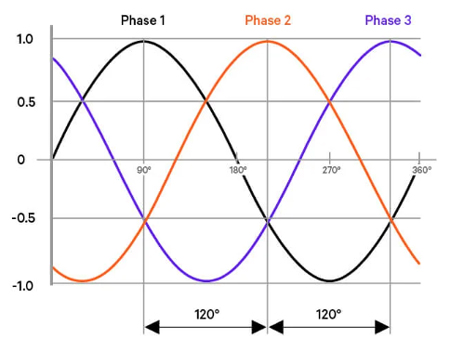

AC (alternating current) is a type of power in which the direction of the current periodically reverses. This type of power is used in most systems today, including power grids and household appliances.
What is DC electricity?
On the other hand, DC (direct current) is a steady flow of a charge in one direction. DC is used in batteries, electronic devices, and motors. For more on steady-state behavior and applications, the guide on DC current discusses sources, waveforms, and common uses.
What are the electrical properties of materials?
Electrical properties describe the characteristics of materials concerning power, such as voltage, current, and resistance. These properties are essential for designing and analyzing circuits and systems. For quick reference, a concise glossary of related vocabulary appears under electricity terms to support learning and design work.
What is an electrical circuit?
A circuit is a system that allows the flow of charge through a closed loop. Circuits can be either DC or AC, requiring an energy source like a battery or generator. The components of a circuit include a power source, conductors, switches, and loads, such as light bulbs or motors.
What is an electrical conductor?
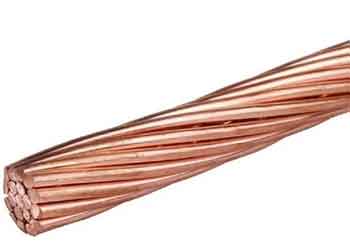
A conductor is a material that allows the flow of charge through it. Metals, such as copper and aluminum, are good conductors of power and are often used in electrical wiring and circuits.