Electricity Windmill Explained

Electricity Windmill

Electricity windmill converts wind energy into electrical power via rotor blades, generator, gearbox, and inverter, supporting renewable energy, grid integration, power electronics, and efficient electricity production with modern control systems and variable-speed drives.


Electricity Windmill Fundamentals

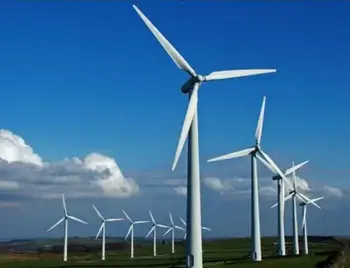
Electricity windmill Mankind been harnessing the wind's energy for many years. From Holland to traditional farms around the world, old style windmills were used in the past for pumping water through primative irrigation systems or used to grind grain. Then, the wind turned large "sails" which were connected by a long vertical shaft that was attached to a grindnig machine or to a wheel that turned and drew water from a well. Today's wind turbine generators can utilize the clean energy of high wind speeds to turn large metal blades which in turn spins a generator that manufactures electric power. For a deeper overview of modern designs, the resource at windmills for electricity explains key configurations used by utilities today.

Electricity windmill turbines, unlike the machines of old, are mounted on very tall towers in order to capture the most wind energy available. At 100 feet (30 meters) or more above ground, wind turbines can take advantage of the faster and less turbulent wind. Turbines catch the wind's energy with their propeller-like blades. Usually, two or three blades are mounted on a shaft to form a rotor. If you're curious how these rotating blades ultimately power homes, see how turbines generate electricity through step-by-step conversion processes.

A blade acts much like an airplane wing. When the wind blows, a pocket of low-pressure air forms on the downwind side of the blade. The low-pressure air pocket then pulls the blade toward it, causing the rotor to turn. This is called lift. The force of the lift is actually much stronger than the wind's force against the front side of the blade, which is called drag. The combination of lift and drag causes the rotor to spin like a propeller, and the turning shaft spins a generator to make power. The rotating shaft must be matched to an electricity generator with appropriate gearing and controls to optimize output.

In recent years, governments have invested enormous amounts of (taxpayer) money in electricity windmill "wind farms" to generate large amounts of energy from large and small wind turbines that take advantage of high winds. These wind systems or energy systems use wind turbine power to create electricity.  Other energy sources like solar power do not produce as much electricity. The only problem with wind generated power is that when the wind stops, so does the generator and therefore the electric power production. Electric power cannot be produced and stored for consumption later. Therefore, wind power can only be counted on mostly when the wind is blowing at optimal speeds and only in locations where the prevailing winds are such that it makes economic sense to build these power plants and this may not be when and where the power is needed. Grid planners track regional electricity production profiles to determine how much wind capacity can be integrated without compromising reliability. As part of a balanced portfolio, policy makers also evaluate alternative electricity options that can complement variable wind resources.

Stand-alone electricity windmill turbines are typically used for water pumping or communications. However, homeowners, farmers, and ranchers in windy areas can also use wind turbines as a way to cut their power bills. For off-grid ranch operations, understanding the interplay between pumps and water electricity systems helps size batteries and controllers correctly.

Small electricity windmill systems also have potential as distributed energy resources. Distributed energy resources refer to a variety of small, modular power-generating technologies that can be combined to improve the operation of the electric power delivery system. In some regions, small-scale hydroelectricity can serve as a firm companion to wind in distributed portfolios.
Related News

Kirchhoff's Law

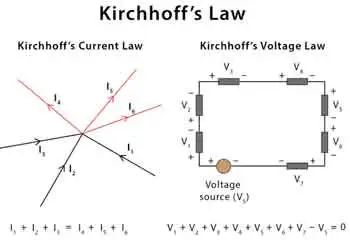
Kirchhoff's Law, comprising the Current Law (KCL) and Voltage Law (KVL), governs electrical circuits by ensuring charge conservation and energy balance, essential for analyzing current flow, voltage drops, and network behaviour.   How Kirchhoff's Law Works It consists of two fundamental rules, Kirchhoff's Current Law (KCL) and Kirchhoff's Voltage Law (KVL), which are intrinsically linked to other electricity laws, such as Ohm's law.  Kirchhoff’s Law works closely with Ohm’s Law Formula to calculate voltage drops, currents, and resistance in electrical networks. Kirchhoff's Current Law (KCL) - Also known as the first Kirchhoff's law or Kirchhoff's junction rule, KCL states that…
View more

Resistance in Series Explained

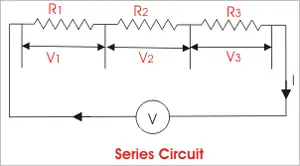
Resistance in series describes a circuit where resistors are connected end to end so the same current flows through each one. Total resistance equals the sum of values, shaping voltage drop, current flow, and circuit behaviour. A series circuit uses a single current path, which makes its electrical behavior highly predictable. Because the current does not split, changes in resistance directly affect voltage distribution across the circuit. This makes series circuits especially useful for illustrating how resistance controls current and how voltage is shared among components, forming the foundation for analyzing more complex electrical networks. To understand how resistance behaves…
View more

Hydroelectricity Explained

Hydroelectricity converts hydropower into grid-ready electricity using dams, penstocks, turbines, and generators, enabling renewable baseload, pumped storage, high efficiency, and low emissions for resilient power systems with load balancing, frequency regulation, and strong capacity factors.   Understanding How Hydroelectricity Works Hydroelectricity is another term for power generated by harnessing the power of damming rivers and moving water into generating plants. Not necessarily falling water, just moving water. There are many famous such Hydroelectricity stations in the world, not the least of them at Niagara Falls, Grand Coulee and Boulder Dam and the three gorges dam in China . In the past, small…
View more

Definition of a Rectifier

Definition of a rectifier explains AC to DC conversion using diodes, bridge or full-wave circuits, filters, and regulators to supply stable DC, reduce ripple, and power electronics, chargers, and DC motor drives.   Key Concepts of the Definition of a Rectifier Understanding the definition of a rectifier is fundamental to grasping the complexities of power electronics and electrical engineering. Rectifiers are pivotal in converting AC power to DC power, a critical process for operating numerous electronic devices. By delving into the intricacies of half-wave, full-wave, and bridge rectifiers, as well as the silicon-controlled rectifier, it becomes clear that these devices…
View more

Faraday's Law Explained

Faraday’s Law describes electromagnetic induction, where changing magnetic fields generate electricity. Discovered in 1831 by Michael Faraday, it revealed how magnetism produces electric current and became the foundation of modern electrical science.   Applications of Faraday's Law in Modern Power Systems For a deeper look at the mathematics, mechanisms, and engineering uses, see our detailed guide on Faraday’s Law of Induction."   Michael Faraday, the Inventor of Faraday’s Law In 1831, Michael Faraday performed experiments with coils of wire, magnets, and galvanometers. He observed that when a magnet was moved through a coil, or when the magnetic field around the…
View more

Types of Electricity - Static and Current

Types of electricity include static electricity and current electricity, which flows as direct current or alternating current. These forms explain how electric charge builds up, moves through conductors, and powers devices and electrical systems.   Understanding Types of Electricity Electricity is commonly described in different ways, but at its core it behaves in only two fundamental forms: electricity that is stored in place and electricity that flows. This distinction helps avoid a common source of confusion, because the way electricity is generated does not define its type. Whether electricity comes from wind, water, solar panels, or fossil fuels, the output…
View more

Sign Up for Electricity Forum’s Newsletter

Stay informed with our FREE Newsletter — get the latest news, breakthrough technologies, and expert insights, delivered straight to your inbox.

Electricity Today T&D Magazine Subscribe for FREE

Stay informed with the latest T&D policies and technologies.
  • Timely insights from industry experts
  • Practical solutions T&D engineers
  • Free access to every issue

Download the 2026 Electrical Training Catalog

Explore 50+ live, expert-led electrical training courses –

  • Interactive
  • Flexible
  • CEU-cerified