Who Invented Electricity?
By R.W. Hurst, Editor
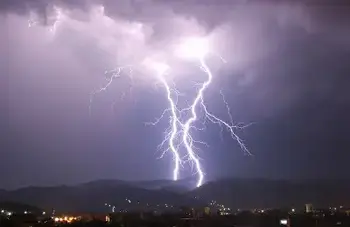
When people ask who invented electricity, they are usually asking which people made the most important breakthroughs that led to practical electrical power. Electricity itself was not invented in a single moment, but shaped by key figures whose discoveries made it usable.
Learn more about the history of electricity and how it powers our modern world.
Who Really “Invented” Electricity?
When people ask who invented electricity, they usually expect a name. But electricity does not have an inventor in the usual sense. It existed long before humans understood it, appearing naturally as lightning, static charge, and magnetic effects. What we use today as electrical power is the result of generations of experimentation, disagreement, and gradual progress, not a single breakthrough.
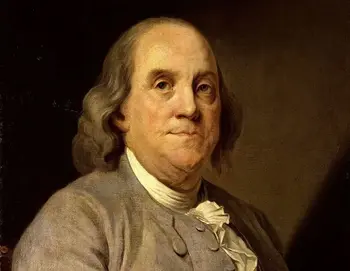
Benjamin Franklin
The confusion often begins with Benjamin Franklin. His famous kite experiment in 1752 did not create electricity, but it proved something essential: lightning and static electricity were the same phenomenon. That realization helped remove electricity from the realm of myth and superstition and place it firmly within the realm of science. Franklin showed that electrical forces followed natural rules and could be studied, measured, and eventually used.
Long before Franklin, people had already noticed strange electrical effects. As early as 600 BC, the Greek philosopher Thales of Miletus observed that amber rubbed with fur could attract light objects, an early example of static electricity. For centuries, these effects remained curiosities. There was no reliable way to produce electricity on demand, and no clear understanding of how it worked.
Early Contributors Who Advanced the Understanding of Electricity
Real progress began in the 17th century. William Gilbert separated magnetism from electrical attraction and introduced systematic experimentation. He coined the term electricity from the Greek word elektron (amber) and laid the groundwork for the scientific study of electrical forces.
Soon after, inventors such as Otto von Guericke built early machines capable of generating static electricity, and experimenters learned to store charge using devices such as the Leyden jar. For the first time, scientists could create, hold, and release electricity in a controlled way. This transformed electricity from a mysterious effect into a subject that could be tested and measured.
Even so, static electricity and stored charge were not enough to power practical devices or systems. What was missing was a steady, controllable current flow.
Alessandro Volta and the First Continuous Electric Current
That turning point came in 1800 with Alessandro Volta. By stacking layers of zinc and copper separated by salt-soaked material, Volta created the first battery capable of producing a continuous electric current. For the first time, electricity could be generated on demand, studied carefully, and applied consistently.
Alessandro Volta’s invention of the battery introduced the world to electrical energy as a usable, stored source of power.
This was a defining moment. Continuous current allowed scientists to move beyond sparks and shocks and toward circuits, measurements, and practical systems. From Volta’s work came fundamental electrical principles, such as Ohm’s Law, as well as instruments for measuring voltage, current, and resistance. Electricity had become a usable form of energy rather than a scientific novelty.
From batteries to generators, and from laboratory experiments to power grids, electricity evolved step by step. It was shaped by many figures, including Franklin, Volta, Faraday, Edison, Tesla, and others, each contributing a critical piece. Understanding who “invented” electricity really means understanding how these discoveries fit together to create the electrical world we depend on today.
Key Figures Who Made Electricity Practical and Widespread
The next major advance came from Michael Faraday, who discovered that electricity could be generated by moving a magnet through a coil of wire. This insight led directly to the development of the electric generator. Almost all the electricity we use today is still produced using this basic principle: mechanical energy is converted into electrical energy.
Michael Faraday
An English scientist, Michael Faraday, now known for Faraday's Law, was the first to realize that an electric current could be produced by passing a magnet through a copper wire. His discoveries with magnets and coils paved the way for the development of the electricity generator, a key component of modern power systems.
With generators available, the challenge shifted from producing electricity to delivering it. Thomas Alva Edison built some of the first practical systems for electric lighting and power distribution using direct current (DC). His Pearl Street Station in New York City showed that electricity could power homes and businesses, not just laboratory equipment.
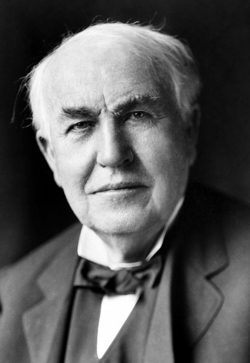
Thomas Alva Edison
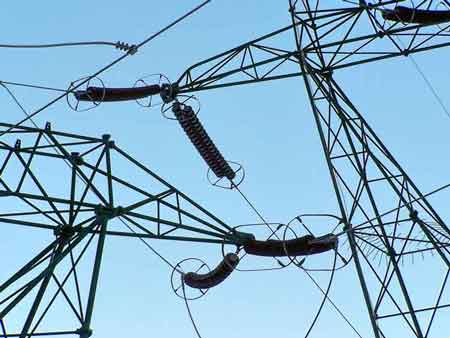
However, DC systems had a serious limitation: they could not transmit power efficiently over long distances. Nikola Tesla, working with George Westinghouse, developed alternating current (AC) systems that could. AC power could be stepped up to high voltages for transmission and then stepped down again for safe use.
The so-called War of Currents between Edison’s DC approach and Tesla’s AC system ultimately ended with AC becoming the foundation of the modern power grid.
Nikola Tesla
Croatian scientist Nikola Tesla, commonly known as the father of wireless electricity, came to the United States to work with Thomas Edison. The famous battle between Edison’s DC system and Tesla’s AC innovation is central to the evolution of electric power systems and continues to shape how electricity is transmitted today. The development of electrical components such as capacitors and resistors played a vital role in turning raw discoveries into usable technology.

The next challenge was developing an electrical system that would provide people with a practical energy source to power these new lights. Understanding an electrical circuit became essential as inventors like Edison and Tesla developed systems to power homes and cities. Edison wanted a way to make electricity both practical and inexpensive. He designed and built the first electric power plant capable of producing electricity and distributing it to people’s homes. The invention of devices such as the voltmeter and multimeter enabled precise measurement and control of electric current, pushing experimental science into practical engineering.
Reference Timeline: Electricity Discoveries and Inventions
| Year | Contributor | Breakthrough |
|---|---|---|
| 600 BC | Thales of Miletus | Observed static electricity by rubbing amber—earliest recorded observation. |
| 1600 | William Gilbert | Coined the term "electricity"; studied electric and magnetic properties. |
| 1660 | Otto von Guericke | Built the first electrostatic generator using a sulfur ball. |
| 1745 | Pieter van Musschenbroek | Invented the Leyden jar, an early capacitor that stored static charge. |
| 1752 | Benjamin Franklin | Proved lightning is electrical via kite experiment; advanced static theory. |
| 1786 | Luigi Galvani | Discovered bioelectricity through frog leg experiments. |
| 1800 | Alessandro Volta | Invented the voltaic pile—the first true battery generating continuous current. |
| 1820–1831 | Ørsted, Ampère, Faraday | Discovered electromagnetism; Faraday invented the first electric generator. |
| 1873 | James Clerk Maxwell | Developed equations describing the electromagnetic field. |
| 1879 | Thomas Edison | Invented a practical incandescent light bulb with a long-lasting filament. |
| 1887 | Nikola Tesla | Developed the AC (alternating current) power system and Tesla Coil. |
| 1895 | Guglielmo Marconi | Used electromagnetic waves to pioneer wireless telegraphy (radio). |
So, Who Invented Electricity?
The honest answer is that nobody invented electricity, but many people helped turn it into the essential resource it is today. Franklin helped explain it, Volta made it usable, Faraday showed how to generate it, and Tesla helped distribute it over long distances. Each contributed a critical piece of the puzzle.
For a deeper background, explore our guides on what electricity is and the broader history of electricity, including the key inventions, people, and technologies that shaped modern power systems.
Related Articles