Faraday's Law of Induction Explained
By Howard Williams, Associate Editor
Faraday’s Law of Induction explains how changing magnetic fields induce electromotive force (EMF) in conductors, forming the basis of electromagnetism that powers electric generators, transformers, and many modern electrical technologies.
How Faraday's Law of Induction Works
History
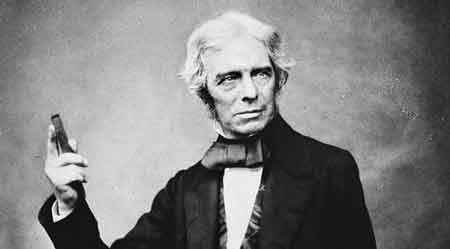
In 1831, Michael Faraday demonstrated through experiments that a changing magnetic field could induce an electric current in a nearby conductor. These experiments laid the foundation for electromagnetic induction, marking one of the most significant discoveries in physics and electrical engineering (Encyclopedia Britannica).
Theory and Mechanisms
Faraday’s Law is one of the four Maxwell’s equations, expressed mathematically as the Maxwell–Faraday equation, which describes how a time-varying magnetic field creates an electric field (Wikipedia).
There are two primary mechanisms for induction:
-
Motional EMF – When a conductor moves through a magnetic field, charges inside experience a Lorentz force that drives current.
-
Transformer EMF – Even without motion, a time-varying magnetic field produces a non-conservative electric field that induces current in a stationary loop (Wikipedia).
Both mechanisms demonstrate that induction is not about static conditions, but about changing magnetic flux.
A principle in Electromagnetism
Faraday's Law of Induction is a fundamental principle in electromagnetism. It describes how a changing magnetic field within a closed loop induces an electromotive force (EMF) in the conductor. This phenomenon, known as electromagnetic induction, forms the basis for numerous electrical devices and technologies, including transformers, electric motors, and generators. The principle of induced EMF is closely related to Lenz’s Law, which explains why the induced current always acts to oppose the change in magnetic flux.
At its core, Faraday's Law states that a changing magnetic field induces an electromotive force (EMF) within a loop of wire. This EMF, often referred to as voltage, drives an electric current when the circuit is closed. The magnitude of the induced EMF is proportional to the rate of change of the magnetic flux through the loop. A solid grasp of Ohm’s Law is essential to understand how the induced voltage translates into measurable current in a circuit.
Mathematical Expression
The general expression of Faraday’s Law is:
ε = − dΦ/dt
where Φ (magnetic flux) is defined as Φ = ∫ B·dA.
For N turns of wire:
ε = −N (ΔΦ / Δt)
-
ε is the induced electromotive force (voltage)
-
N is the number of turns in the coil
-
ΔΦ is the change in magnetic flux
-
Δt is the change in time
The negative sign comes from Lenz’s Law, indicating that the induced EMF always acts to oppose the change in flux (Lumen Learning).
Applications
Faraday’s Law is fundamental to countless technologies, both classical and modern:
-
Electric generators – Convert mechanical energy into electrical energy.
-
Transformers – Step up or step down voltages in power transmission.
-
Induction cooktops – Heat cookware directly through electromagnetic induction.
-
Magnetic swipe cards – Use induction for reading security and identification data.
-
Induction motors – Operate on the principle of electromagnetic induction for motion.
-
Inductive charging – Wireless energy transfer used in phones and electric vehicles.
-
Eddy-current braking – Magnetic damping systems in trains and amusement rides.
-
Inductors – Passive components in circuits that store energy in magnetic fields.
These examples demonstrate how Faraday’s discovery powers everyday life and modern electrical engineering
Frequently Asked Questions
Why is EMF regarded as voltage?
EMF is regarded as voltage because it represents the potential difference that drives the electric current through a circuit. Essentially, EMF is the voltage generated by a change in the magnetic environment of the circuit.
How is the EMF induced, and why?
EMF is induced when there is a change in the magnetic flux through a loop of wire. This change can occur by moving a bar magnet towards or away from the coil, altering the field strength, or changing the area of the coil exposed to the magnetic field. Faraday's Law quantifies this induction, stating that the induced EMF is proportional to the rate of change of the magnetic flux. The negative sign in the equation indicates that the induced EMF acts to oppose the change in flux, a principle known as Lenz's Law.
Why does an induced EMF induce a current in the coil?
An induced EMF induces a current in the coil due to Ohm's Law, which states that 𝑉=𝐼𝑅V=IR (voltage equals current times resistance). When an EMF is induced, it creates a potential difference that causes current to flow through the coil if the circuit is closed. Even in the absence of an initial current, the induced voltage (EMF) drives the current through the coil. At a fundamental level, Faraday’s Law complements concepts such as inductance, helping engineers design efficient coils, transformers, and motors.
Why is the magnetic field strength experienced by the coil increased?
The magnetic field strength experienced by the coil increases when a bar magnet approaches because the magnetic flux through the coil increases. As the bar magnet gets closer, the magnetic field lines become denser within the area of the coil, increasing the magnetic flux and inducing a stronger EMF.
Does Faraday's Law apply if no current is supplied to the solenoid?
Yes, Faraday's Law applies to situations where the current is induced by changing magnetic fields rather than being supplied by an external power source. The magnetic field in a solenoid can interact with an approaching bar magnet to induce EMF without any initial current in the solenoid.
What is true about Faraday's law of induction?
Faraday's Law of Induction is universally applicable in explaining how changing magnetic fields can induce an electromotive force (EMF) in conductors. It is fundamental to the working principles of many electrical devices and technologies.
What is the significance?
The significance of Faraday's Law of Induction lies in its ability to explain the generation of electric currents in response to changing magnetic fields. This principle is crucial for the operation of electric generators, transformers, and inductors, making it a foundational concept in both theoretical and applied electromagnetism. The practical applications of electromagnetic induction are evident in devices such as electricity generators, which convert mechanical energy into electrical power.