Ben Franklin Electricity

By R.W. Hurst, Editor


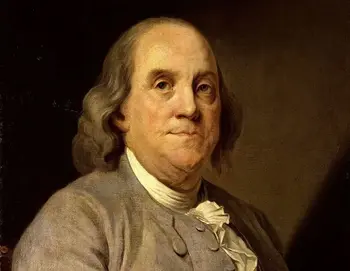
Ben Franklin’s electricity experiment in 1752 used a kite and key to prove that lightning is electrical in nature. His discovery helped lay the foundation for the study of electricity and influenced the development of lightning rods and electrical theory.


Quick Reference: Ben Franklin Electricity

Ben Franklin was a great American inventor and innovator. His electrical experiments formed the basis for other inventions that we still use today. Explore deeper insights into the debate around who invented electricity and who discovered electricity, where Franklin’s name often takes center stage.
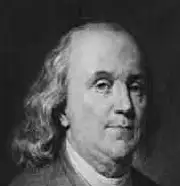
benfranklin


Benjamin Franklin began studying electricity after attending a lecture about it in Scotland in 1743. Five years later, he sent a letter on it to the Royal Society. In 1751, he published his book of experiments on electrical currents in England. To understand where Ben Franklin fits into the broader context, refer to a timeline of the history of electricity, which outlines key discoveries and milestones leading up to and following his famous experiment.

While visiting Boston in 1746, Franklin witnessed some electrical experiments performed by Mr. Spence. Shortly after his return to Philadelphia, the Library Company received a glass tube from Mr. Collinson, a member of the Royal Society from London, along with instructions for conducting experiments with it. With this tube, Ben Franklin initiated a series of electrical experiments that led to discoveries that seem to have had a more profound material impact on the world's industries than any other human intellect discovery. Our page on how Ben Franklin discovered electricity provides more detail on his innovative kite-and-key test and its lasting influence on electrical science.

His electricity experiments included an infamous event in the summer of 1752 when he made a kite with silk, which he sent up with a cord made of hemp. To avoid damaging the paper in the rain, he used silk instead of paper. At the top end was an iron point, and at the bottom part of the string was a key. Accompanied by his son, Ben Franklin raised the kite while staying under a shed to avoid getting wet. The long wait almost made him give up until he noticed loose fibres on the string. When his knuckle touched the key, he received a strong spark with an electrifying sensation. The key drew repeated sparks that charged the vial, and all the experiments made yielded electricity. Learn more about the evolution of power in our article on the history of electricity, which includes Franklin's work alongside other scientific pioneers.

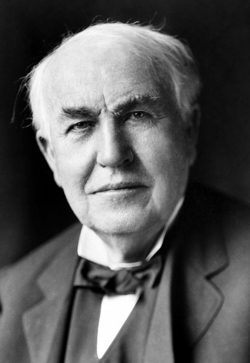
He was very smart. He was not afraid to experiment. When a thought popped in his head, like lightning is a source of electricity, he had the determination to prove it. The story is that he and three of his friends were trying to analyze static electricity and experiment with it. Two of his friends got electrocuted while they were working on this, so Franklin decided to do the kite experiment alone. Franklin’s early theories set the stage for future inventors like Thomas Edison and electricity, who later transformed those ideas into practical technologies.

Ben Franklin's experiments on electricity laid the foundation for many inventions, including electricity, batteries, the incandescent light bulb, electromagnetic fields, generators, transformers, and other related items. His experiments became the origin of the "plus" and "minus" nomenclature that are still in use today. The positive and the negative charges helped identify the atmospheric and frictional electricity.

Ben Franklin is rightly considered the principal founder of the scientific study of electrical phenomena. These Letters are the reports of his experiments, the theories he formed to explain the results of these experiments, and more speculative theories he extrapolated from his observations and analysis of his findings.

The single most important discovery noted in these letters is that of polarity, which means that he found all electrical potentials were not equivalent, but could be observed holding either of two opposite charges. To these he assigned the names we still use, positive and negative. Unfortunately, from our point of view, he assigned them in the opposite sense to our understanding -- "positive" meaning a deficit of free electrons -- which is why we now call the electron a negatively charged particle. The broader history of electricity reveals how Franklin’s contributions intersected with global discoveries across centuries.
Related News

Who Invented Electricity?

When people ask who invented electricity, they are usually asking which people made the most important breakthroughs that led to practical electrical power. Electricity itself was not invented in a single moment, but shaped by key figures whose discoveries made it usable. Learn more about the history of electricity and how it powers our modern world.   Who Really “Invented” Electricity? When people ask who invented electricity, they usually expect a name. But electricity does not have an inventor in the usual sense. It existed long before humans understood it, appearing naturally as lightning, static charge, and magnetic effects. What we…
View more

History of Electricity

History of electricity explains how early studies of static charge and lightning led to batteries, generators, power grids, and modern electrical systems that reshaped communication, industry, and daily life. The history of electricity is the story of how human curiosity slowly turned mystery into mastery. What began as wonder at lightning, static sparks, and magnetic attraction grew into careful experimentation, practical invention, and eventually the electrical systems that power modern life.   Fundamentals of the History of Electricity Early observations of electrical effects did not come from laboratories but from everyday experience. A crackle from rubbed amber, a sudden shock…
View more

Ben Franklin Electricity

Ben Franklin’s electricity experiment in 1752 used a kite and key to prove that lightning is electrical in nature. His discovery helped lay the foundation for the study of electricity and influenced the development of lightning rods and electrical theory.   Quick Reference: Ben Franklin Electricity Ben Franklin was a great American inventor and innovator. His electrical experiments formed the basis for other inventions that we still use today. Explore deeper insights into the debate around who invented electricity and who discovered electricity, where Franklin’s name often takes center stage.   Benjamin Franklin began studying electricity after attending a lecture…
View more

Did Ben Franklin Really Discover Electricity?

Ben Franklin discovered electricity, explaining how Franklin’s kite experiment, lightning research, Leyden jar studies, and grounding insights shaped early electrical science and influenced modern concepts of charge, conductors, and circuit safety.   Why Understanding Ben Franklin's Discovery of Electricity Is Important Ben Franklin’s place in the story of electricity is often reduced to a simple image, a kite rising into a storm. The reality is more interesting and far more important. His work unfolded within a long progression of studies on static charge, conductors, Leyden jars, and atmospheric electricity that were already underway in Europe. Franklin’s originality came from the…
View more

Thomas Edison Electricity

Thomas Edison electricity revolutionized the modern world. He developed the first practical electric light bulb. He built the first power grid, enabling the widespread distribution and use of electric power in homes and industries, laying the foundation for the electric age.   Understanding Thomas Edison Electricity: Principles and Applications Early Life and Telegraphy Roots Thomas Edison and Electricity are almost synonymous. He was one of the most prolific inventors in history, born in Milan, Ohio, on February 11, 1847. With little formal education, Thomas Edison gained experience as a telegraph operator. Then he went on to invent several electricity-inspired devices,…
View more

A Timeline Of History Of Electricity

A timeline of the history of electricity traces discoveries that turned static experiments into generators, grids, and modern power systems, showing how early science became the foundation of today’s global electrical infrastructure worldwide. Electricity developed through a series of discoveries and technological advances that unfolded over centuries. This page provides a chronological reference of key milestones showing when major developments occurred, from early observations of electrical effects to modern power systems and infrastructure.   Milestones in the History of Electricity The story of electricity is not one of a single invention, but a gradual sequence of discoveries and technological advances…
View more

Sign Up for Electricity Forum’s Newsletter

Stay informed with our FREE Newsletter — get the latest news, breakthrough technologies, and expert insights, delivered straight to your inbox.

Electricity Today T&D Magazine Subscribe for FREE

Stay informed with the latest T&D policies and technologies.
  • Timely insights from industry experts
  • Practical solutions T&D engineers
  • Free access to every issue

Download the 2026 Electrical Training Catalog

Explore 50+ live, expert-led electrical training courses –

  • Interactive
  • Flexible
  • CEU-cerified