What is Current Electricity?
By R.W. Hurst, Editor
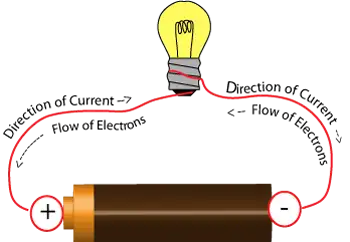
Current electricity is the continuous movement of electric charge through a closed circuit, driven by voltage and measured as current. It is the form of electricity that powers lighting, motors, electronics, and every operating electrical system, whether supplied as alternating current or direct current.
When current electricity is misunderstood, systems are misdesigned, protection devices are misapplied, and failures are misdiagnosed. Current is not merely “flow.” It determines heating, magnetic effects, mechanical force, and whether a circuit operates safely or destructively. Small errors in how current is interpreted can lead to nuisance tripping, equipment damage, or serious electrical hazards.
Understanding current electricity is therefore not an academic exercise. It directly affects how conductors are sized, how loads behave, how protective devices are selected, and how faults are analyzed. Engineers, technicians, and system designers rely on accurate current interpretation to decide whether a system is stable, overstressed, or unsafe.
What Is Current Electricity
Current electricity refers to the continuous flow of electric charge through a conductive path under the influence of an electric field. Unlike static electricity, which accumulates and discharges in brief events, current electricity flows steadily through circuits to deliver usable energy to equipment, devices, and power systems.
Electric current is defined as the rate at which electric charge passes a point in a circuit. In most conductors, this motion occurs when electrons drift through the material under an applied electrical potential difference. That electrical pressure is known as voltage, and it is the force that initiates and sustains current flow.
When a conductive path is connected to a voltage source, charge carriers begin moving and energy transfer begins. This movement powers everything from household appliances to industrial machinery. While current is often visualized as electron flow, the electrical behavior of a circuit depends on the interaction between positive and negative charges throughout the conductive structure.
The Quantitative Definition
Electric current is calculated using the formula:
I = Q ÷ t
In this relationship, current is measured in amperes, charge in coulombs, and time in seconds. One ampere is the rate of flow of one coulomb of charge per second through a point in a circuit. This definition allows engineers and technicians to measure and control the current a system carries precisely.
Types of Current: AC and DC
There are two primary types of current used in electrical systems today.
-
Direct current flows in one direction only and is typically supplied by batteries, solar cells, and electronic power supplies.
-
Alternating current changes direction periodically and is used for electrical distribution in homes and industries. In North America, most AC systems operate at 60 hertz, meaning the current reverses direction sixty times per second.
How Current Electricity Works
In conductive materials such as copper or aluminum, electrons are loosely bound to atoms and can move when a voltage is applied. A battery or generator creates an imbalance of charge between two points, causing electrons to move from areas of excess toward areas of deficiency.
As electrons drift through the conductor, energy is transferred to loads such as motors, lamps, and electronic components. While the electrons themselves move relatively slowly, the electrical energy travels through the circuit at nearly the speed of light.
Effects of Electric Current
The flow of electric current produces several important physical effects. It creates magnetic fields used in motors, generators, and transformers. It produces heat as current encounters resistance, a principle used in heaters and cooking appliances. It can also drive chemical reactions, such as those used in electrolysis and battery charging.
These effects explain why current electricity is fundamental to modern technology and industrial processes.
Ohm’s Law and Resistance
Ohm’s Law describes the relationship between current, voltage, and resistance:
V = I × R
This equation shows that the current depends on both the applied voltage and the circuit's resistance. Resistance limits electron flow and converts some electrical energy into heat. Understanding this relationship is critical for safe circuit design and component selection.
Measuring Current
Electric current is measured using instruments designed to work directly within or around a circuit. Ammeters are connected in series to measure current flow directly. Clamp meters sense the magnetic field around a conductor without breaking the circuit. Multimeters combine current, voltage, and resistance measurements in a single tool.
Real-World Applications
Current electricity is present in nearly every aspect of modern life. It powers lighting systems, appliances, computers, industrial machinery, electric vehicles, medical devices, and communication networks. It also appears in biological systems, such as nerve signals, and in scientific applications involving plasma and high-energy research.
Related Articles