What is the Electricity Demand In Canada?
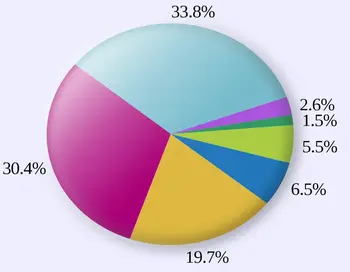

electricity demand Canada

Electricity demand Canada drives load forecasting, grid reliability, peak demand management, renewable integration, and capacity planning across provinces, informing energy consumption trends, transmission constraints, demand response programs, and ISO market operations.


Understanding How Electricity Demand in Canada Works

Electricity Demand in Canada will continue to put, in the longer term, upward pressure on prices for consumers in both regulated and restructured or deregulated markets. For context, market fundamentals and policy design both shape electricity prices across provinces today, influencing bills over time.

These dynamics play out within an integrated electric power system that balances reliability, affordability, and decarbonization goals.

These pricing impacts will be felt due to the cost of developing new generation and transmission facilities in order to replace ageing infrastructure and due to the increased use of renewable sources of generation (e.g., wind, solar, biomass). Continued strength of oil and gas prices are expected to keep electricity prices higher in regions that rely on natural gas and oil products as input fuels for power generation. Understanding the mix of hydro, wind, solar, nuclear, and gas requires a grasp of how electricity is generated across Canada’s grid components.

With the exception of Ontario (due to its large summer seasonal air conditioning requirement for electricity demand, Canada is a winter-peaking system and so the highest demand loads usually occur in the winter. However, for provinces that have competitive wholesale markets (e.g. Alberta and Ontario), near-term price pressures could result from the increase in summer cooling demand. Prices could also experience additional upward pressure from fuels used to generate electricity; namely, oil and natural gas. These pressures could be further supported by unusual weather events, unplanned generation outages and transmission system failures. If wholesale price pressures are to be passed on to consumers, the cost impact would likely not be felt immediately. Instead, such costs would need to go through a review process in all provinces and be approved by the energy regulatory board of that respective province. Tight reserve margins can constrain electricity supply during extreme temperature events, amplifying short-term price volatility.

Consumer prices or "rates" vary for several reasons:

In many jurisdictions, the total electricity cost combines generation, transmission, distribution, and rider charges that appear separately on bills.


  • variation in generation costs; prices in hydro-based provinces tend to be lower (e.g., British Columbia, Manitoba and Quebec);
  • customer class (e.g., residential, commercial, industrial);
  • residential rates tend to be higher than commercial and industrial rates;
  • amount of energy consumed in a given period (e.g., rates may vary based on customer consumption);
  • time-of-use pricing (e.g., some consumers have access to time of use meters that show lower charges for electricity during off peak periods);
  • and capability to switch to lower cost fuels (e.g. industrial customers)

Consumers in deregulated provinces can compare plans from an electricity supplier to align contract terms and risk with their usage profile.


Electricity demand Canada in peak periods typically occurs during the winter months, although, at times, Ontario and Quebec experience peak electricity demand in the summer months due to increased use of air conditioning units. Spring and fall tend to be shoulder seasons with lower demand. Seasonal patterns also influence maintenance schedules for electricity generation across provinces, which can tighten supply during cold snaps or heat waves.
 

Related Articles

Related News

Watt’s Law - Power Triangle

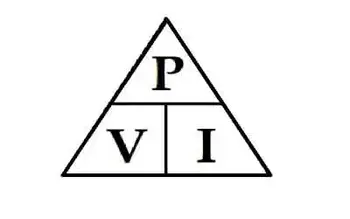
Watt’s Law defines the relationship between electrical power, voltage, and current: power equals voltage multiplied by current. In practical terms, it tells you how much electrical energy a circuit or device is using at any moment.   Watts Law Explained With Examples This relationship is foundational, but in practice, it matters most when equipment sizing, circuit loading, or heat buildup are involved. Electricians and technicians rarely struggle with the formula itself. Where mistakes usually occur is in understanding what the result actually means for a real system. Using this relationship, once voltage and current are known, power can be determined…
View more

Inductive Load Explained

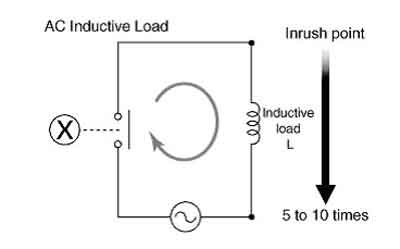
An inductive load is common in electrical systems and can significantly impact power quality. Understanding inductive and resistive loads, as well as their impact on the quality of your electricity, is essential for designing and operating an effective electrical system.   Inductive Load: Real-World Examples and Uses   Power Quality Analysis Training Power Factor Training Request a Free Power Quality Training Quotation In power systems, an inductive load affects the flow of electrical current through conductors, creating conditions that may necessitate careful monitoring. A hot wire and a neutral wire must be properly balanced to avoid hazards, while ground fault circuit…
View more

Electricity Windmill Explained

Electricity windmill converts wind energy into electrical power via rotor blades, generator, gearbox, and inverter, supporting renewable energy, grid integration, power electronics, and efficient electricity production with modern control systems and variable-speed drives.   Electricity Windmill Fundamentals Electricity windmill Mankind been harnessing the wind's energy for many years. From Holland to traditional farms around the world, old style windmills were used in the past for pumping water through primative irrigation systems or used to grind grain. Then, the wind turned large "sails" which were connected by a long vertical shaft that was attached to a grindnig machine or to a wheel that…
View more

Resistance Formula Explained

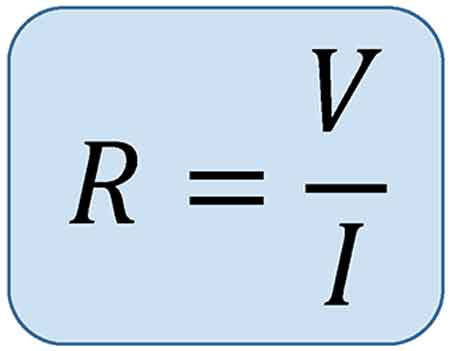
The resistance formula, R = V/I, shows how voltage and current determine opposition in a circuit. Central to Ohm’s Law, it is widely applied in electronics, power distribution, and engineering to calculate resistance, ensure efficiency, and design reliable electrical systems.   Quick Reference: Resistance Formula Electrical circuits are essential for powering our daily lives, and understanding the factors that influence their performance is key to optimizing their efficiency. A critical aspect of electrical circuits is the Resistance they encounter, which directly affects the flow of electrons. Based on Ohm's law, the formula helps us analyze and manipulate various elements within…
View more

Biot-Savart Law Explained

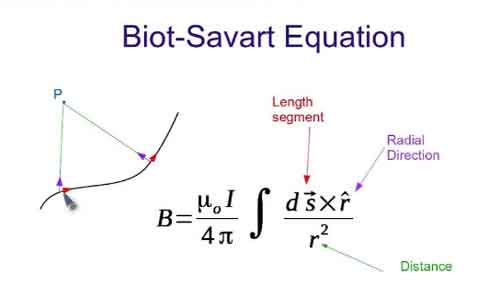
Biot-Savart Law describes how electric current produces a magnetic field, helping engineers calculate field strength, direction, and magnetic effects around conductors in electromagnetism.   Understanding Biot-Savart Law: Principles and Applications The Biot Savart Law sits at the core of classical electromagnetism because it explains how magnetic fields arise from moving electric charges. Named after Jean Baptiste Biot and Félix Savart, the law gave early scientists a practical way to link current flow to magnetic effects in space. It remains valuable today because even simple conductors generate fields that influence nearby circuits, sensors, and devices. The law provides a structured method…
View more

Electrical Resistance Definition Explained

Electrical resistance definition explains how materials oppose current flow in circuits, measured in ohms, linked to voltage, resistivity, conductor geometry, temperature, and impedance, governed by Ohm's law and SI units in electronics.   Quick Reference: Electrical Resistance Definition Electrical Resistance Definition: ER occurs in an electrical circuit when current-carrying charged particles collide with fixed particles that make up the structure of the conductors. Resistance is measured in ohm. Resistance is the ohm w. Resistance occurs in every part of a circuit, including wires and especially power transmission lines. For a concise overview, see this introduction to electrical resistance to reinforce key…
View more

Sign Up for Electricity Forum’s Newsletter

Stay informed with our FREE Newsletter — get the latest news, breakthrough technologies, and expert insights, delivered straight to your inbox.

Electricity Today T&D Magazine Subscribe for FREE

Stay informed with the latest T&D policies and technologies.
  • Timely insights from industry experts
  • Practical solutions T&D engineers
  • Free access to every issue

Download the 2026 Electrical Training Catalog

Explore 50+ live, expert-led electrical training courses –

  • Interactive
  • Flexible
  • CEU-cerified