Arc Flash PPE
By R.W. Hurst, Editor
NFPA 70E Training
Our customized live online or in‑person group training can be delivered to your staff at your location.
- Live Online
- 6 hours Instructor-led
- Group Training Available
Download Our OSHA 4475 Fact Sheet – Being Aware of Arc Flash Hazards
- Identify root causes of arc flash incidents and contributing conditions
- Apply prevention strategies including LOTO, PPE, and testing protocols
- Understand OSHA requirements for training and equipment maintenance
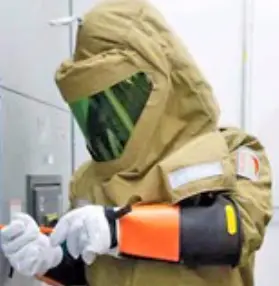
Arc flash PPE is personal protective equipment designed to protect electrical workers from extreme thermal energy, pressure, and molten metal released during an arc flash event. It exists for one reason: to keep workers alive when electrical energy escapes its intended path.
When an arc flash occurs, temperatures rise fast enough to vaporize metal, ignite clothing, and cause severe burns in a fraction of a second. PPE becomes the final barrier between the worker and that thermal release.
Arc flash PPE is selected based on the calculated incident energy at the working distance. That value determines how much heat the body may be exposed to and, in turn, what arc rating the clothing and protective gear must provide. If you are unfamiliar with how that exposure is measured, our guide to incident energy explains why even small differences in clearing time can dramatically change injury severity.
In North America, PPE requirements are defined by NFPA 70E in the United States and CSA Z462 in Canada. These standards require employers to perform an arc flash risk assessment, calculate incident energy, and select PPE with an arc rating equal to or greater than the expected exposure. PPE is not determined by voltage alone. It is chosen by data.
That data comes from an arc flash study. The study establishes incident energy values and defines the arc flash boundary where protective measures become mandatory. Without those numbers, PPE selection becomes guesswork, and guesswork has no place in electrical safety.
Why Arc Flash PPE Matters
Most arc flash injuries are not caused by flying debris alone. They are caused by thermal transfer. Clothing that melts, ignites, or collapses under heat can turn a survivable exposure into permanent injury. Properly rated arc-resistant fabrics are engineered to self-extinguish and insulate the body from that heat long enough to prevent second-degree burns.
Sign Up for Electricity Forum’s Arc Flash Newsletter
Stay informed with our FREE Arc Flash Newsletter — get the latest news, breakthrough technologies, and expert insights, delivered straight to your inbox.
Even brief exposure can be devastating. Many documented injuries occurred in events lasting less than a blink. Arc flash PPE is not about comfort or convenience. It is about buying the body enough time to survive.
What Arc Flash PPE Includes
Arc flash protection is not a single garment. It is a coordinated system. Depending on the task and calculated energy level, that system may include arc-rated shirts and pants, coveralls, flash suits, hoods, face shields, rubber insulating gloves, balaclavas, and hearing protection. Each component is selected to match the hazard, not the wearer’s preference.
Daily-wear garments are often used for lower-energy tasks, while higher incident energy levels require layered systems or full flash suits. The correct configuration always traces back to the incident energy calculation, not the job title.
Understanding PPE Ratings and Materials
Arc ratings are expressed in calories per square centimeter. A garment rated at 12 cal/cm² protects against far lower thermal exposure than one rated at 40 cal/cm². Higher ratings usually require heavier or layered materials, which is why material choice matters.
Nomex fabrics are commonly selected for their balance of weight and thermal resistance. Kevlar blends add durability for severe exposure environments. Treated FR cotton offers breathability for lower-energy tasks but provides a smaller protection margin. All compliant materials must meet ASTM performance standards and maintain flame resistance after repeated laundering.
No fabric makes a worker invincible. PPE exists to prevent catastrophic injury, not to justify unnecessary exposure.
The Role of Hazard Assessment
Arc flash PPE only works when it matches the hazard. A proper hazard assessment identifies equipment, calculates incident energy using IEEE 1584 methods, evaluates working distance, and documents the results.
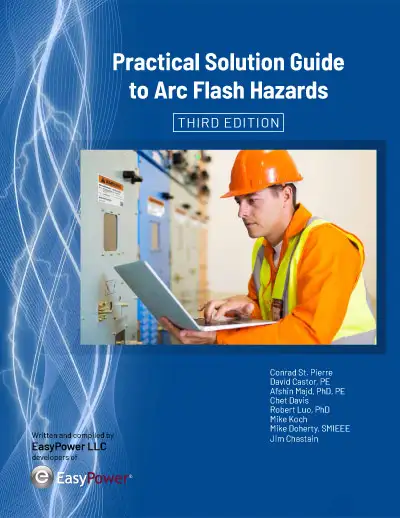
If you want to understand how those calculations are performed, see our guide to understanding arc flash calculations.
When assessments are skipped or outdated, PPE programs quietly drift out of alignment with real conditions. That is when serious injuries occur.
Understanding Arc Flash PPE Requirements
Electrical safety begins with understanding how PPE requirements are defined under NFPA 70E and CSA Z462. Clothing is selected either by calculated incident energy or by task-based protection categories when permitted by the standard. Exposure above 40 cal/cm² requires multilayer suits and a properly rated flash suit hood, because single-layer garments cannot provide sufficient thermal resistance.
For a detailed breakdown, see NFPA 70E PPE requirements
Materials: Nomex, Kevlar, and FR Cotton
Nomex offers a balance of weight and thermal resistance and is widely used for Category 2 panel work. Kevlar blends increase mechanical strength and are commonly used in 40-cal and higher garments for Category 4 hazards. FR cotton is typically limited to 8–12 cal/cm² applications and offers comfort but a smaller protection margin.
For hazard-specific gear, explore
arc flash PPE category or browse arc flash clothing.
Case Study: How Arc Flash PPE Saved Lives
During a 2024 outage, a technician servicing a 480-volt panel experienced an electrical explosion rated at 25 cal/cm². Equipped with NFPA 70E-compliant protection, including a 40-cal suit, face shield, and insulating gloves, no injury occurred.
High-hazard solutions are detailed in our 40 cal arc flash suit
Conducting an Arc Flash Hazard Assessment
A hazard assessment identifies equipment, calculates incident energy, evaluates working distance, and aligns PPE accordingly.
For visual references, review arc flash PPE requirements
Arc Flash PPE Categories and Required Gear
Category 1 includes garments rated 4 cal/cm².
Category 4 exceeds 40 cal/cm² and requires full multilayer suits.
Learn more at:
Arc Flash PPE Category
Arc Flash Category 1 PPE
Building a PPE Program That Works
An effective PPE program integrates hazard analysis, labeling, training, inspection, and replacement schedules. Workers must understand not only what to wear, but why they are wearing it. Supervisors must recognize when task conditions change and PPE must change with them.
FREE EF Electrical Training Catalog
Download our FREE Electrical Training Catalog and explore a full range of expert-led electrical training courses.
- Live online and in-person courses available
- Real-time instruction with Q&A from industry experts
- Flexible scheduling for your convenience
Daily-wear strategies reduce routine exposure, but task-based PPE remains essential for high-hazard operations.
Choosing the Right Flash Suit
Explore options:
Arc Flash PPE Performance and Material Standards
High-quality arc-rated fabrics must remain flame-resistant after repeated washing and use.
Review PPE performance
Additional Arc Flash PPE
Protection includes more than clothing.
Learn what a complete system includes in arc flash safety gear
Arc Flash PPE Compliance Checklist
Verify NFPA 70E labels
Inspect flame-resistant gear
Match the PPE category to the hazard
Frequently Asked Questions
What is arc flash protection?
Learn levels at arc-rated PPE categories
How does a face shield meet NFPA 70E?
Why test arc flash PPE?
Review PPE performance
Explore More Arc Flash Topics:
Explore our Arc Flash Training Programs or contact us to Request a Free Training Quotation for group safety sessions and PPE consultation.
