What is a Voltage Regulator?
By R.W. Hurst, Editor
What is a voltage regulator? A control circuit that stabilizes DC output from AC/DC power supplies using feedback, reference, and PWM; includes linear LDOs and switching buck/boost converters, improving line/load regulation, ripple suppression, efficiency.
What Is a Voltage Regulator?
What is a voltage regulator, and how does it work?
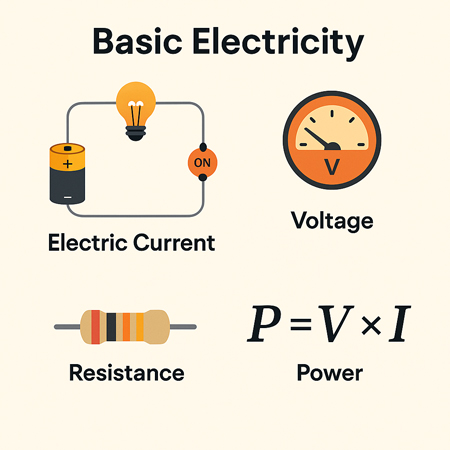
A voltage regulator is a component of the power supply unit that maintains a constant voltage supply through all operational conditions. Voltage regulators can regulate both AC and DC voltages, ensuring a steady, constant voltage supply. The output voltage is usually lower than the input voltage. The regulator compares the output voltage to a reference voltage and uses the difference to adjust the output voltage. An external voltage source or a circuit within the regulator typically sets the reference voltage. The regulator monitors the output voltage and adjusts it to maintain the reference voltage, which ensures a constant output voltage despite fluctuations in the input voltage or load conditions. For a succinct refresher on fundamentals, review what voltage is and how it is quantified in electrical systems.
Why is voltage regulation important in electronic circuits?
Voltage regulation is essential in electronic circuits because all electronic devices are designed to run at predetermined power ratings, including voltage and current. Therefore, the voltage supply should ideally be constant and steady for the device's proper functioning. Any variation in the voltage supply can lead to device malfunction or even failure. Voltage regulation ensures proper device operation and prevents damage due to voltage fluctuations. Design targets often align with a system's nominal voltage to ensure interoperability and safety margins.
What are the different types of voltage regulators?
They can be classified based on their physical design, active components used, and working principle. For example, linear and switching regulators are the most common classifications of active voltage regulators (that use amplifying components like transistors or op-amps).
Linear regulators use amplifying components like transistors or op-amps to regulate the output voltage. They are simple and reliable but less efficient as they waste excess power as heat. Linear regulators are suitable for low-power applications where efficiency is not a major concern. In many loads the effective behavior of a resistor network shapes the current draw and thermal budget.
Switching regulators, on the other hand, use inductors and capacitors to store and transfer energy, making them more efficient than linear regulators. They are commonly used in battery-powered devices as they consume less power. Switching regulators are more complex than linear regulators and require careful design and layout.
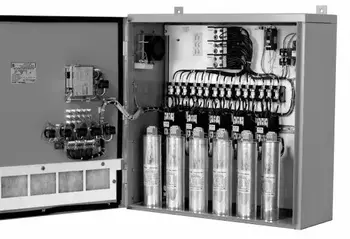
They can also be classified based on their physical design. Voltage regulators used in low-voltage electronic devices are usually integrated circuits. Power distribution centers providing AC power to residential and industrial consumers use more sophisticated and mechanically large voltage regulators that maintain a rated voltage regardless of consumption demands across the area. For context, consumer gadgets often operate within defined low-voltage categories that influence package choice and safety standards.
Can a voltage regulator be used for both AC and DC power sources?
Yes, they can be used for both AC and DC power sources. AC voltage regulators are used in power distribution centers to maintain a constant voltage supply to consumers. DC voltage regulators are used in electronic devices that run on DC power sources, such as batteries or DC power supplies. When selecting between sources, it helps to understand the difference between AC and DC and how each impacts regulation strategy.
What is the difference between a voltage regulator and a voltage stabilizer?
Linear voltage regulators and voltage stabilizers are similar in function as they both regulate the output voltage. However, the main difference between the two is in their working principle. They maintain a constant output voltage by adjusting the voltage as needed to maintain a reference voltage. On the other hand, voltage stabilizers maintain a constant output voltage by using a transformer and voltage regulator ics to stabilize the voltage output.
How do you choose the right one for a specific application?
When choosing one for a specific application, several factors should be considered, including the input voltage range, output voltage range, output current requirements, efficiency, and operating temperature range. During prototyping, verify rails with a calibrated voltmeter to confirm stability under representative loads.
The input voltage range refers to the maximum and minimum input voltages that the regulator can handle. The output voltage range is the range of output voltages that the regulator can provide. The output current requirement refers to the amount of current that the regulator needs to supply to the load. Efficiency is an essential factor as it determines how much power is wasted as heat. Higher efficiency regulators consume less power and generate less heat, which is especially important in battery-powered devices. The operating temperature range is also important as some higher output voltage regulators can operate only within a certain temperature range.
It is crucial to select the appropriate type of regulator for the application. For example, linear regulators are suitable for low-power applications where efficiency is not a major concern while switching regulators are more appropriate for high-power applications that require higher efficiency.
There are various types, including adjustable, boost step-up and buck-boost regulators, and constant output. Adjustable ones allow the user to adjust the output voltage as needed, making them versatile for different duty cycle applications. Boost step-up and buck-boost regulators can increase or decrease the output voltage from the input voltage, making them useful for applications where the input voltage is lower than the required output voltage. Constant output voltage regulators maintain a constant output voltage despite changes in input voltage or load conditions.

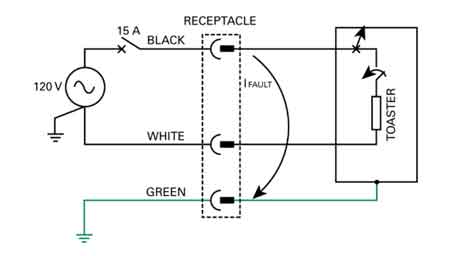


In electronic circuits, voltage fluctuations and ripple voltage can be problematic. Voltage fluctuations refer to rapid changes in the voltage level, while ripple voltage refers to the residual AC voltage that remains after rectification. Voltage regulators can help minimize voltage fluctuations and ripple voltage in electronic circuits, ensuring proper device operation. After rectification, understanding what a rectifier does helps explain the origin of ripple and filtering needs.