What is a Resistor?
By Harold WIlliams, Associate Editor
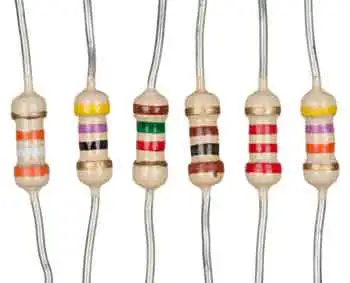
A resistor is an electronic component that limits or regulates the flow of electric current, manages voltage levels, and safeguards circuits in electrical and electronic devices, ensuring stable performance and preventing component damage.
Understanding the Resistor
A resistor is an electronic component designed to create electrical resistance in a circuit, playing a key role in controlling how electricity behaves. By limiting or regulating the flow of electric current, a resistor helps control voltage levels so that electrical and electronic devices operate properly, while also protecting sensitive components from damage caused by excessive current.
In electronic components and circuits, resistors play a crucial role. But what exactly is a resistor, and why are they so important? This comprehensive guide will explain the basics of resistors, explore their different types and applications, and answer common questions about their function and use.
Their primary function is to control and limit the flow of electrical current, ensuring the proper operation of electronic devices and, in addition, introducing resistance to help maintain stable voltage and current levels in circuits, protecting sensitive components from damage due to excess current.
Electrical Resistance
Understanding electrical resistance is essential to grasping how resistors control current flow and protect sensitive components in circuits. The value of a resistor is determined by its electrical resistance, which is measured in ohms (Ω). Resistance is directly related to Ohm's law, a fundamental principle in electronics that states that the current (I) flowing through a conductor between two points is directly proportional to the voltage (V) across those points and inversely proportional to the resistance (R). In simpler terms, the equation V = I represents Ohm's law of R. Resistors work alongside capacitors and other components to regulate voltage and ensure stable performance in electronic devices. The unit of electrical resistance, the ohm (Ω), defines how much a resistor opposes the flow of electric current.
Various types of resistors are available, each with its own set of applications and characteristics. Some common resistor types include fixed resistors, variable resistors, carbon-film resistors, metal-foil resistors, metal-oxide film resistors, and wire-wound resistors.
As the name suggests, fixed resistors have a fixed resistance value and are often used for general-purpose applications. Carbon film and metal film resistors are popular examples of fixed resistors, with the latter offering higher accuracy and stability. On the other hand, wire-wound resistors are constructed by wrapping a metal wire around a core, providing excellent heat dissipation and making them suitable for high-power applications.
Types of Resistors
Variable resistors, also known as potentiometers or rheostats, allow users to manually adjust resistance. These components are typically used for fine-tuning and controlling various aspects of electronic circuits, such as volume or light intensity. Different types of resistors offer unique properties for specific applications, from precision electronics to high-power systems.
Resistor colour codes identify the value, tolerance, and sometimes the temperature coefficient of fixed resistors. The colour code consists of a series of coloured bands, with each colour representing a specific number. To read the colour code, you need to learn the number assigned to each colour and understand the sequence of bands.
The primary difference between fixed and variable resistors is the ability to adjust the resistance value. Fixed resistors have a predetermined resistance that cannot be changed, while variable resistors can be adjusted to obtain the desired resistance within a certain range.
Power Dissipation
Power dissipation is the heat a resistor generates when electrical current flows through it. This heat can affect a resistor's performance and reliability and, in some cases, cause damage to the component or the circuit. To prevent such issues, resistors are designed with a power rating indicating the maximum power they can safely dissipate.
A resistor is integral to electronic circuits and can be found in virtually every electronic device. They come in various shapes, sizes, and materials to suit various applications. Because they control electrical current and maintain circuit stability, resistors play a vital role in the operation of electronic devices.
Summary: What is a resistor?
Resistors are essential electronic components that help regulate electrical current and voltage within circuits. Their various types and applications cater to different needs in the electronics world. Understanding resistors and their characteristics is crucial for anyone working with electronic circuits or building their own devices.
Related Articles