Dissolved Gas Analysis Advancements Explained
By Dr. Zachary H Draper & Dr. James J Dukarm
Substation Maintenance Training
Our customized live online or in‑person group training can be delivered to your staff at your location.
- Live Online
- 12 hours Instructor-led
- Group Training Available
Download Our OSHA FS3529 Fact Sheet – Lockout/Tagout Safety Procedures
- Learn how to disable machines and isolate energy sources safely
- Follow OSHA guidelines for developing energy control programs
- Protect workers with proper lockout devices and annual inspections
Dissolved gas analysis advancements improve transformer diagnostics through energy-based indices, disciplined sampling, and stronger trend validation. They reduce false alarms and clarify fault severity for utility transformer maintenance.
Dissolved gas analysis advancements improve transformer diagnostics through energy-based indices, disciplined sampling, and stronger trend validation. They reduce false alarms and clarify fault severity for utility transformer maintenance.
Modern transformer DGA work no longer begins with ratios or graphical tools. It begins with a quieter but more consequential question: Does the gas data itself show credible evidence of active insulation breakdown? Without that foundation, every subsequent interpretation method is only a decoration of uncertainty.
Experienced analysts learned this the hard way. Early practice encouraged direct entry into triangle, pentagon, or ratio frameworks even when gas behavior was dominated by sampling noise, sensor drift, or benign background generation. The result was not a diagnosis but pattern-seeking. Advancements in DGA have steadily shifted attention from method selection to evidence qualification. That shift is reinforced by newer guidance summarized in dissolved gas analysis methods, which treat interpretation frameworks as confirmation tools rather than starting points.
Why Dissolved Gas Analysis Advancements Matter
One of the most influential changes in recent years was the move away from summing gas volumes into single totals such as TDCG. Treating hydrogen, methane, acetylene, and carbon oxides as interchangeable quantities ignored the fact that each gas requires very different energy to form. Summing them was convenient, but chemically meaningless. Much of the industry’s correction of this problem emerged from improvements in sampling discipline and laboratory consistency, now outlined in advancements in DGA data quality.
Electricity Today T&D Magazine Subscribe for FREE

- Timely insights from industry experts
- Practical solutions T&D engineers
- Free access to every issue
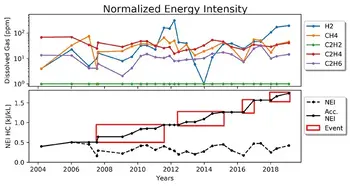
Energy-based indices corrected that flaw. By weighting each gas according to its heat of formation, analysts could follow the energy released by a fault rather than the raw quantity of by-products. This subtle change transformed trend interpretation. Gas no longer had to be alarming in volume to be alarming in meaning.
Normalized Energy Intensity was born from that logic. It allowed cumulative fault energy to be tracked over time without favoring any particular fault type. For the first time, trend shape became more important than isolated gas spikes.
When carbon gas behavior dominates those trends, interpretation is strengthened by reference to the DGA CO/CO2 ratio rather than relying solely on hydrocarbon patterns.
Electrical Transformer Maintenance Training
Substation Maintenance Training
Request a Free Training Quotation
Separating oil faults from paper faults
The later division of fault energy into hydrocarbon and carbon dioxide indices further refined the picture. Hydrocarbon energy reflects oil cracking. Carbon-oxide energy reflects cellulose degradation. The separation made it possible to observe which insulation system was actually under stress, rather than guessing from mixed gas patterns. Because carbon energy reflects paper breakdown, its interpretation is inseparable from the condition of the transformer insulation system.
This distinction matters in practice. Paper involvement changes the risk profile, the urgency, and the expected progression of damage. When carbon energy begins to dominate, interpretation shifts from thermal surface events toward structural insulation aging.
The chemistry supports the observation. Acetylene and carbon monoxide carry the highest formation energies within their respective groups. Their appearance carries physical meaning, not just statistical correlation.
In modern transformer operations, dissolved gas analysis DGA is valued less for raw gas concentrations and more for how dissolved gases reveal insulation degradation in real time. An oil sample may show rising ethane C2H6, carbon dioxide CO2, or subtle shifts linked to partial discharges, yet the real signal emerges when those patterns are interpreted against complex faults rather than isolated thresholds.
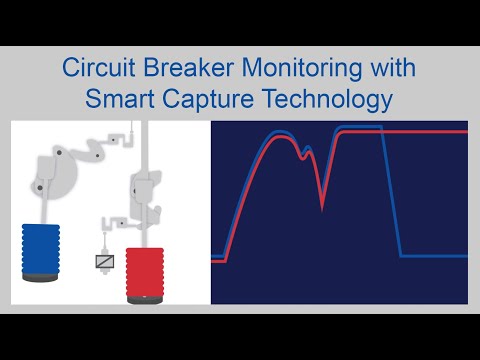
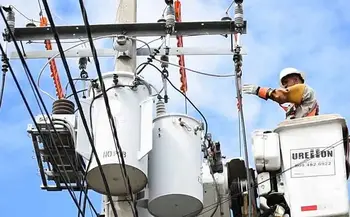
This allows engineers to distinguish a specific fault from background activity and treat DGA as an early warning system instead of a post-event explanation. By tracking how dissolved gases evolve, utilities can move DGA beyond condition reporting into predictive maintenance, where insulation degradation, thermal stress, and electrical activity are understood as a continuous process rather than disconnected incidents.
From episodic alarms to historical context
Energy indices also changed how time is used. Instead of reacting to single-sample excursions, analysts can now follow cumulative fault energy across years of service. Short-term disturbances caused by through faults, oil processing, or maintenance work can be separated from persistent internal activity.
This historical perspective is where modern DGA gains most of its credibility. Transformers do not fail in single events. They accumulate stress. Energy-based trending aligns with that reality.
Thermal influences on those trends are better understood when considered alongside transformer cooling performance, which often governs how quickly fault energy develops.
Advancements in interpretation methods did not eliminate the need for ratios, triangles, or gas-signal libraries. They reframed their role. Those tools now confirm conclusions that energy trending first suggests, rather than serving as the starting point.
Where modern DGA earns its reliability
The real advancement in dissolved gas analysis is not a new diagram or equation. It is the discipline to delay interpretation until the gas behavior itself earns trust. Energy indices, fault separation, and long-term accumulation provide that discipline.
When those elements are applied together, DGA becomes less about labeling faults and more about understanding how insulation actually responds to electrical, thermal, and mechanical stress within the transformer.
Test Your Knowledge About Utility Transformers!
Think you know Utility Transformers? Take our quick, interactive quiz and test your knowledge in minutes.
- Instantly see your results and score
- Identify strengths and areas for improvement
- Challenge yourself on real-world electrical topics
That shift explains why modern DGA programs experience fewer false alarms, more stable trending, and stronger confidence in maintenance decisions. The methods did not become more complex. They became more honest.
Related Articles