Oil in Transformers - An Insulating Medium
By Frank Baker, Technical Editor
Transformer Maintenance Training - Testing and Diagnostics
Our customized live online or in‑person group training can be delivered to your staff at your location.
- Live Online
- 12 hours Instructor-led
- Group Training Available
Download Our OSHA FS3529 Fact Sheet – Lockout/Tagout Safety Procedures
- Learn how to disable machines and isolate energy sources safely
- Follow OSHA guidelines for developing energy control programs
- Protect workers with proper lockout devices and annual inspections
Oil in transformers serves as a dielectric barrier and an active thermal transport medium, preventing arcing while transferring heat to radiators. Viscosity, moisture control, oxidation stability, and gas behavior ultimately govern reliability and service life.
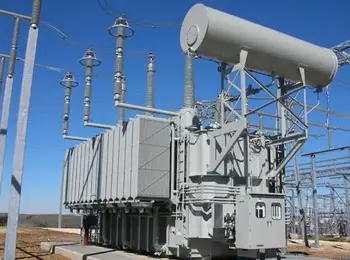
Inside every liquid-filled transformer, oil performs a task that is both constant and largely invisible. It moves heat, cushions electrical stress, and fills microscopic spaces that would otherwise invite failure. Operators rarely think about it when systems run smoothly, yet its condition shapes nearly every outcome a transformer will experience over time.
Oil does not merely sit inside a tank. It circulates, absorbs, reacts, ages, and adapts to the operating environment. The difference between a transformer that serves reliably for decades and one that fails prematurely often lies in how this fluid is managed. Its fundamental behavior is governed by the same principles described in dielectric fluid performance, even though service conditions introduce far greater complexity.
The Role of Oil in Transformers
Oil supports two essential functions at once. It electrically separates energized components and transports heat away from the core and windings. These roles cannot be separated in practice. When electrical stress rises, thermal stress follows. When thermal stress persists, chemical change begins.
Because of this interdependence, oil quality influences more than dielectric margins. It shapes mechanical aging, insulation flexibility, and even the interpretation of later diagnostic data. Once oil begins to deteriorate, no other system inside the transformer remains unaffected, particularly the solid insulation system described in transformer insulation.
Electrical Transformer Maintenance Training
Substation Maintenance Training
Request a Free Training Quotation
How heat actually moves through transformer oil
Heat removal is often described as a cooling function, but in reality, it is a circulation behavior. Warm oil rises, cooler oil descends, and the process repeats continuously. Any factor that alters viscosity, contamination level, or flow path changes how evenly temperature is distributed, which is why cooling performance must always be considered alongside transformer cooling design.
Test Your Knowledge About Utility Transformers!
Think you know Utility Transformers? Take our quick, interactive quiz and test your knowledge in minutes.
- Instantly see your results and score
- Identify strengths and areas for improvement
- Challenge yourself on real-world electrical topics
Uneven cooling does not announce itself immediately. Instead, it creates slow asymmetry. Certain windings age faster. Certain paper regions embrittle sooner. Over time, these small differences accumulate into structural vulnerability.
This is why oil condition influences insulation life long before dielectric tests appear abnormal.
Moisture and the silent erosion of margins
Water is the most damaging contaminant oil encounters. Even trace amounts reduce dielectric strength and accelerate paper aging. More importantly, moisture does not stay in one place. It migrates between oil and cellulose depending on temperature and loading cycles.
As a result, moisture management is never static. A transformer may pass moisture limits in one season and exceed them in another. Understanding this movement is central to interpreting oil behavior in service, not just in the laboratory, which is why moisture trends are a core element of transformer oil analysis.
Oxidation and time
Oxidation does not fail transformers quickly. It weakens them patiently. Acids form. Sludge accumulates. Heat transfer becomes less uniform. Dielectric margins narrow.
Well-formulated oil slows this process, but no oil stops it entirely. The goal is not perfection. The goal is predictability. When oxidation progresses slowly and evenly, maintenance planning remains stable. When it accelerates unexpectedly, failure risk becomes difficult to forecast.
Mineral, ester, and alternative oils in service
Mineral oil remains dominant in many networks because of its cost balance and historical familiarity. Ester fluids are increasingly selected when fire safety, biodegradability, or urban installation constraints are most important. Silicone oils continue to serve niche high-temperature applications.
In service, each behaves differently. Esters hold moisture differently. Silicone oils manage heat differently. Mineral oil ages differently. None is universally superior. Each simply shifts how operators manage long-term risk, which is why selection criteria differ from those discussed on oil for transformers.

Testing as observation, not compliance
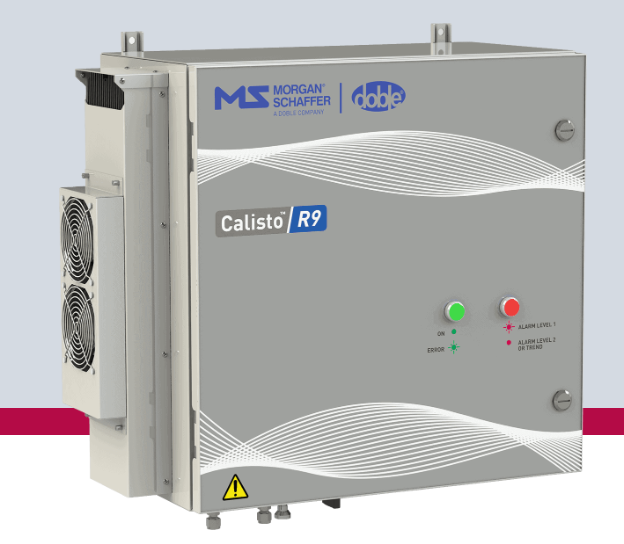
Oil testing is often presented as a checklist. In reality, it is an observation process. Dielectric strength shows cleanliness. Moisture reveals insulation interaction. Gas content reflects internal stress history. Acidity and interfacial tension describe the chemical trajectory.
None of these numbers stands alone. Their meaning emerges from trend behavior, not isolated results. Oil tells a story, but only when its history is read in sequence, particularly when combined with dissolved gas analysis interpretation.
Purification as life extension
Filtration, degassing, and dehydration do not restore oil to its original state, but they reset harmful trajectories. Removing moisture reduces paper stress. Removing gases stabilizes electrical margins. Removing particles improves breakdown behavior.
Well-timed purification often delays replacement decisions by many years. Poorly timed purification, however, only masks deeper structural deterioration. Experience matters more than procedure, which is why data discipline remains central in advancements in DGA data quality.
Environmental and safety realities
Fire performance, spill behavior, and disposal rules now influence oil selection almost as much as electrical properties. High fire point fluids reduce containment requirements. Biodegradable fluids reduce long-term environmental liability.
Oil selection today is no longer only an engineering choice. It is a business, safety, and regulatory decision layered on top of technical performance.
Oil as a transformer historian
Every electrical event, overload, cooling irregularity, and moisture cycle leaves a trace in oil. It records the transformer’s operating life in chemical form. This is why experienced engineers treat oil not simply as a consumable, but as a historian.
When oil is stable, insulation systems age calmly. When oil is unstable, interpretation becomes uncertain. And when oil is ignored, failure rarely arrives without warning, but it often arrives without clarity.
Sign Up for Electricity Forum’s Utility Transformers Newsletter
Stay informed with our FREE Utility Transformers Newsletter — get the latest news, breakthrough technologies, and expert insights, delivered straight to your inbox.
Oil in transformers is not merely an insulating fluid. It is the medium through which electrical, thermal, mechanical, and chemical processes remain in balance. Managing it well does not guarantee immortality, but it makes long service life far more predictable, particularly when reviewed as part of a broader power transformers health check.
Related Articles