Renewable Energy Tax Credits

Renewable Energy Tax Credits reduce project CAPEX via ITC/PTC incentives for solar, wind, battery storage, and EV charging, supporting grid modernization, power electronics, and IEEE-compliant interconnections while accelerating decarbonization and load flexibility.
Understanding How Renewable Energy Tax Credits Work
The Government of Canada wants Canadians to invest in a healthier environment, a more stable energy future and a more competitive economy, so it offers innovative Renewable Energy Tax Credits. For an overview of complementary programs, the resource at alternative energy incentives outlines how federal and provincial measures align with investment goals today.
In order to achieve these goals, two specific Renewable Energy Tax Credit measures are available to encourage investments in energy efficiency and renewable energy projects:
- Class 43.1 in Schedule II of the Income Tax Act allows taxpayers an accelerated Renewable Energy Tax Credit write-off of certain equipment that is designed to produce energy in a more efficient way or to produce energy from alternative renewable energy sources.
- Canadian Renewable and Conservation Expenses (CRCE) is a category of fully deductible expenditures associated with the start-up of renewable energy and energy conservation projects for which at least 50 per cent of the capital costs of the property would be described in Class 43.1.
Investors can also consult alternative energy tax credits to understand how project structures interact with other deductions and incentives available in Canada.
Investments in energy efficiency and renewable energy are helping to reduce Canada’s consumption of fossil fuels and minimize the production of greenhouse gases that contribute to climate change and other environmental problems. These investments also contribute to the development of new technologies1 and lead to export opportunities. It’s all part of the government’s ongoing efforts to promote sustainable development by integrating economic and environmental goals. Further context on market benefits is provided in clean renewable energy discussions that track growth trends and policy impacts across sectors worldwide.
Sustainable development will ensure the continued prosperity of Canadians while safeguarding our natural heritage for future generations. As deployment expands, insights into renewable power generation can help stakeholders benchmark performance and grid integration approaches in comparable jurisdictions.
Canadian Renewable Energy Tax Credits and Conservation Expenses
The early development phase of renewable energy and energy conservation projects typically involves certain intangible costs, such as feasibility and resource assessment studies. The CRCE category of expenditures was introduced in the 1996 Budget to allow investors Renewable Energy Tax Credits to fully write-off certain intangible costs associated with investments in renewable energy and energy conservation projects. CRCE is intended to promote the development of conservation and renewable energy projects in the same way that is currently done for investments in other types of resource activities.
Under CRCE, Renewable Energy Tax Credits allow eligible expenditures are 100 per cent deductible in the year they are incurred or can be carried forward indefinitely for deduction in later years. These expenditures can also be renounced to shareholders through a flow-through share agreement, providing the agreement was entered into before the expense was incurred. To be eligible, costs must be incurred after December 5, 1996. For the legislative basis of flow-through shares and CRCE expenditures, please refer to Sections 66 and 66.1 of the Income Tax Act and to Section 1219 of the Income Tax Regulations.
In parallel, understanding how markets value renewable energy credits can enhance financial models where environmental attributes are monetized alongside tax deductions.
Class 43.1 Accelerated Capital Cost Allowance
Class 43.1 provides an accelerated rate of write-off for certain capital expenditures on equipment that is designed to produce energy in a more efficient way or to produce energy from alternative renewable sources.
Class 43.1 allows taxpayers to deduct the cost of eligible equipment at up to 30 per cent per year, on a declining balance basis. Without this accelerated Renewable Energy Tax Credit write-off, many of these assets would be depreciated at annual rates of 4, or 20 percent (with the exception of expenses eligible for the pre-existing Class 34, which were deductible at an annual rate of up to 50 percent). In planning capital acquisitions, awareness of broader trends in alternative energy development can inform equipment selection and timing for making claims under this class.
What Types of Systems Qualify?
In general, the following types of systems qualify for CRCE Renewable Energy Tax Credit or Class 43.1 write-off:
Electricity Generation Systems
- certain cogeneration and specified-waste fuelled2 electrical generation systems
- small-scale hydro-electric installations (not exceeding 15 megawatts of average annual capacity)
- wind energy electrical generation systems
- enhanced combined cycle systems
- expansion engines
- photovoltaic electrical generation systems (three kilowatts capacity or larger)
Specified-waste fuels, both for electricity generation and heat production, are defined as municipal waste, wood waste, landfill gas or digester gas.
- geo-thermal electrical generation systems
- electrical generating systems using solution gas that would otherwise be flared during the production of crude oil
Thermal Energy Systems
- active solar systems (including groundsource heat pumps)
- heat recovery systems
- specified-waste fuelled heat production equipment
Note: Thermal energy systems qualify only if their primary purpose is to produce thermal energy for use directly in an industrial process.
Eligible Expenses
Intangible expenses eligible under CRCE Renewable Energy Tax Credits include:
- the cost of pre-feasibility and feasibility studies of suitable sites and potential markets for projects that will have equipment included in Class 43.1
- costs related to determining the extent, location and quality of energy resources
- negotiation and site approval costs
- certain site preparation costs that are not directly related to the installation of equipment
- service connection costs incurred to transmit power from the project to the electric utility
Test Wind Turbines

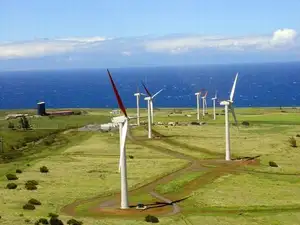
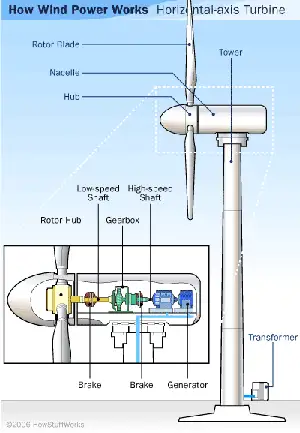
Costs related to the acquisition and installation of a test wind turbine – defined as “the first wind turbine installed at the site of a proposed wind farm, whose primary purpose is to test the energy production at the site” – are included in the CRCE category of expenses. In order to be eligible, a favourable prior opinion must be issued by the Minister of Natural Resources Canada for each installation.
Tax Incentives
The following types of costs are eligible for an accelerated rate under Class 43.1:
- machinery and equipment
- related soft costs for design, engineering and commissioning
- other services required to make the system operational
Many proponents also leverage alternative energy grants to complement accelerated allowances and reduce upfront cash requirements for project execution.
Depending on all the facts of a particular situation, the cost of modifications and improvements to existing qualifying equipment may also be eligible, provided that:
- the costs increase the capacity or performance of the equipment
- the resulting system continues to meet the conditions for qualification
The following are generally ineligible under Class 43.1:
- operating costs
- spare parts inventories
- foundations and structures, except those associated with qualifying small-scale hydro-electric, photovoltaic and wind energy conversion systems
- electrical distribution systems
- electrical transmission systems, except those associated with qualifying small-scale hydro-electric, photovoltaic and wind energy conversion systems
- used equipment, except if the equipment was included in Class 34 or 43.1 of the vendor, remains at the same site in Canada and is not more than five years old Generally, to be eligible for Class 43.1, an asset must be acquired after February 21, 1994, by a Canadian taxpayer for use in a business in Canada.
For more information on CRCE or Class 43.1, please order the guide entitled Class 43.1 Technical Guide and Technical Guide to Canadian Renewable and Conservation Expenses (CRCE) at a cost of $100 plus applicable taxes, available from the following address. A written prior opinion can be obtained by writing to:
Class 34/43.1 Secretariat
CANMET Energy Technology Centre
Natural Resources Canada
1 Haanel Drive, Bldg. 3
Nepean, ON K1A 1M1
Tel.: (613) 996-0890
Fax: (613) 995-7868