Renewable Power Sources
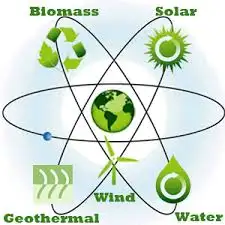
Renewable power sources deliver clean energy via solar PV, wind turbines, hydroelectric, geothermal, and biomass, enabling grid integration, power electronics, smart inverters, and energy storage for efficient, low-carbon electricity generation and resilient distribution.
The Complete Guide to Renewable Power Sources
Renewable Power Sources involve a wide range of modern technologies that do not rely on fossil fuels or non-renewable energy sources to generate electricity
For a broader overview of policies, technologies, and market adoption, the field of renewable power continues to evolve rapidly worldwide.
The following technology risks have been identified for various renewable power sources. The descriptions are based on the outputs from the Needs Assessment, and the results of the Technology, Market and Sustainability analyses.
Understanding these risks also requires situating each technology within the wider ecosystem of renewable energy sources that shape supply, demand, and policy trajectories.
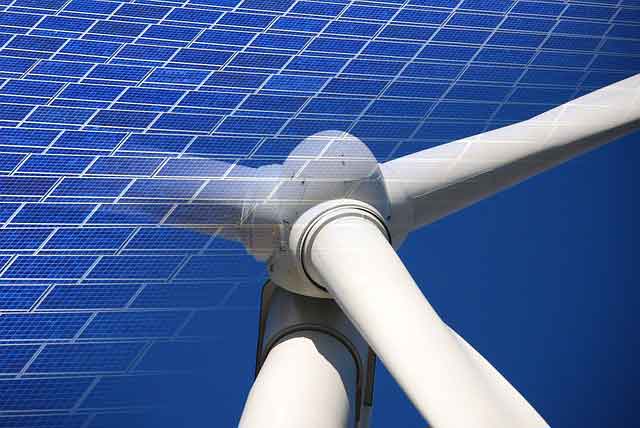
- Wind Power: Wind turbine power generation is a well-developed technology, especially in the medium/large-sized range. Small units of less than 100 kW to very large units of more than 2MW require further technological research and development. Wind turbine technology is generally finding its most effective application in large scale wind farms with turbines greater than 2MW and whcih are grid-connected.
Grid integration and ancillary services markets are central to scaling wind, as demonstrated by best practices in delivering reliable renewable electricity across diverse regions.
As wind technologies near full market commercialization,the financial and market risks become more important. Specifically,the price point for the produced power, as well as the regulatory acceptance (through appropriate codes and standards) is the key issue. Capital costs are high ($1200-$1500/kW) relative to conventional electricity generation,which are <$1000/kW. Those technologies which help address the cost-competitiveness will be of interest. Comparative analyses of learning curves and procurement models show how renewable power generation can achieve competitive levelized costs under supportive frameworks.
In general, wind power is considered a medium-to-low risk proposition, compared to the other technologies being considered. Given the substantial amount of Canada's energy needs that can be met by wind on our current electrical grid without a major technical challenge, SDTC's wind investment efforts are likely to be weighted towards large-scale technologies. This does not preclude investments in small-scale, non-grid-connected systems, but the net environmental and economic impact would need to be considered.
These considerations also inform deployment pathways alongside microgrids and storage in remote provinces, where flexible alternative energy power solutions can complement existing infrastructure.
- Solar PV Power: Solar panel development has become quite refined, so the current challenge is to improve the production techniques of the panels in order to reduce overall costs,and the environmental impacts of production. Investments in improved production technologies may still be considered a high risk proposition because few such technologies have so far been identified. In terms of the market, there is fairly wide acceptance of solar technologies, but application is fragmented (residential and remote users), and there is little acceptance and integration on a grid scale. Solar systems are harder to justify economically as major generation sources, so many are being used in individual residential and small commercial applications. Consequently,there are growing aesthetic issues (solar panels on roofs and lawns are facing the same issues that large satellite dishes once had).
Manufacturing innovation and policy incentives continue to shape alternative energy development for PV, influencing supply chains, permitting, and workforce training.
Solar power is not a stand-alone solution for large-scale electricity generation:it requires a form of energy storage or baseload generation. However, in certain niche applications, solar power is quite acceptable. Such solar power applications are likely to have the greatest environmental and economic benefits in the short term. Over the longer term, when time-of-day rates are implemented, peak-shaving applications will become more attractive. Canada should be seeding early applications that demonstrate the benefits of peak-shaving in various classes and installation locations.
On balance, the high financial and market risks result in an overall high risk rating for solar PV for the generation of grid-scale power.
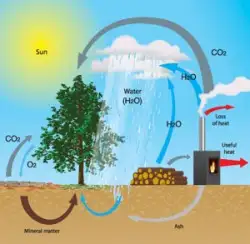
- Bio-electricity Power: Bio oil and Bio gas technologies are well into the development cycle,but there are only a few major players at this point.Financially,the technology has not yet been proven as a primary power generation source. However,the value proposition shows good potential if the co-products of the technology (heat and downstream bio products) are factored into the financial equation. While there is no evidence of an integrated market infrastructure at this point,the costs and complexities of creating such infrastructure are not considered to be as high as for other forms of renewable energy. This is largely because such systems could be considered as a means to improve efficiency in the agricultural and waste management areas (bio gas) and offer an attractive alternative for power generation in remote communities.
When aligned with waste valorization and district heating, integrated projects contribute meaningfully to renewable alternative energy outcomes that strengthen both resilience and community benefits.
- Stationary Fuel Cell Power (Hydrogen): Fuels cells still face very high developmental risk as a source of electricity generation (the world's largest installed pilot project of 250 MW is experiencing ongoing technical problems. Material costs are still very high (owing largely to the rare earth materials-mainly platinum-required to make them work), and the market infrastructure is still considered to be in its infancy. This results in an overall high risk rating for power stationary fuel cells that are going to be connected to the power grid. Less expensive hydrogen fuel supply and greater market availability are expected in the future.