Clean Renewable Energy Explained

Clean Renewable Energy

Clean renewable energy powers electrification with solar, wind, and hydro, leveraging power electronics, energy storage, smart grids, and grid integration to cut carbon, enhance reliability, and optimize load management for sustainable electrical engineering.


Understanding Clean Renewable Energy: Principles and Applications

Clean Renewable Energy
Widespread use of clean renewable energy technologies (RET) is vital in securing a sustainable global energy system. Advantages of RET include:

  • In contrast to conventional energy sources, the potential supply from renewables is essentially infinite and largely free of external costs.
  • While clean renewable energy technologies currently still have relatively high installation costs, operating costs are low.
  • In many countries, some RET are already competitive with conventional energy sources, for example biomass or biogas applications in Thailand. For most RET, costs will fall significantly below those of conventional energy sources within the next two decades.
  • Increased use of renewable energy technologies is an insurance against rising import prices of fossil fuels.
  • Renewable energy technology equipment can be produced domestically. For example, China has become one of the leading manufacturers of low-temperature solar thermal applications.

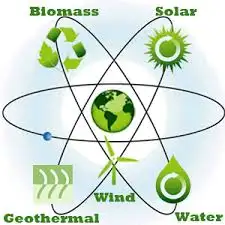
For readers comparing different technologies, this overview of renewable power sources outlines their characteristics and typical applications, aiding informed evaluation.

Given the mention of biomass competitiveness, this primer on biomass renewable energy explains feedstocks, conversion pathways, and typical project scales.

The number of countries where clean renewable energy technologies have seen significant market growth is steadily increasing. However,in most countries of the world, dissemination of new renewable energy technologies is still very limited. A range of barriers – financial, economic, institutional, political and technical – impede implementation. Key barriers include energy markets that are either monopolistic and skewed by subsidies, lack of energy awareness of renewable energy technologies potential and benefits, and a lack of technical and institutional capacity and financing means. So far only a few countries have implemented clean air energy policies promoting renewable energy technologies. To align stakeholders and policies, a concise primer on renewable energy fundamentals clarifies benefits, limitations, and common misconceptions.

Under the Kyoto Protocol, most public and private renewable energy project development companies can generate and market "certified emission reductions" from energy projects that involve renewable energy technologies that reduce carbon emissions in under developed areas of the world. The Kyoto Protocol provides financial incentives for shifting countries to less emissions-intensive economies. But while the Kyoto Protocol is able to lower some of the key barriers to renewable energy project development, especially in regard to the financial and economic aspects, it is not designed to cancel the obstacles. Adjusting these many conditions will attract more renewable energy technologies. These mechanisms can stimulate investment in renewable power projects across emerging markets, improving bankability and accelerating deployment.

Addressing the barriers that discriminate against renewable energy technologies in countries usually requires a mixture of well-designed and mutually supportive policies. Probably the leading issue is the economic performance of renewable energy technologies compared to the traditional energy sources that currently dominate the world's energy demand.There are two main approaches to addressing this central problem for developing renewable energy policies and technologies:

Effective policy design should reflect the maturity and grid-integration needs of different renewable energy sources so that incentives target real system constraints.

1. Bringing down the cost of renewable energy technologies and their related energy services 2. Abolishing market distortions that discriminate against the technologies Both approaches are reinforced by transparent market rules that value renewable electricity for its reliability contributions, flexibility, and environmental attributes.

Measures to address specific economic barriers include priority setting at project level by host countries, development of a suitable legal frameworks. This is not to say that Industrialised countries and the private sector cannot provide assistance such as building capacity and provding financing. But leading industrialized nations should provide international assistance to attract investment in renewable energy technologies. Clear definitions of what is renewable energy support coherent eligibility criteria and measurement frameworks in financing programs.
 

Related Articles

Related News

What is Distributed Generation? Explained

Distributed generation is the local production of electricity using solar, wind, CHP, fuel cells, and energy storage near the point of use, reducing transmission losses and improving grid resilience. Distributed generation describes a practical shift in how electricity is produced and delivered. Instead of relying solely on large, remote power plants, electricity is generated closer to where it is actually used. This approach reflects how modern energy systems are evolving in response to efficiency goals, reliability concerns, and the growing role of renewable energy.   Distributed Generation Overview  At its core, distributed generation (DG) focuses on smaller, localized sources of…
View more

Renewable Electricity Technology

Renewable electricity enables grid integration of solar, wind, and hydro via power electronics, inverters, and converters; optimized by SCADA, EMS, and storage for frequency regulation, reliability, decarbonization, and resilient microgrids across transmission.   How Renewable Electricity Works Renewable Electricity Renewable electricity (RE) policy is an important subset of industrial and energy policy, and thus needs to be aligned with the energy policy priorities of sustainability, competitiveness, and security. Our common and only long-term natural advantage in the energy sector stems from renewable electricity resources such as wind, biomass, and ocean energy. For a concise overview, see what is renewable energy for…
View more

Renewable Energy Systems

Renewable energy systems integrate solar PV, wind turbines, battery storage, inverters, and smart grid controls for efficient generation, power conversion, and grid integration, enabling resilient microgrids and low-carbon, distributed electricity.   Renewable Energy Systems: Real-World Examples and Uses Renewable energy systems today can be a cost effective alternative for areas with high electricity connection fees. For an overview of how stand-alone configurations work in remote areas, see this guide to off-grid solar power systems and typical cost considerations.It is also possible to connect renewable energy power systems to the grid, reducing the amount of electricity you need to purchase, or…
View more

Renewable Power Sources

Renewable power sources deliver clean energy via solar PV, wind turbines, hydroelectric, geothermal, and biomass, enabling grid integration, power electronics, smart inverters, and energy storage for efficient, low-carbon electricity generation and resilient distribution.   The Complete Guide to Renewable Power Sources Renewable Power Sources involve a wide range of modern technologies that do not rely on fossil fuels or non-renewable energy sources to generate electricityFor a broader overview of policies, technologies, and market adoption, the field of renewable power continues to evolve rapidly worldwide.The following technology risks have been identified for various renewable power sources. The descriptions are based on the…
View more

Wind Turbine Theft: An Emerging Threat to Renewable Energy Infrastructure

Wind Turbine Theft an Emerging Threat to Renewable Energy Infrastructure drives copper theft, SCADA breaches, and component vandalism, undermining grid reliability, power electronics, asset monitoring, and substation security via weak telemetry and inadequate intrusion detection.   Wind Turbine Theft: An Emerging Threat to Renewable Energy Infrastructure and Its Impact on Workplace Safety As the global energy landscape shifts towards sustainability, wind power has emerged as a cornerstone of renewable energy. However, a growing concern is threatening the integrity of this clean energy source: the theft of wind turbine components. This issue not only undermines the efficiency of wind farms but…
View more

Renewable Energy Credits

Renewable energy credits certify MWh-scale green generation, enabling GHG accounting, Scope 2 reductions, RPS compliance, and PPA hedging via registries like WREGIS, GATS, and M-RETS for grid decarbonization and utility procurement strategies.   Renewable Energy Credits Explained Renewable Energy Credits, otherwise known as Renewable Electricity Certificates, or Tradable Renewable Certificates (TRCs), are tradable, non-tangible energy commodities that represent proof that 1 megawatt-hour (MWh) of electricity was generated from an eligible renewable energy resource (renewable electricity). For context on how clean generation is delivered and tracked, see renewable electricity fundamentals and related attributes. Renewable Energy Credits can be sold and traded…
View more

Sign Up for Electricity Forum’s Newsletter

Stay informed with our FREE Newsletter — get the latest news, breakthrough technologies, and expert insights, delivered straight to your inbox.

Electricity Today T&D Magazine Subscribe for FREE

Stay informed with the latest T&D policies and technologies.
  • Timely insights from industry experts
  • Practical solutions T&D engineers
  • Free access to every issue

Live Online & In-person Group Training

Advantages To Instructor-Led Training – Instructor-Led Course, Customized Training, Multiple Locations, Economical, CEU Credits, Course Discounts.

Request For Quotation

Whether you would prefer Live Online or In-Person instruction, our electrical training courses can be tailored to meet your company's specific requirements and delivered to your employees in one location or at various locations.