OSHA Arc Flash Requirements: What You Need to Know
By William Conklin, Associate Editor
CSA Z462 Arc Flash Training – Electrical Safety Compliance Course
Our customized live online or in‑person group training can be delivered to your staff at your location.
- Live Online
- 6 hours Instructor-led
- Group Training Available
Download Our OSHA FS3529 Fact Sheet – Lockout/Tagout Safety Procedures
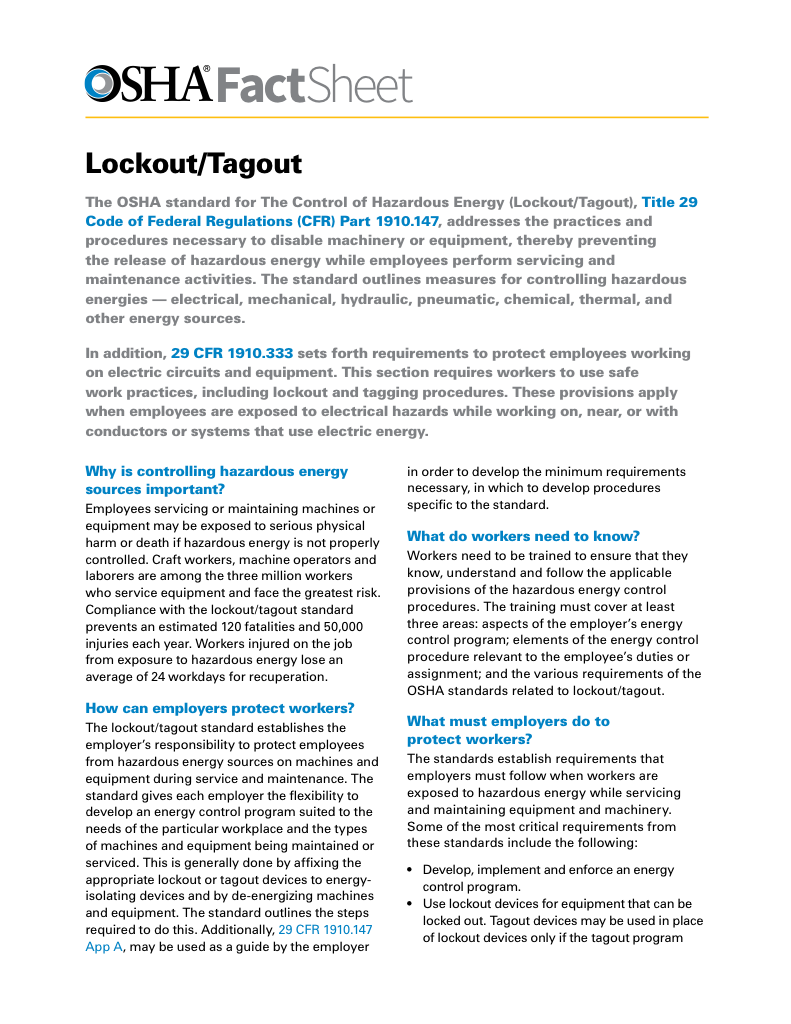
- Learn how to disable machines and isolate energy sources safely
- Follow OSHA guidelines for developing energy control programs
- Protect workers with proper lockout devices and annual inspections
OSHA arc flash requirements explain how employers must control electrical hazards through risk assessment, safe work practices, training, and recognized standards such as NFPA 70E to meet OSHA electrical safety enforcement expectations.
OSHA arc flash requirements focus on how employers are expected to recognize and control arc flash hazards under federal workplace safety law. Unlike technical standards, OSHA does not publish arc flash limits, PPE categories, or calculation methods. Its role is enforcement, not engineering.
The expectation is that employers identify known electrical hazards and apply reasonable, industry-recognized controls before workers are exposed. OSHA enforcement expectations are shaped by how electrical hazards are recognized and controlled in real workplaces, which is why understanding how arc flash hazards develop is critical for compliance decisions rather than relying on simplified definitions, as outlined in our overview of arc flash hazards.
Request a Free Training Quotation
From OSHA’s perspective, arc flash injuries are not rare anomalies. They are foreseeable events when energized work is carried out without adequate planning, hazard evaluation, or oversight. When questions arise about how arc flash hazards are enforced rather than calculated, employers should refer to OSHA electrical safety enforcement expectations as the broader legal framework that guides compliance decisions.
Why OSHA Arc Flash Requirements Matter
One of the most persistent misunderstandings about OSHA arc flash requirements is the assumption that OSHA operates like a technical code. It does not. OSHA enforces outcomes, not tables.
When inspectors evaluate arc flash exposure, they are not asking whether a particular PPE category was selected correctly. They are asking whether the employer understood the hazard, whether energized work was justified, and whether accepted protective practices were applied.
FREE EF Electrical Training Catalog
Download our FREE Electrical Training Catalog and explore a full range of expert-led electrical training courses.
- Live online and in-person courses available
- Real-time instruction with Q&A from industry experts
- Flexible scheduling for your convenience
In practice, this is where many programs begin to unravel. This distinction becomes especially clear in post-incident investigations, where a documented arc flash accident reveals gaps between written policies and how energized work was actually planned and supervised.
OSHA frequently relies on NFPA 70E as evidence of what the industry already recognizes as reasonable protection, but that does not make NFPA 70E arc flash requirements a legal necessity. It makes it a benchmark. Employers who ignore that distinction often discover it only after an incident or inspection.
Workplaces Where Energized Electrical Equipment is Located
In workplaces where energized electrical equipment is serviced or tested, electrical arc flash hazards remain one of the most serious threats to occupational safety and health, often developing in seconds when an electric arc forms across exposed conductors or failed components within electrical equipment. The intense heat and pressure released can cause severe burn injuries, even at distances workers may assume are safe, which is why protecting against arc flash hazards depends on more than awareness alone.
Effective control requires appropriate clothing and personal protective equipment PPE, task-specific work practices, and an understanding of how energized electrical equipment behaves under fault conditions. These expectations are reinforced through guidance and enforcement by the safety and health administration, which focuses on whether employers have taken reasonable steps to recognize the risk and provide meaningful protection rather than relying on assumptions or informal habits.
OSHA Standards and Enforcement Authority
OSHA’s authority over arc flash hazards flows through existing electrical safety rules rather than a single arc-flash-specific regulation. The most commonly cited provisions fall under 29 CFR 1910 Subpart S, which governs work on or near exposed energized parts, and the Lockout/Tagout standard, which addresses the control of hazardous energy during servicing and maintenance.

These rules require employers to establish safety-related work practices, ensure employees are qualified for the tasks they perform, and prevent unexpected energization. Arc flash occurs when energized work is performed without adequate control of the thermal and blast hazards associated with electrical faults. Failures in hazardous energy control are frequently traced to weak or inconsistently applied lockout procedures, which is why OSHA continues to emphasize strict compliance with its 29 CFR 1910.147 lockout/tagout requirements during electrical enforcement actions.
This is why lockout/tagout failures remain a recurring factor in serious arc flash incidents. When de-energization is treated as optional rather than foundational, the margin for error disappears quickly.
OSHA Compliance
OSHA compliance in the context of arc flash is less about documentation volume and more about consistency between policy and practice. Written programs that are never reflected in job planning or supervision provide little protection when enforcement begins.
In many workplaces, arc flash analysis exists as a static report created years earlier, while equipment, loads, and maintenance practices have quietly changed. From an enforcement standpoint, that gap matters. OSHA evaluates whether the employer acted reasonably given current conditions, not whether a study once existed. Outdated studies are a recurring problem, and many enforcement cases align closely with the same breakdowns identified in the 10 most common errors in arc flash analysis that quietly undermine otherwise well-intentioned safety programs.
Programs that hold up under scrutiny tend to share a few traits. Hazard assessments are revisited when systems change. Energized work is questioned rather than normalized. Supervisors understand the reasoning behind controls, not just the paperwork attached to them.
Electricity Today T&D Magazine Subscribe for FREE

- Timely insights from industry experts
- Practical solutions T&D engineers
- Free access to every issue
OSHA Arc Flash Compliance Checklist
OSHA does not publish a formal arc flash checklist, but enforcement actions consistently revolve around a familiar set of expectations. Inspectors look for evidence that hazards were identified, that workers were protected accordingly, and that decisions were made deliberately rather than by habit.
When citations occur, they often trace back to missing or outdated assessments, unclear labelling, inadequate training, or energized work that was never truly justified. The issue is rarely that employers lack a policy. It is that the policy was disconnected from the work itself.
Arc Flash Hazard Analysis
OSHA does not mandate how an arc flash hazard analysis must be performed, nor does it prescribe calculation methods or intervals. What it requires is that employers understand the magnitude of the hazard their workers face.
Incident energy, arc flash boundaries, and exposure duration all factor into whether protective measures are adequate. When an analysis exists only as a compliance artifact and is not reflected in labels, permits, or work planning, it loses its protective value. From an enforcement perspective, OSHA focuses on whether the arc-flash analysis was used to inform decisions rather than on the mathematical underpinnings of the analysis.
Safety Training
Training under OSHA arc flash requirements is not about general awareness. It is about competence. Workers who perform tasks near energized equipment must understand the specific hazards involved, the limits of their approach, and the controls in place to protect them.
Generic training that is disconnected from actual equipment and work conditions is a common weak point. OSHA inspectors routinely evaluate whether training aligns with recognized industry practices, which is why many employers structure their programs around NFPA 70E training as evidence of feasible and accepted electrical safety controls.
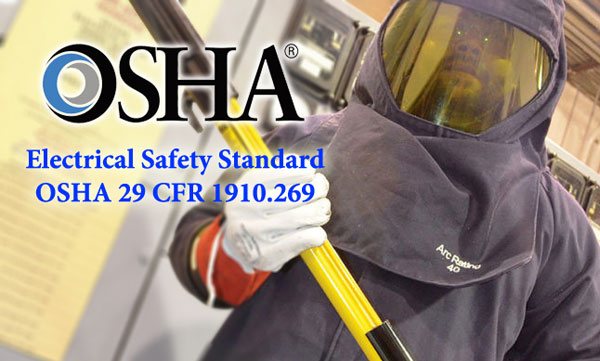
When incidents occur, OSHA examines whether training prepared workers for the tasks they were actually performing, not whether a course was completed.
Frequently Asked Questions
How often does OSHA require an arc flash study?
OSHA does not specify a fixed interval for arc flash studies. Instead, it expects employers to reassess hazards when system conditions, equipment, or work practices change in ways that could affect risk. The obligation is ongoing, not calendar-driven.
What is the OSHA regulation for arc flash?
OSHA does not have a single regulation titled “arc flash.” Enforcement typically relies on 29 CFR 1910 Subpart S, the General Duty Clause, and related electrical safety provisions. Consensus standards, such as NFPA 70E, are often used to define recognized and feasible protection.
Related Articles
