Renewable Power Explained

Renewable Power

Renewable power drives grid decarbonization via solar PV, wind turbines, hydropower, energy storage, power electronics, and smart grid integration, optimizing reliability, efficiency, and demand response in modern electric power systems.


The Science Behind Renewable Power

Renewable power technology is developing rapidly around the world aided by range of economic support mechanisms. This paper reviews the various mechanisms, and explores the relative merits of technology push and market pull approaches. It compares the approaches adopted in the UK with those used elsewhere. For readers new to the topic, a clear overview of what is renewable energy helps frame the policy context being discussed here.


THE RENEWABLE CHALLENGE
Renewable power technologies are new entrants into the world's electricity generation systems. However, they face an uphill struggle against the well established dominant electricity generation power technologies coal and gas, plus nuclear. Given increasing concerns about climate change, governments around the world have tried to simulate the expansion of renewable power generation via a range of subsidies and other financial support systems. As policymakers weigh options, comparative lists of renewable energy sources illustrate how technology maturity and costs vary across the sector.

Underlying the approaches to the development of renewable power technologies that have been adopted around the world is a basic distinction between supply side "technology push" approaches and demand side "market pull" approaches. It was perhaps inevitable that technology push dominated initially, in the mid 1970s, as new technologies needed research and development (R&D) effort, with much of the funding coming from government in the form of grants to research teams. However, by the early 1980s, the emphasis shifted in most countries to a market pull approach. Evidence from markets that track renewable power sources shows how pull mechanisms can accelerate deployment once early R&D has de-risked the technologies.


MARKETS OR SUBSIDIES?
Renewable power technologies need subsidies to get established, but at some point they should be able to compete with traditional methods of generating electricity, without subsidy. Wind power has nearly reached that point, and some waste or biofuel combustion options have already passed it. So, for these attractive renewable power technologies, the energy market has achieved its primary goal, even though it has maybe not led to much overall installed capacity. In practice, sustained cost declines have followed broader adoption of clean renewable energy solutions in competitive procurement schemes.

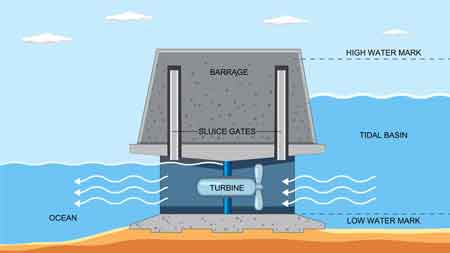
However, there are new renewable power options which need continued support, such as wave and tidal power. With the large scale wave and tidal programs abandoned, and in the new liberalized electricity market, the emphasis being on smaller scale plants, the focus amongst the surviving research teams had been on smaller scale inshore and onshore wave system and on the more recent idea of extracting renewable power from tidal flows.>/p>

For emerging marine concepts, insights into alternative energy power provide useful parallels for scaling prototypes to commercial arrays.

Projects like this, which were at best at the demonstration stage and more usually at the R&D stage, are not suited to support under the NFFO or the RO, which are meant for 'near market' technologies. By contrast the REFIT approach has provided support for technologies such as photovoltaic solar which are still very expensive on the assumption that costs will come down later as the market for the technology was expanded by subsidised lift off. So far, as we have seen, the UK approach does not seem to have done enough to help much near market technology take off. It is even less suited to less developed technologies. This may be one reason why, despite having a very large renewable power potential, so much of the world lags behind North America in terms both of developing capacity now, and in terms of meeting targets for the future. International case studies of alternative energy solutions underline the importance of stable, long-term policy design for investor confidence.

The challenge facing the United States is particularly striking. Whereas Germany already gets 14 per cent of its electricity from renewable power sources, the United States gets only about 1 per cent of its electricity from wind, solar, and geothermal combined. But more than half the states have set ambitious goals for increasing the use of renewable power, and president-elect Barack Obama wants 10 per cent of the nation's electricity to come from renewable power sources by the end of his first term, rising to 25 per cent by 2025. Yet unlike Germany, which has begun planning for new transmission lines and passing new laws meant to accelerate their construction, the United States has no national effort under way to modernize its system. A failure to improve the nation's grid will be a significant burden for the development of new renewable power technologies. Grid modernization discussions often reference foundational definitions and metrics outlined in learn the facts guides that connect resource potential with transmission needs.

 

Related Articles

Related News

What Is Renewable Energy?

What is renewable energy? Electricity from solar, wind, hydro, and geothermal converted via generators and power electronics, integrated with grid infrastructure, energy storage, and smart controls to deliver sustainable, low-carbon power with reliability and efficiency.   What Is Renewable Energy? What Is Renewable Energy? Renewable Energy is popularly considered as any source of sustainable energy that has as its source the renewable, natural environment. Most souces of renewable energy include wind energy, solar energy, water energy and biomass energy, as well as geothermal energy. In most cases, renewable energies are replenished by the natural environment. Non renewable energy resources, such as…
View more

Renewable Energy Credits

Renewable energy credits certify MWh-scale green generation, enabling GHG accounting, Scope 2 reductions, RPS compliance, and PPA hedging via registries like WREGIS, GATS, and M-RETS for grid decarbonization and utility procurement strategies.   Renewable Energy Credits Explained Renewable Energy Credits, otherwise known as Renewable Electricity Certificates, or Tradable Renewable Certificates (TRCs), are tradable, non-tangible energy commodities that represent proof that 1 megawatt-hour (MWh) of electricity was generated from an eligible renewable energy resource (renewable electricity). For context on how clean generation is delivered and tracked, see renewable electricity fundamentals and related attributes. Renewable Energy Credits can be sold and traded…
View more

Renewable Energy Sources Explained

Renewable energy sources power modern grids via solar photovoltaics, wind turbines, and hydropower, using power electronics, inverters, smart grid controls, and energy storage to enhance reliability, grid integration, load balancing, and efficient transmission.   Key Concepts of Renewable Energy Sources Renewable Energy Sources are any renewable energy source that can be turned into the generation of electricity. Most renewable energy systems depend on natural souces of energy such as solar energy, wave energy, water energy, wind energy, etc that takes advantage of these energy souces to facilitate the conversion of those energies through the mechanical action of a generator to manufacture…
View more

What is Tidal Energy? Explained

Tidal energy is a renewable power source that harnesses ocean tides through the use of turbines and barrages. Utilizing predictable tidal cycles, it supports clean electricity generation, reduces dependence on fossil fuels, and strengthens sustainable energy systems.   What is tidal energy? It is a renewable power harnessed from the rise and fall of the ocean's tides. The ocean's vast power is one of the most promising resources, capable of generating electricity to meet the needs of communities worldwide. With the growing demand for clean, sustainable sources, tide-generated power has been thrust into the spotlight as an effective and environmentally…
View more

Biomass Renewable Energy

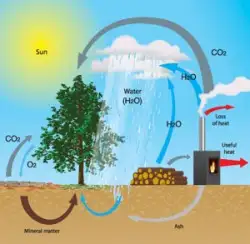
Biomass renewable energy converts organic feedstocks into electricity via gasification, biogas, and CHP systems, integrating with microgrids, power electronics, inverters, and grid-tied generators for reliable, low-carbon baseload and frequency support.   Applications of Biomass Renewable Energy in Modern Power Systems Biomass Renewable Energy is an important source of energy for majority of the world’s population. The use of biomass renewable energy is expected to increase in the near future, with growth in population. In many under developed nations (most especially areas such as parts of Africa, conventional biomass renewable energy dominates national energy strategies, leading to negative impacts on human health…
View more

Renewable Energy Systems

Renewable energy systems integrate solar PV, wind turbines, battery storage, inverters, and smart grid controls for efficient generation, power conversion, and grid integration, enabling resilient microgrids and low-carbon, distributed electricity.   Renewable Energy Systems: Real-World Examples and Uses Renewable energy systems today can be a cost effective alternative for areas with high electricity connection fees. For an overview of how stand-alone configurations work in remote areas, see this guide to off-grid solar power systems and typical cost considerations.It is also possible to connect renewable energy power systems to the grid, reducing the amount of electricity you need to purchase, or…
View more

Sign Up for Electricity Forum’s Newsletter

Stay informed with our FREE Newsletter — get the latest news, breakthrough technologies, and expert insights, delivered straight to your inbox.

Electricity Today T&D Magazine Subscribe for FREE

Stay informed with the latest T&D policies and technologies.
  • Timely insights from industry experts
  • Practical solutions T&D engineers
  • Free access to every issue

Live Online & In-person Group Training

Advantages To Instructor-Led Training – Instructor-Led Course, Customized Training, Multiple Locations, Economical, CEU Credits, Course Discounts.

Request For Quotation

Whether you would prefer Live Online or In-Person instruction, our electrical training courses can be tailored to meet your company's specific requirements and delivered to your employees in one location or at various locations.