Arc Flash Levels of Protection
By R.W. Hurst, The Electricity Forum
CSA Z462 Arc Flash Training – Electrical Safety Compliance Course
Our customized live online or in‑person group training can be delivered to your staff at your location.
- Live Online
- 6 hours Instructor-led
- Group Training Available
Download Our OSHA 4474 Fact Sheet – Establishing Boundaries Around Arc Flash Hazards
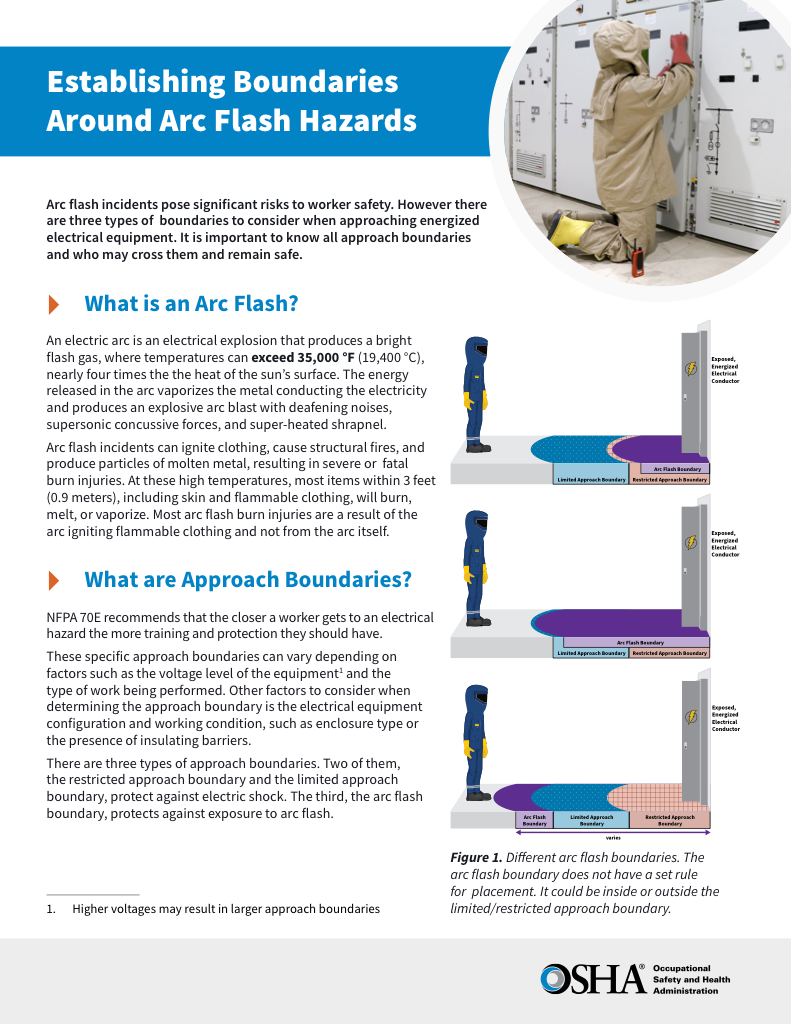
- Understand the difference between arc flash and electric shock boundaries
- Learn who may cross each boundary and under what conditions
- Apply voltage-based rules for safer approach distances
Arc Flash Levels of Protection define PPE categories per NFPA 70E, based on incident energy analysis and approach boundaries. They guide the selection of arc-rated clothing, shock protection, and safe work practices for electrical systems.
How Arc Flash Levels of Protection Improve Electrical Safety
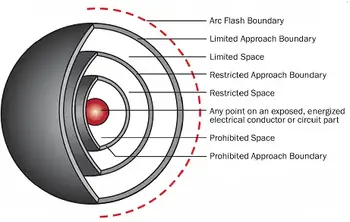
Arc Flash Levels of Protection are best understood as layers or boundaries of protection around and away from hazardous electrical equipment.
Understanding how an arc-flash hazard influences boundary selection and PPE selection clarifies why layered protection is necessary in the first place.
Arc flash boundary
The arc flash boundary, or restricted approach boundary, changes depending on the potential arc flash hazard. The arc flash boundary is calculated to 1.2 calories/cm2 of incident energy. That’s the distance where a worker without appropriate PPE would receive second-degree burns. For deeper context, see how NFPA 70E arc flash guidance informs boundary calculations in practice.
Sometimes this boundary is the furthest one from the exposed equipment; other times, the limited approach boundary is the furthest out. When the arc-flash boundary is the farthest away, it becomes the line no one should cross without training and PPE. If the limited approach boundary is further out, it should be treated as the line no one should cross without training and PPE. This distinction is central to arc-flash protection strategies, which define who may cross and under what conditions.
Limited approach boundary
As you move toward the energized and exposed equipment, you’ll find the limited approach boundary. Within this boundary, it is still possible to be exposed to a shock hazard. Qualified workers should wear appropriate PPE in the limited space (space between the limited approach boundary and the restricted boundary). Non-qualified workers should stay outside of this boundary unless wearing proper PPE and being escorted by a worker with specialized training.
Electricity Today T&D Magazine Subscribe for FREE

- Timely insights from industry experts
- Practical solutions T&D engineers
- Free access to every issue
Aligning task categories with arc flash PPE requirements helps ensure non-qualified personnel remain protected when proximity is unavoidable.
Restricted boundary
The area closest to the live, exposed equipment is within the restricted boundary. To cross this boundary, you must be a qualified worker with the proper training and PPE. If you need to perform work on the energized equipment, you may also need a work permit and documentation. Selecting appropriate arc flash safety equipment supports permitting decisions and safe work execution.
Arc Flash Protection first became a major area of investigation in the 1980s when, in the IEEE published Transactions on "Industry Applications," an article authored by Ralph Lee entitled: “The Other Electrical Hazard: Electric Arc Blast Burns” appeared. This early investigation led several companies, particularly those in the petrochemical industry, to realize that too many electrical workers were injured in electrical safety accidents. Consequently, several leading companies created the first known set of work practices designed to specifically protect electrical workers performing electrical maintenance and service on energized electrical equipment.
As guidance matured, enforcement of OSHA arc-flash requirements accelerated the adoption of consistent procedures across sectors.
Visit Our CSA Z462 Arc Flash Training Page
Visit Our NFPA 70E Arc Flash Training Page
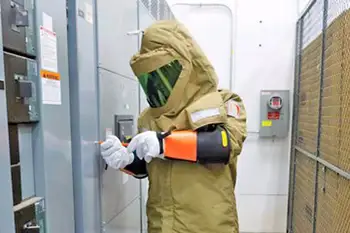
In terms of personal protective equipment (PPE), here are the most valuable minimum arc rating levels of protection
- face shield
- required ar
- leather footwear
- hearing protection
- arc flash suit hood
- layer of arc-rated PPE
- rubber insulating gloves
While petrochemical facilities were perhaps the first to recognize the need for electrical arc-flash protection, it quickly became clear that arc-flash hazards apply to all electrical facilities. Although the level of incident energy released in an electrical arc flash explosion may be larger in the higher voltage ranges found in petrochemical and other industrial facilities, it means that the large volume of medium and especially low voltage electrical equipment in industrial, commercial and institutional facilities would cause the largest number of electrical safety accidents.
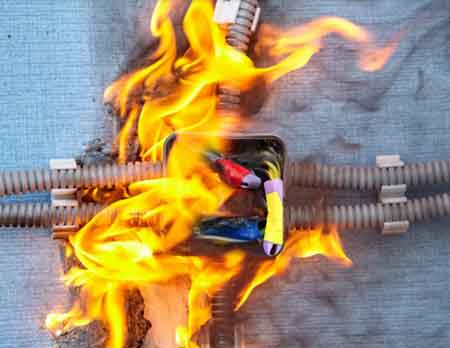
Arc Flash Levels of Protection start with preventing personal injury, which means turning off electrical equipment before starting work. Standards such as NFPA 70E and CSA Z462 are intended to provide arc-flash guidelines for qualified electrical workers when de-energizing could pose a greater hazard than leaving the power on. These arc-flash protection standards squarely place the responsibility for electrical worker safety on both employers and facility owners to ensure that safe electrical workplace standards and practices are in place to protect their workers from electrical accidents. Organizations can map tasks to NFPA 70E arc flash requirements to justify energized work and select appropriate controls.
The goal of these electrical arc-flash protection standards, such as NFPA 70E, is to keep electrical workers free from the hazards of shock, electrocution, arc flash, and arc blast. It's therefore important to understand the requirements outlined in employee safety standards, the importance of an electrical safety program, the employer's and employee's responsibilities, and the processes and best practices outlined in various industry standards and regulations.
ARC FLASH INDUSTRY STANDARDS
Four separate industry standards establish practices for the prevention of electrical explosion incidents:
OSHA 29 Code of Federal Regulations (CFR) Part 1910, Subpart S
This regulation states, in part, "Safety-related work practices shall be employed to prevent electric shock or other injuries resulting from either direct or indirect electrical contacts… ." OSHA also addresses the qualification of workers exposed to electrical shock hazards and the provision of protective equipment appropriate for the work to be performed. OSHA enforces electrical arc-flash protection practices and cites NFPA requirements.
NFPA 70e, National Electrical Code
Section 110.16 requires that companies place a warning label on electrical equipment likely to constitute an electrical safety hazard. This field marking can be generic or very specific, whichever the company selects. Future revisions of the NEC standard may require more detailed information on this label.
Test Your Knowledge About Arc Flash!
Think you know Arc Flash? Take our quick, interactive quiz and test your knowledge in minutes.
- Instantly see your results and score
- Identify strengths and areas for improvement
- Challenge yourself on real-world electrical topics
NFPA 70e, Standard for Electrical Safety Requirements for Employee Workplaces
NFPA 70E can be considered the “how-to” standard behind OSHA enforcement. It provides the detailed actions companies must take to be in federal compliance.
Specifically:
- Arc flash protection program with defined responsibilities
- Calculations for the degree of electrical safety hazard
- Arc-rated personal protective equipment (PPE) for workers, such as flame-resistant, arc flash suits
- Training for workers
- Tools for safe work
- Warning labels on equipment
IEEE Standard 1584, Guide for Electrical Safety Regulation
For arc-flash protection warning labels to convey sufficient information about the danger zone for electrical safety conditions, companies must determine the area within which only qualified workers should enter—the protection boundary. IEEE 1584 provides a method for calculating incident energy to specify the level of PPE required for workers.

