Why Are Electrical Fires Especially Hazardous Explained?
By R.W. Hurst, Editor
CSA Z462 Arc Flash Training – Electrical Safety Compliance Course
Our customized live online or in‑person group training can be delivered to your staff at your location.
- Live Online
- 6 hours Instructor-led
- Group Training Available
Download Our OSHA 4474 Fact Sheet – Establishing Boundaries Around Arc Flash Hazards
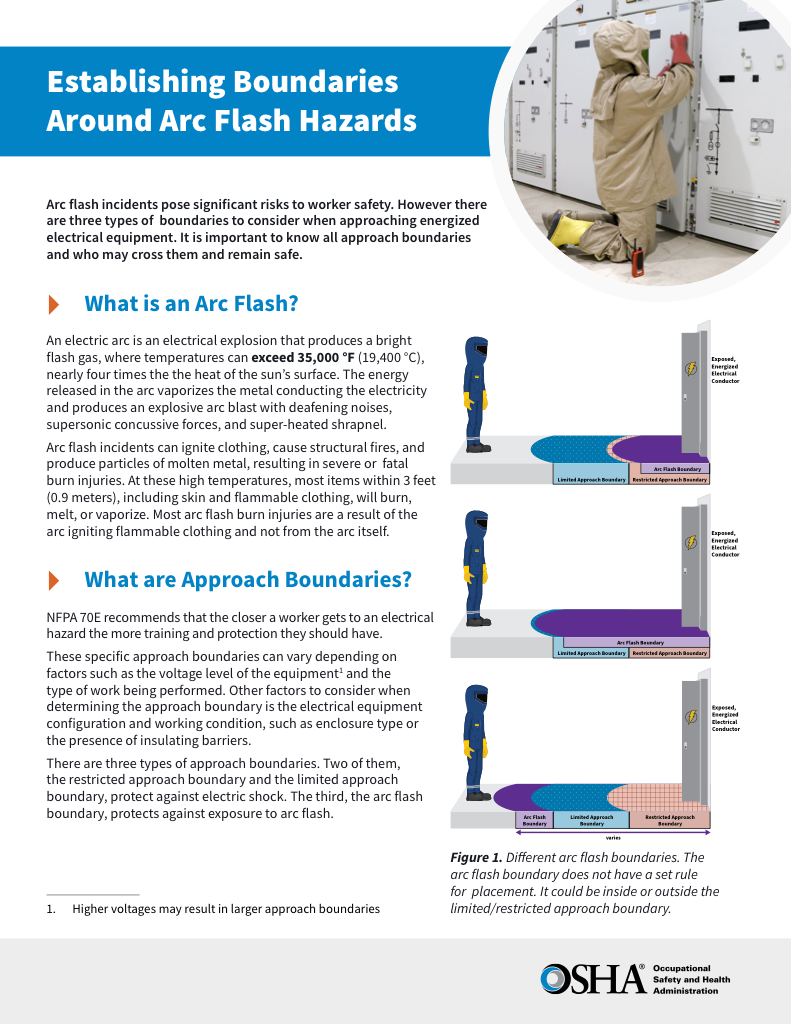
- Understand the difference between arc flash and electric shock boundaries
- Learn who may cross each boundary and under what conditions
- Apply voltage-based rules for safer approach distances
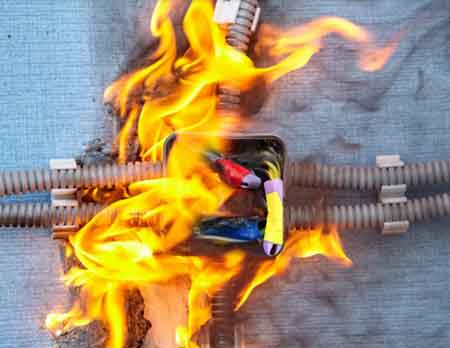
Electrical fires are especially hazardous because they often start unseen, remain energized, and spread quickly through wiring and insulation, creating shock, arc fault, and ignition risks that complicate suppression and endanger occupants.
Why Are Electrical Fires Especially Hazardous?
Electrical fires have a distinct character compared to most other fire hazards. They rarely announce themselves clearly, and when they do, conditions have often already deteriorated. A conductor buried in a wall, a connection warming quietly in a junction box, or insulation degrading over the years does not attract attention until failure occurs. By the time smoke is visible, the fire is no longer a simple ignition problem. It is an energized event, fed by current and confined by structures not designed to release heat. Electrical fires often involve the same energized fault conditions that lead to arc-flash events, which is why understanding the fundamentals outlined in our arc-flash overview helps explain why these fires behave so aggressively.
What makes these fires particularly dangerous is not only how they start, but where they live. Walls, ceilings, panels, and equipment housings trap heat and delay detection. Combustion develops alongside energized components, creating a mix of thermal danger and shock exposure that limits safe response options. People often underestimate this phase, assuming the hazard is no different from an open flame. It is not.
Request a Free Training Quotation
Why Are Electrical Fires More Dangerous Than Other Types of Fires?
Most fires consume fuel until that fuel is exhausted or suppressed. Electrical fires can continue as long as current flows. That single difference changes everything. A faulted conductor can keep reigniting surrounding materials, even after initial flames appear to be under control. The fire does not simply burn. It is sustained. Higher system voltages increase both ignition energy and injury severity, which is why incidents in 480V arc flash environments often overlap with serious electrical fire scenarios.
Test Your Knowledge About Arc Flash!
Think you know Arc Flash? Take our quick, interactive quiz and test your knowledge in minutes.
- Instantly see your results and score
- Identify strengths and areas for improvement
- Challenge yourself on real-world electrical topics
There is also the matter of escalation. Electrical failures do not always progress gradually. A loose connection may sit harmlessly for years before heating rapidly in a matter of minutes. When insulation ignites near energized parts, arc faults can occur, releasing intense heat in confined spaces. That sudden transition is why electrical fires so often appear to “come out of nowhere,” even in buildings that seemed safe hours earlier.
Can Water Be Used to Extinguish an Electrical Fire?
Water and energized equipment are a dangerous combination, and this is not a theoretical concern. Conductive paths form instantly when water contacts live components, creating shock hazards for anyone nearby. Even mist or runoff can bridge gaps that were previously safe.
In practice, this limitation removes one of the most instinctive fire responses people have. The correct response depends on de-energizing the source and using extinguishing agents designed for electrical conditions. Until power is removed, the fire remains an electrical event, not just a combustion problem. That distinction is often misunderstood in emergencies, which is why injuries occur during attempted suppression rather than during ignition.
What Are the Main Causes of Electrical Fires?
The origins of electrical fires are usually ordinary, not dramatic. Aging wiring slowly loses insulation integrity. Circuits designed for one era are asked to carry modern loads. Receptacles wear, connections loosen, and devices are used in ways they were never intended to support.
Extension cords and power strips deserve particular mention because they are so familiar. They are often treated as permanent solutions rather than temporary tools. When high-demand equipment is plugged into devices not designed for sustained load, heat builds quietly. Add time, dust, or nearby combustibles, and the conditions for ignition are already in place. In many investigations, poor assumptions or shortcuts during analysis play a role, a pattern explored in the most common errors in arc flash analysis, which mirrors how electrical fire risks are underestimated.
When a fire originates in energized equipment, the inability to safely de-energize systems connects directly to lockout failures addressed under OSHA 29 CFR 1910.147.


Why Do Electrical Fires Often Occur Without Warning?
Electrical systems fail internally long before external signs appear. Heat buildup occurs inside walls, enclosures, and devices that appear normal from the outside. Unlike mechanical failures, there may be no sound, no vibration, and no visible movement to attract attention.
Protective devices do not always intervene early. Breakers and fuses are designed to protect conductors, not prevent fires in every scenario. A connection can overheat without exceeding trip thresholds, especially under fluctuating loads. When failure finally occurs, it often does so suddenly, giving occupants little time to react.
How Can Electrical Fires Be Prevented in Homes and Workplaces?
Prevention is less about reacting to danger and more about respecting time and load. Electrical systems age, even when they appear functional. Regular inspection identifies heat damage, loose connections, and misuse patterns before ignition occurs.
Load awareness matters just as much. Circuits should not be treated as infinite resources, and temporary solutions should remain temporary. Equipment placement also plays a role. Combustible materials near luminaires, appliances, or outlets create unnecessary exposure when faults occur.
Most importantly, prevention depends on understanding that electrical safety is not static. What was acceptable years ago may no longer be safe under current usage. Treating systems as living infrastructure rather than fixed installations is often the difference between long-term reliability and sudden failure.
Electrical fires are hazardous not because they are mysterious, but because they operate outside the assumptions people make about fire behavior. They are hidden, energized, and capable of rapid escalation. Recognizing those realities changes how prevention, response, and risk are understood, and that understanding is what ultimately protects lives and property.
FREE EF Electrical Training Catalog
Download our FREE Electrical Training Catalog and explore a full range of expert-led electrical training courses.

- Live online and in-person courses available
- Real-time instruction with Q&A from industry experts
- Flexible scheduling for your convenience
