Arc Flash Fatality: Lessons from Tragic Incidents
NFPA 70E Training
Our customized live online or in‑person group training can be delivered to your staff at your location.
- Live Online
- 6 hours Instructor-led
- Group Training Available
Download Our OSHA FS3529 Fact Sheet – Lockout/Tagout Safety Procedures
- Learn how to disable machines and isolate energy sources safely
- Follow OSHA guidelines for developing energy control programs
- Protect workers with proper lockout devices and annual inspections
Arc flash fatality is not a theoretical risk or a statistical abstraction. It is the final outcome of a moment when electrical energy escapes its intended path and converts into heat, force, and debris faster than human reaction can respond. The people who die in these events are rarely reckless. They are often experienced workers operating inside systems that failed them through design, maintenance, communication, or culture.
The industry sometimes treats fatal events as rare outliers. In practice, every fatality follows a familiar pattern. Energy was underestimated. Boundaries were misunderstood. Protection was incomplete. A decision was made under time pressure. The arc simply finished what the system had already set in motion.
Arc flash fatality is therefore best understood not as a single mistake, but as a chain of ordinary conditions aligning at the wrong moment.
Most fatal sequences begin long before the flash itself, and a clear understanding of what causes arc flash helps explain why routine conditions can suddenly become lethal.
When electrical energy turns lethal
Electrical explosions release more than light and heat. They release mechanical force. Air expands violently. Copper vaporizes. Enclosures rupture. Molten metal becomes shrapnel. Clothing ignites. Even a worker standing slightly off-axis can be struck by pressure, fragments, or secondary contact.
In fatal cases, death is rarely caused by one mechanism alone. Severe burns, blunt trauma, internal organ damage, or inhalation injuries often combine. In some incidents, the worker never comes into contact with the arc. The blast itself delivers the fatal injury. This is why proximity, enclosure design, and incident energy matter more than most workers intuitively realize, and the engineering logic behind incident energy is central to understanding why some events overwhelm protection in milliseconds.
Test Your Knowledge About Arc Flash!
Think you know Arc Flash? Take our quick, interactive quiz and test your knowledge in minutes.
- Instantly see your results and score
- Identify strengths and areas for improvement
- Challenge yourself on real-world electrical topics
Why are experienced workers still vulnerable
Fatal incidents are frequently described as failures of judgment. The reality is more uncomfortable. Many workers who die in arc flash events follow what they believe are reasonable practices based on incomplete or outdated assumptions.
A panel that looks routine may carry far higher energy than its appearance suggests. A voltage level that seems manageable can still produce catastrophic force. A breaker that has been opened may not be isolated as the worker believes. A label may reflect conditions that no longer exist.
An arc-flash fatality is often the result of an invisible change within a system that still looks familiar on the outside. When boundaries are treated as informal instead of engineered limits, misunderstandings around the arc flash boundary can place a worker inside a lethal exposure zone without anyone realizing it.
Patterns seen in fatal events
Across many investigations, several patterns appear repeatedly:
• Work performed on equipment believed to be de-energized but still live.
• PPE selected for voltage rather than incident energy.
• Incomplete risk assessment for temporary or modified installations.
• Maintenance history that did not reflect the actual equipment condition.
• Overconfidence in routine tasks.
The most consistent precursor is an isolation failure, and recurring breakdowns in lockout tagout show up in fatal events precisely because “assumed safe” equipment invites the wrong posture and the wrong decisions.
Field reality: three fatal outcomes
In substation environments, fatalities often follow insulation failure or breaker operation during racking. The worker is exposed to both thermal and mechanical forces within a confined space.
In industrial panels, contact with a busbar or loose conductor can initiate an arc that turns the enclosure into a blast chamber.

On construction sites, temporary power systems introduce unpredictable fault paths, mismatched protection, and grounding weaknesses that magnify exposure.
Where the risk is not visible, formal arc flash risk assessment becomes the discipline that forces hidden conditions, assumptions, and exposure paths into the open before someone pays for them.
The role and limits of PPE
Protective equipment saves lives. It also has limits that are rarely discussed honestly.
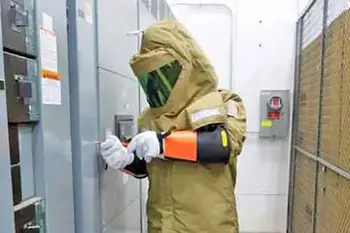
Arc-rated clothing can delay ignition and reduce burn depth. Face shields and gloves reduce exposure. Helmets deflect debris. None of these stops pressure waves. None of these prevents internal trauma. None of these removes energy from the system.
PPE does not make an arc safe. It only narrows the margin between survival and fatality.
Fatal incidents continue to occur even when PPE is worn correctly, because the energy exceeded what the system and the clothing were ever designed to contain.
That is why PPE selection has to align with credible energy data rather than habit, and the details in NFPA 70E PPE requirements matter most when the consequences are irreversible.
Why lockout failures are so often fatal
When equipment believed to be isolated remains energized, the worker is psychologically unprepared for an explosion. Body position, tool placement, and attention are all wrong for a live environment. Reaction time disappears.
Fatal cases frequently show that the arc itself was not the only problem. The surprise removed any chance of avoidance.
Lockout failures do not merely allow exposure. They remove the worker’s last line of defense.
Survival factors that change outcomes
Survival probability shifts with small variables:
Distance from the arc source.
Orientation of the body.
Vent paths inside enclosures.
Response time of emergency support.
Actual versus assumed energy levels.
Electricity Today T&D Magazine Subscribe for FREE

- Timely insights from industry experts
- Practical solutions T&D engineers
- Free access to every issue
Two workers can stand in similar locations and experience entirely different outcomes. This variability is why fatality statistics never tell the full story. The system geometry decides more than the worker does.
The uncomfortable truth is that many of these variables are set during design and study work, which is why a properly executed arc flash analysis often determines the margin between survivable exposure and a fatal event long before anyone opens a door.
Legal and organizational consequences
After a fatality, investigations rarely focus only on the moment of the arc. They examine training records, maintenance schedules, labeling practices, risk assessment processes, and supervisory decisions.
Civil liability often follows. Regulatory penalties follow more reliably. Criminal exposure appears when negligence becomes obvious.
Yet the legal record is still not the true cost. The permanent loss of a skilled worker reshapes teams, families, and organizations in ways no report can quantify.
The deeper failure behind arc flash fatality
Every fatal case ultimately reflects a system that normalized risk. Not dramatic risk. Familiar risk.
Shortcuts became routine. Warnings became background noise. Labels became decorative. Procedures became optional. The system drifted slowly until the margin vanished.
Arc flash fatality is not an accident of physics. It is an accident of tolerance.
Prevention is not a checklist
Prevention is not a list of rules. It is a mindset that refuses to treat electrical energy as predictable simply because it is familiar.
It means treating temporary installations as high risk by default.
It means questioning labels that have not been recently verified.
It means assuming that protection may not behave as expected.
It means respecting that energy does not negotiate.
When organizations internalize this posture, fatality rates fall. When they relax it, the next name eventually appears in an investigation file.
Why this topic must remain uncomfortable
Arc flash fatality is uncomfortable to discuss. It forces confrontation with limits, with responsibility, and with the reality that experience does not guarantee safety.
But discomfort is not a weakness here. It is the signal that attention has not yet drifted.
No job task, schedule, or production target is worth trading a human life for. The physics will never compromise. Only people can.
Arc flash fatality remains one of the most severe and preventable outcomes in electrical work. Reducing it does not depend on a single control or standard. It depends on whether organizations are willing to treat electrical energy as unforgivable, even when nothing appears wrong.
Related Articles
