NFPA 70E Arc Flash Label Requirements
By R.W. Hurst, Editor
NFPA 70E Training
Our customized live online or in‑person group training can be delivered to your staff at your location.
- Live Online
- 6 hours Instructor-led
- Group Training Available
Download Our OSHA 4474 Fact Sheet – Establishing Boundaries Around Arc Flash Hazards
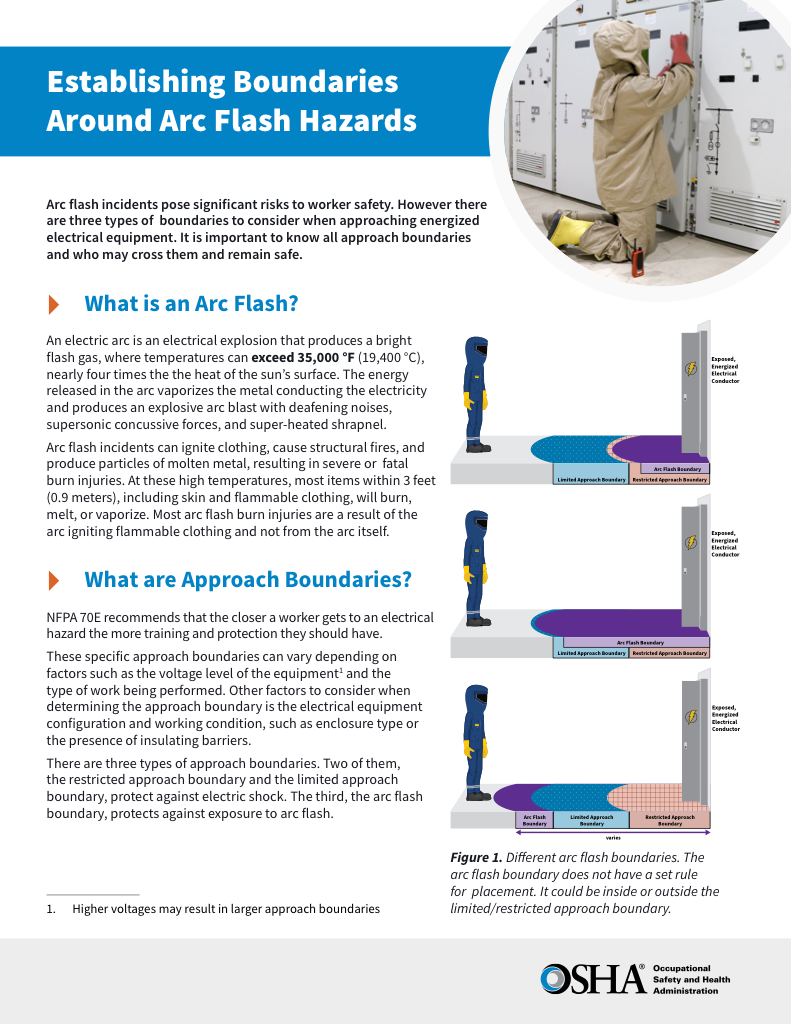
- Understand the difference between arc flash and electric shock boundaries
- Learn who may cross each boundary and under what conditions
- Apply voltage-based rules for safer approach distances
NFPA 70E Arc Flash Label Requirements define what electrical safety labels must display, including incident energy, approach boundaries, voltage, and PPE. Clear, updated labels improve compliance, reduce arc flash hazards, and guide workers toward safe electrical practices.
NFPA 70E Arc Flash Label Requirements and Their Impact on Workplace Safety
NFPA 70E Arc Flash Label Requirements are extremely important. Ensuring electrical safety in the workplace is paramount, and the National Fire Protection Association (NFPA) 70E standards play a critical role in protecting workers from electrical hazards. One crucial aspect of these standards is the requirement for arc flash (AF) markers. These labels provide essential information to ensure safe work practices around electrical equipment. This article delves into the requirements for AF signage, what information should be included, and the importance of these signs in maintaining a safe work environment.
Request a Free Training Quotation
NFPA 70E Arc Flash Label Requirements
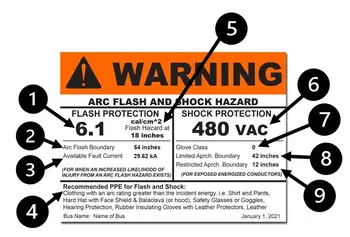
NFPA 70E Arc Flash Label Requirements define how electrical equipment must be marked to warn qualified workers of potential arc flash hazards. These signs communicate incident energy, approach boundaries, voltage, and PPE guidance, ensuring safe practices and compliance with OSHA regulations.
Purpose of Arc Flash Labels
Arc flash studies and risk assessments provide the data, but labels are the point where safety information meets the worker. Without a clear, durable sign, technicians may underestimate risks or choose the wrong protective equipment. NFPA 70E labeling rules make sure vital details are visible at the equipment itself, not buried in a report.
Required Information on a Label
NFPA 70E requires specific details to be displayed on each arc flash label:
-
Nominal system voltage – to identify the level of shock risk.
-
Arc flash boundary – distance from the equipment where PPE is required.
-
Incident energy or PPE category – showing calculated energy exposure in cal/cm² or the assigned PPE level.
-
Minimum PPE required – details such as arc-rated clothing, gloves, or face shields.
For a deeper dive into the calculations behind these values, see our guide on arc flash analysis and labeling solutions.
Sign Up for Electricity Forum’s Arc Flash Newsletter
Stay informed with our FREE Arc Flash Newsletter — get the latest news, breakthrough technologies, and expert insights, delivered straight to your inbox.
Placement and Visibility
Signs must be clearly visible before any examination, adjustment, or maintenance begins. They are typically applied to the front of switchboards, panelboards, industrial control panels, and motor control centers.
While NFPA 70E does not dictate exact dimensions, common sizes range from 4 x 6 inches to 5 x 7 inches, large enough to be visible from a safe distance. For best practices, review our article: arc flash warning label.
Updating NFPA 70E Arc Flash Labels
Arc flash signs are not permanent; they must be reviewed and updated whenever system changes occur. This includes:
-
Equipment replacements or upgrades
-
System reconfigurations that alter fault current or clearing times
-
Updates in protection devices
NFPA 70E also recommends labels be reviewed at least every five years. Out-of-date or faded markings are a common compliance issue, and the 10 most common errors in arc flash analysis.
PPE Categories on NFPA 70E Arc Flash Labels
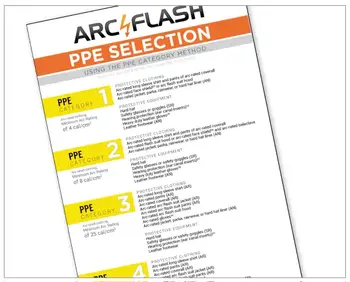
Arc flash signs often guide workers toward the correct PPE by listing either the incident energy or the PPE category. The four NFPA 70E PPE categories range from Category 1 (minimum 4 cal/cm²) to Category 4 (minimum 40 cal/cm²). Each category specifies the required protection, including items such as arc flash suits, gloves, hoods, and other necessary gear.
Learn more about how categories are determined in our resource on arc flash PPE clothing.
Common Mistakes to Avoid
Employers often fall short of compliance in labeling by:
-
Using generic or incomplete signs
-
Failing to update signs after system changes
-
Placing signs where they are not visible during normal operation
-
Omitting critical details such as incident energy or boundaries
These oversights increase risk and can leave workers without the guidance they need at the equipment itself.
NFPA 70E Arc Flash Label Requirements translate complex hazard data into simple, actionable instructions at the point of work. By displaying incident energy, voltage, boundaries, and PPE needs, signs help workers make safe decisions and maintain compliance.
For a comprehensive overview of arc flash safety programs and training, visit our NFPA 70E training course page.
Frequently Asked Questions
Do arc flash labels need to include the date of the analysis?
While NFPA 70E does not mandate a printed date, many facilities add one so it’s clear when the sign was last verified. This helps ensure regular updates and prevents workers from relying on outdated information.
Are standardized colors or symbols required on arc flash labels?
NFPA 70E does not prescribe colours, but the ANSI Z535 standards recommend using orange or red for warnings and standardized pictograms for consistency. Many companies adopt this practice to make hazards immediately recognizable.
Can digital labels or QR codes be used in accordance with NFPA 70E?
Yes. NFPA 70E allows flexibility as long as the required hazard information is accessible. Some employers use QR codes linked to arc flash studies or detailed PPE charts for quick reference in the field.
How often should labels be inspected in day-to-day operations?
In addition to the five-year review cycle, signs should be visually checked during routine maintenance. If a label is damaged, unreadable, or missing, it should be replaced immediately to maintain compliance.
What happens if equipment is mislabeled or unlabeled?
Improper labeling can lead to workers using insufficient PPE or crossing unsafe boundaries, which may result in severe arc flash accidents. OSHA citations and penalties are also likely if compliance is not demonstrated.
Do temporary or rental electrical systems require labels?
Yes. Any system that may be worked on while energized requires labeling. Even short-term setups, such as construction panels, must display clear hazard information to protect electricians and contractors.
Visit our Arc Flash Electrical Safety Channel