Ireland: We are the global leaders in taking renewables onto the grid
Protective Relay Training - Basic
Our customized live online or in‑person group training can be delivered to your staff at your location.
- Live Online
- 12 hours Instructor-led
- Group Training Available
Ireland 65% Renewable Grid Capability showcases world leading integration of intermittent wind and solar, smart grid flexibility, EU-SysFlex learnings, and the Celtic Interconnector to enhance stability, exports, and energy security across the European grid.
What's Behind the News
Ireland can run its isolated power system with 65% variable wind and solar, informing EU grid integration and scaling.
World-leading 65% non-synchronous penetration on an isolated system
Smart grid tools: fast frequency response, inertia, voltage control
EU-SysFlex roadmap informs scalable solutions across EU networks
Celtic Interconnector adds 700MW capacity for stability and exports
Supports 2030 goal of 50% renewables and enhanced energy security
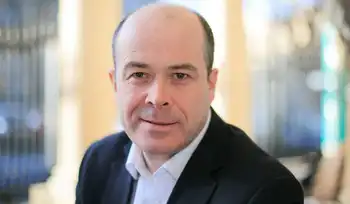
Ireland is now able to cope with 65% of its electricity coming from intermittent electricity sources like wind and solar, as highlighted by Ireland's green electricity outlook today – an expertise Energy Minister Denish Naugthen believes can be replicated on a larger scale as Europe moves towards 50% renewable power by 2030.
Denis Naughten is an Irish politician who serves as Minister for Communications, Climate Action and Environment since May 2016.
Naughten spoke to editor Frédéric Simon on the sidelines of a EURACTIV event in the European Parliament to mark the launch of EU-SysFlex, an EU-funded project, which aims to create a long-term roadmap for the large-scale integration of renewable energy on electricity grids.
What is the reason for your presence in Brussels today and the main message that you came to deliver?
The reason that I’m here today is that we’re going to share the knowledge what we have developed in Ireland, right across Europe. We are now the global leaders in taking variable renewable electricity like wind and solar onto our grid.
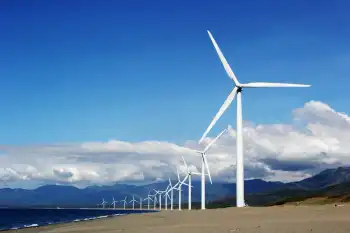
We can take a 65% loading on to the grid today – there is no other isolated grid in the world that can do that. We’re going to get up to 75% by 2020. This is a huge technical challenge for any electricity grid and it’s going to be a problem that is going to grow and grow across Europe, even as Europe's electricity demand rises in the coming years, as we move to 50% renewables onto our grid by 2030.
And our knowledge and understanding can be used to help solve the problems right across Europe. And the sharing of technology can mean that we can make our own grid in Ireland far more robust.
What is the contribution of Ireland when it comes to the debate which is currently taking place in Europe about raising the ambition on renewable energy and make the grid fit for that? What are the main milestones that you see looking ahead for Europe and Ireland?
It is a challenge for Europe to do this, but we’ve done it Ireland. We have been able to take a 65% loading of wind power on our grid, with Irish wind generation hitting records recently, so we can replicate that across Europe.
Yes it is about a much larger scale and yes, we need to work collaboratively together, reflecting common goals for electricity networks worldwide – not just in dealing with the technical solutions that we have in Ireland at the fore of this technology, but also replicating them on a larger scale across Europe.
And I believe we can do that, I believe we can use the learnings that we have developed in Ireland and amplify those to deal with far bigger challenges that we have on the European electricity grid.
Trialogue talks have started at European level about the reform of the electricity market. There is talk about decentralised energy generation coming from small-scale producers. Do you see support from all the member states in doing that? And how do you see the challenges ahead on a political level to get everyone on board on such a vision?
I don’t believe there is a political problem here in relation to this. I think there is unanimity across Europe that we need to support consumers in producing electricity for self-consumption and to be able to either store or put that back into the grid.
The issues here are more technical in nature. And how you support a grid to do that. And who actually pays for that. Ireland is very much a microcosm of the pan-European grid and how we can deal with those challenges.
What we’re doing at the moment in Ireland is looking at a pilot scheme to support consumers to generate their own electricity to meet their own needs and to be able to store that on site.
I think in the years to come a lot of that will be actually done with more battery storage in the form of electric vehicles and people would be able to transport that energy from one location to another as and when it’s needed. In the short term, we’re looking at some novel solutions to support consumers producing their own electricity and meeting their own needs.
So I think this is complex from a technical point of view at the moment, I don’t think there is an unwillingness from a political perspective to do it, and I think working with this particular initiative and other initiatives across Europe, we can crack those technical challenges.
To conclude, last year, the European Commission allocated €4 million to a project to link up the Irish electricity grid to France. How is that going to benefit Ireland? And is that related to worries that you may have over Brexit?
The plan, which is called the Celtic Interconnector, is to link France with the Irish electricity grid. It’s going to have a capacity of about 700MW. It allows us to provide additional stability on our grid and enables us to take more renewables onto the grid. It also allows us to export renewable electricity onto the main European grid as well, and provide stability to the French network.
So it’s a benefit to both individual networks as well as allowing far more renewables onto the grid. We’ve been working quite closely with RTE in France and with both regulators. We’re hoping to get the support of the European Commission to move it now from the design stage onto the construction stage. And I understand discussions are ongoing with the Commission at present with regard to that.
And that is going to diversify potential sources of electricity coming in for Ireland in a situation which is pretty uncertain because of Brexit, correct?
Well, I don’t think there is uncertainty because of Brexit in that we have agreements with the United Kingdom, we’re still going to be part of the broader energy family in relation to back-and-forth supply across the Irish Sea, with grid reinforcements in Scotland underscoring reliability needs. But I think it is important in terms of meeting the 15% interconnectivity that the EU has set in relation to electricity.
And also in relation of providing us with an alternative support in relation to electricity supply outside of Britain. Because Britain is now leaving the European Union and I think this is important from a political point of view, and from a broader energy security point of view. But we don’t see it in the short term as causing threats in relation to security of supply.