Core Current Transformer Explained
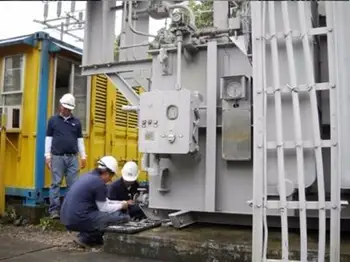
Transformer Maintenance Training - Testing and Diagnostics
Our customized live online or in‑person group training can be delivered to your staff at your location.
- Live Online
- 12 hours Instructor-led
- Group Training Available
Download Our OSHA 4475 Fact Sheet – Being Aware of Arc Flash Hazards
- Identify root causes of arc flash incidents and contributing conditions
- Apply prevention strategies including LOTO, PPE, and testing protocols
- Understand OSHA requirements for training and equipment maintenance
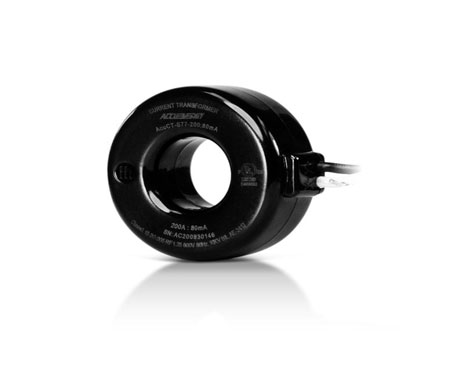
A core current transformer measures alternating current by producing a scaled secondary current that is proportional to the primary current. It ensures accurate metering, protection, and monitoring in electrical systems, commonly used in power distribution and industrial applications.
Core designs are part of the larger group of measurement and protection devices described in our current transformer reference guide.
How Core Current Transformers Work
To understand the basic function of transformers, see our guide on what is a transformer.
A core current transformer uses a continuous magnetic core to provide stable, accurate current measurement for protection and metering applications. Unlike split-core or flexible Rogowski designs, a core CT offers lower leakage flux and higher accuracy, making it preferred for permanent industrial and utility installations.
Electrical Transformer Maintenance Training
Substation Maintenance Training
Request a Free Training Quotation
Types of Core Current Transformer: Solid Core vs. Split Core
The types of CTs vary based on their configurations and intended applications. In particular, the two most common types are the solid-core and split-core current transformer. The solid core design is typically preferred for fixed installations where the wiring configuration does not need to be altered after installation. The core is a single, continuous piece of material that provides a stable and durable structure for the equipment. On the other hand, the split-core current transformer allows for easy installation around existing conductors. The ability to "split" the core open makes this configuration ideal for retrofit applications, where adding new wiring or modifying existing circuits would be impractical. Core CT performance is strongly influenced by the ratio selection and secondary burden, as explained in detail in our current transformer ratio guide.
Unlike split-core current transformers used for temporary measurements and Rogowski coils used for flexible sensing, core current transformers are designed for permanent installations where accuracy, thermal stability, and long-term performance are critical.
FREE EF Electrical Training Catalog
Download our FREE Electrical Training Catalog and explore a full range of expert-led electrical training courses.

- Live online and in-person courses available
- Real-time instruction with Q&A from industry experts
- Flexible scheduling for your convenience
Comparison of Core Current Transformers: Solid Core vs. Split Core
| Feature | Solid Core Current Transformer | Split Core Current Transformer | Best Applications |
|---|---|---|---|
| Design | Single, continuous magnetic core | Core opens/closes for easy placement | Solid core for fixed installs, split core for retrofits |
| Installation | Requires disconnecting conductors during setup | Installs without removing existing wiring | Split core preferred in existing systems |
| Durability | More robust and stable structure | Slightly less durable due to openable core | Solid core for high-durability needs |
| Accuracy | High measurement accuracy | Slightly lower accuracy compared to solid core | Solid core in precision metering |
| Cost | Generally lower cost | Typically higher cost due to design flexibility | Split core for convenience-focused projects |
| Maintenance | Minimal maintenance required | Also low, but hinges may need periodic check | Both for industrial and commercial use |
Applications
CCTs are widely used in different sectors, particularly in environments where safety and reliability are paramount. Their applications span commercial, industrial, and residential settings, where they serve to protect circuits and ensure the proper functioning of control systems. In commercial buildings, a CCT is often integrated into power distribution panels, enabling the monitoring and control of energy usage. They also find applications in industrial environments, such as factories, where accurate current measurement is critical for optimizing machinery operation and preventing equipment failures. Industrial applications often pair core CTs with instrument transformers to enhance precision in electrical metering systems.
Fire Safety and Environmental Protection
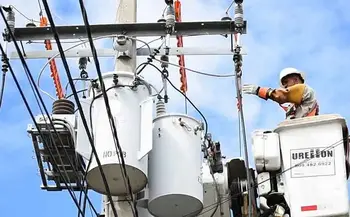
The use of CCTs extends to areas where fire safety and environmental protection are significant concerns. In settings such as hospitals, schools, and chemical plants, where maintaining operational safety is crucial, the design of dry-type equipment becomes particularly important. Dry-type equipment, including CTs, is often used in these environments due to its lower fire risk. Since they don't use liquid insulation, they pose fewer fire hazards than liquid-filled transformers. This makes them a preferred choice for sensitive applications that require both reliable current measurement and safe operation. For installations that require both current and voltage measurement, a potential transformer works with CTs to step down voltages safely.
Advantages and Disadvantages of Core Current Transformer
While a CCT offers various advantages, it is also essential to consider its limitations. One of the primary benefits of this equipment is its minimal maintenance requirements. The absence of liquid insulation and the use of robust materials in the core and enclosure design ensure that the equipment requires less frequent maintenance than other types. Moreover, dry-type core current transformers are environmentally friendly as they avoid the use of toxic substances, contributing to a greener, more sustainable energy system.
However, this equipment may experience higher operational temperatures when compared to liquid-filled types, which could potentially affect their longevity if not properly managed. While effective in many situations, the air-cooled design may not always be sufficient for very high-load applications. Therefore, engineers must carefully assess the operating environment to ensure that the transformer can perform optimally under the expected conditions.
Standards and Compliance for CT
Moreover, CTs must comply with established industry standards to ensure their performance and safety. Standards set by organizations such as ANSI, NEMA, and IEEE help manufacturers produce equipment that meets the requirements of modern electrical systems. Compliance with these standards is critical in maintaining the reliability of control systems that depend on this equipment. For instance, ensuring that the equipment meets the required accuracy class is crucial in applications where precise current measurement is essential for system protection or load balancing.
Frequently Asked Questions
What is a core current transformer?
A core current transformer is a type of current transformer that uses a continuous magnetic core to accurately reproduce primary current in its secondary winding. It is used in protection, metering, and monitoring systems where stability, accuracy, and long-term reliability are required in industrial and utility installations. See how an autotransformer offers cost-effective voltage regulation for industrial applications.
What is the difference between CCT and PT?
The main difference between a CCT and a Potential Transformer (PT) lies in their function and application:
-
CCT: A CT measures the current flowing through a conductor by producing a reduced, proportional current in its secondary coil, which is easily measured and monitored.
-
PT: A PT, also known as a voltage transformer (VT), is used to step down high voltage levels in electrical systems to a lower, safer level for measurement and monitoring purposes. It provides a proportional voltage to its secondary winding.
In short, CCTs measure current, while PTs measure voltage.
Test Your Knowledge About Utility Transformers!
Think you know Utility Transformers? Take our quick, interactive quiz and test your knowledge in minutes.
- Instantly see your results and score
- Identify strengths and areas for improvement
- Challenge yourself on real-world electrical topics
What are the 3 types of transformer cores?
The three primary types of transformer cores are:
-
Shell-type: In this type, the windings are placed around the central core, which is a continuous structure. This configuration provides enhanced magnetic coupling and minimizes leakage flux.
-
Core-type: The windings are placed around the rectangular core. This design is commonly used for power equipment.
-
Toroidal: This type of core is ring-shaped, allowing the windings to be placed around it. The toroidal design offers low core losses and is used in applications where compactness and efficiency are crucial. For a more comprehensive overview of various transformer designs, visit our page on different types of transformers.
A core current transformer is an electrical device that measures the current flowing through a conductor by producing a proportional output current or voltage. It typically consists of a magnetic core around which the primary conductor passes, with the secondary winding placed around the core. When current flows through the primary, it generates a magnetic field that induces a current in the secondary winding. Core CTs are widely used in power systems for protection, measurement, and monitoring purposes, offering benefits such as electrical isolation, accuracy, and the ability to safely measure high currents without direct contact. Dive into detailed transformer types in our section on electrical power transformers.
Related Articles
