Circuit Breaker In Substation Explained
Substation Maintenance Training
Our customized live online or in‑person group training can be delivered to your staff at your location.
- Live Online
- 12 hours Instructor-led
- Group Training Available
Download Our OSHA 4475 Fact Sheet – Being Aware of Arc Flash Hazards
- Identify root causes of arc flash incidents and contributing conditions
- Apply prevention strategies including LOTO, PPE, and testing protocols
- Understand OSHA requirements for training and equipment maintenance
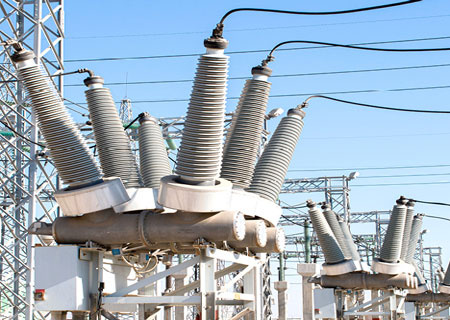
A circuit breaker in substation systems interrupts fault current to protect transformers, busbars, and grid assets while supporting protection coordination, maintenance planning, and long-term substation reliability.
In a substation, the circuit breaker is the piece of equipment that matters most when something goes wrong. For years, it may do nothing at all, sitting closed and unremarked, until the moment a fault develops and it has to act immediately. When it clears the fault cleanly, damage is contained, and the system stabilizes. When it does not, outages cascade, and equipment losses follow.
This is why substation breakers are treated differently from downstream protective devices. They operate at the point where stability can tip into disruption, expected to interrupt very high fault currents, coordinate precisely with protection schemes, and continue doing so under mechanical, thermal, and environmental stress. Those demands influence how breakers are designed, specified, and maintained throughout their service life.
Electrical Transformer Maintenance Training
Substation Maintenance Training
Request a Free Training Quotation
Understanding a How Circuit Breaker in a Substation Works
At a functional level, a substation breaker exists to interrupt current when conditions move outside normal operating limits. In practice, that task is far more demanding than simply opening a set of contacts. Fault currents rise rapidly, mechanical forces increase instantly, and the arc produced during interruption must be controlled within milliseconds.
Different interrupter technologies manage this arc in different ways. Some rely on gas pressure, others on vacuum or insulating oil, but the objective is always the same: force the current to zero while maintaining sufficient dielectric strength to prevent restrike. What matters most in real installations is not the theory, but repeatability. A breaker that performs well once but inconsistently over time becomes a liability.
FREE EF Electrical Training Catalog
Download our FREE Electrical Training Catalog and explore a full range of expert-led electrical training courses.
- Live online and in-person courses available
- Real-time instruction with Q&A from industry experts
- Flexible scheduling for your convenience
In modern substations, breakers are also part of a wider control environment. They are expected to operate automatically, report status accurately, and respond to commands from protection relays and control systems without delay.
Role of the Circuit Breaker in Substation Protection
Within a protection scheme, the breaker is the final actuator. Relays may detect the problem and issue the command, but the breaker is the device that physically separates the fault from the rest of the system. That separation must occur selectively. Only the affected feeder, transformer, or bus section should be removed from service, while adjacent equipment continues operating.
In practice, circuit breakers work by interrupting the flow of electricity the moment a short circuit or other abnormal condition is detected, preventing damage across power distribution systems. Different types of circuit breakers achieve this in different ways, depending on voltage level and duty, especially in high voltage applications where fault energy is extreme.
Older oil circuit breakers rely on insulating oil to quench the arc, while vacuum circuit breakers extinguish it within a sealed chamber, resulting in minimal wear. Other designs use compressed air or SF6 (sulphur hexafluoride) to rapidly cool and deionize the arc path. Each approach reflects a balance among reliability, maintenance demands, and the operating environment, rather than a one-size-fits-all solution.
This selectivity becomes increasingly important as networks grow more interconnected. In transmission yards and large industrial substations, improper coordination can result in unnecessary outages that extend far beyond the original fault location. Breakers, therefore, operate as part of a coordinated protection strategy rather than as standalone components.
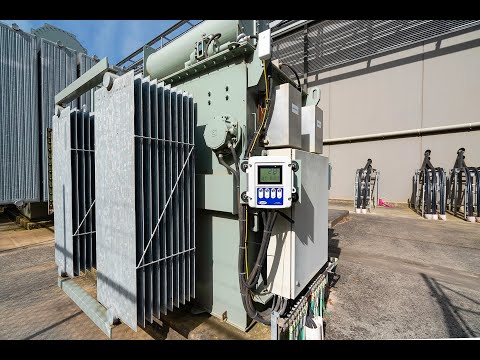
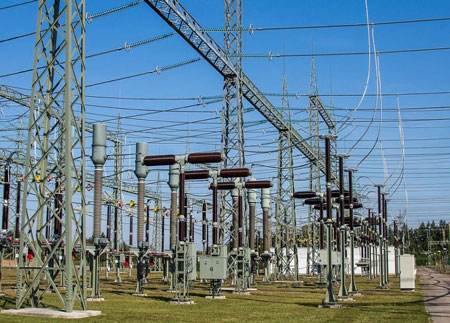
Their role is closely tied to the overall electrical substation design, where layout, bus configuration, and protection philosophy all influence when and how a breaker is expected to operate.
Types of Substation Circuit Breakers
Breaker selection is driven by voltage class, interrupting duty, and operational context rather than preference. Air circuit breakers are typically limited to low-voltage applications where simplicity and accessibility matter more than compactness. Vacuum breakers dominate medium-voltage systems because they offer long service life with minimal contact wear.
Oil breakers, while still present in older installations, demand careful attention due to aging insulation and maintenance burden. SF6 Breakers remain common at high voltages because of their excellent arc-quenching and insulating properties, although environmental concerns are increasingly influencing replacement strategies.
In practice, utilities and plant owners tend to standardize breaker types within voltage classes to simplify maintenance, spares, and training. That standardization often matters more operationally than marginal differences in performance between technologies. Transformer systems pair with circuit breakers; visit our electrical substation transformer overview.
Protection, Control, and Grid Stability
A substation breaker does not make decisions on its own. It responds to inputs from current and voltage transformers and from protective relays that continuously evaluate system conditions. When thresholds are exceeded, the relay issues a trip command, and the breaker executes it.
Modern substation protection relies heavily on digital relays, IEDs, and SCADA platforms to manage this process. Operators expect accurate indication, event records, and fault data immediately after an operation. These systems also enable remote control, reducing response time and limiting personnel exposure in high-energy environments.
Integration with substation automation systems has transformed breakers from isolated devices into data-rich assets that support system analysis and long-term planning.
Test Your Knowledge About Electrical Substations!
Think you know Electrical Substations? Take our quick, interactive quiz and test your knowledge in minutes.
- Instantly see your results and score
- Identify strengths and areas for improvement
- Challenge yourself on real-world electrical topics
Maintenance and Inspection Practices
Breaker failures are rarely sudden. Most are preceded by warning signs that appear during inspection, testing, or routine operation. Effective maintenance programs focus on identifying signals early rather than performing exhaustive, unfocused checklists.
For SF6 and oil breakers, insulation condition and leakage history are critical. For vacuum and air breakers, mechanical wear, control circuit integrity, and operating timing tend to dominate. In the field, technicians often start with control power health, trip coil performance, alarm logs, and historical timing trends before addressing deeper mechanical issues.
Well-designed electrical substation maintenance programs emphasize trend analysis rather than pass/fail results. That approach reduces unexpected outages and extends breaker service life.
Environmental and Safety Considerations
Substation breakers operate in environments where failure consequences are severe. Arc flash risk, stored mechanical energy, and high fault levels require disciplined safety practices during inspections and maintenance. Lockout procedures, PPE selection, and job planning are essential controls, not formalities.
Environmental considerations now play a larger role in breaker strategy as well. SF? handling, leak detection, and reporting obligations have pushed many organizations to reconsider long-term reliance on gas-insulated equipment. Alternatives such as vacuum and clean-air technologies are increasingly evaluated not only for performance but also for regulatory and environmental risks.
These issues are closely tied to broader safety considerations for Electrical Substation Components across the site.
Future Trends in Breaker Technology
Breaker development continues to move toward greater visibility and predictability. Embedded sensors, condition monitoring, and remote diagnostics are becoming standard expectations rather than advanced features. Utilities are also exploring analytics that use operating data to predict failure modes before service is affected.
Sustainability pressures are accelerating the shift toward eco-efficient interrupter technologies. At the same time, digital integration is tightening the relationship between breakers, protection systems, and control platforms. The result is equipment that not only interrupts faults but also actively contributes to system awareness and resilience.
Frequently Asked Questions
What is the main function of a circuit breaker in substation?
To interrupt fault current and isolate affected equipment while preserving overall system stability.
How often should they be inspected?
Intervals vary by breaker type and duty, but most organizations perform annual inspections with periodic diagnostic testing.
Are SF6 breakers still widely used?
Yes, particularly at high voltages, although many operators are planning transitions to lower-impact alternatives.
Related Articles
