Canada, Germany to work together on clean energy
CSA Z462 Arc Flash Training – Electrical Safety Compliance Course
Our customized live online or in‑person group training can be delivered to your staff at your location.

- Live Online
- 6 hours Instructor-led
- Group Training Available
Clean Energy Transition spans hydrogen strategies, offshore wind and undersea cables, decarbonization pledges, and net-zero targets, including green vs blue hydrogen, carbon capture, sustainable aviation fuel, forest conservation, and wetland protection in Canadian policy.
The Main Points
A shift to low-carbon systems via hydrogen, renewables, net-zero policies, carbon capture, and conservation.
Hydrogen pathways: green vs blue with carbon capture
Grid expansion: offshore wind and undersea cables in Japan
Policy and corporate moves: net-zero, SAF, forests, wetlands
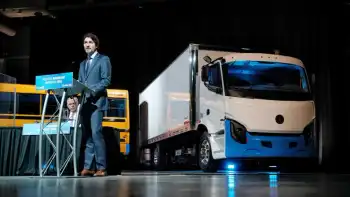
The Canadian federal government is set to sign a new agreement with Germany to strategize on a “clean-energy transition,” with clean hydrogen in Canada expected to be a key player the Globe and Mail reports.
“Germany is probably the world’s most interesting market for hydrogen right now, and Canada is potentially a very big power in its production,” Sabine Sparwasser, Germany’s ambassador to Canada, said in an interview.
However, some friction is expected as Natural Resources Minister Seamus O’Regan has been endorsing “blue” hydrogen, while Germany has been more interested in “green” hydrogen. The former hydrogen is produced from natural gas or other fossil fuels, while simultaneously “using carbon-capture technology to minimize emissions from the process.” In contrast, “green” hydrogen, is manufactured from non-fossil fuel sources, and cleaning up Canada's electricity is critical to meeting climate pledges.
“How the focus on blue hydrogen will be aligned with Canada’s goal of reaching climate neutrality by 2050 is not spelled out in detail,” says an executive summary of the report by the Berlin-based think tank and consultancy Adelphi. “As a result, the strategy seems to be more of a vision for the future of those provinces with large fossil fuel resources.”
According to an IEA report Canada will need more electricity to hit net-zero, underscoring the strategy questions.
Internationally
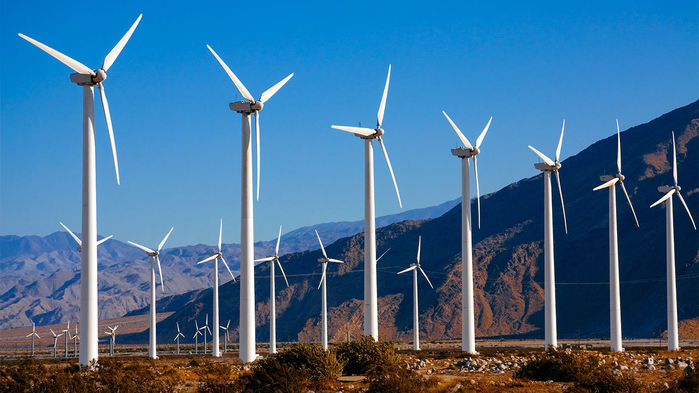
Japan is in talks to develop undersea cables that would bring offshore wind energy to Tokyo and the Kansai region, as the country hopes to more than quadrable its wind capacity from 10 gigawatts in 2030 to 45 gigawatts in 2040. The construction of the cables would cost about US$9.2 billion.
In Western Canada, bridging the electricity gap between Alberta and B.C. makes similar climate sense, proponents argue.
Approximately 80 per cent of that offshore power is expected to be built in Hokkaido, Tohoku, and Kyushu regions. The project is part of the country’s pledge to achieve decarbonization by 2050, according to BNN Bloomberg.
Meanwhile, Russia is falling behind in the world’s transition to clean energy.
“What’s the alternative? Russia can’t be an exporter of clean energy, that path isn’t open for us,” says Konstantin Simonov, director of the National Energy Security Fund, a Moscow consultancy whose clients include major oil and gas companies. “We can’t just swap fossil fuel production for clean energy production, because we don’t have any technology of our own.” Ultimately, natural gas will always be cheaper than renewable energy in Russia, Simonov added. This story also from BNN Bloomberg.
Finally, New Zealand’s Tilt Renewables Ltd., an electricity company, has announced it would be acquired by Powering Australian Renewables (PowAR) for NZ$2.94 billion (US$2.10 billion). PowAR is Australia’s largest owner of wind and solar energy, and the deal will give the energy giant access to Tilt’s 20 wind farms. Reuters has the story.
In Canada
Air Canada has unveiled plans to fight climate change. Specifically, the airlines giant has committed to reducing greenhouse gases (GHG) by 20 per cent from flights by 2030, investing $50 million in sustainable aviation fuel (SAF), and ensuring net-zero emissions by 2050.
In other news, B.C. is facing mounting pressure to abstain from logging “old growth forests” while the government transitions to more sustainable forestry policies. A report titled A New Future for Old Forests called on the provincial government to act within six months to protect such forests in April 2020.
The province's Site C mega dam is billions over budget but will go ahead, the premier said, highlighting the energy sector's complexity.
Last September, the province announced, “it would temporarily defer old growth harvesting in close to 353,000 hectares in nine different areas.” The B.C. government will hold consultations with First Nations and other forestry stakeholders “to determine the next areas where harvesting may be deferred,” according to Forests Minister Katrine Conroy. The Canadian Press has more.
Separately, LNG powered with electricity could be a boon for B.C.'s independent power producers, analysts say.
Finally, Pickering Developments Inc. has come forward saying it will not “alter or remove the wetland” that was meant to house an Amazon facility, according to CBC News.
The announcement comes after CBC News’s previously reported that the Toronto and Region Conservation Authority (TRCA) was pressured to issue a construction permit to Pickering Developments Inc. by Doug Ford’s provincial government. However, on March 12, an official with Amazon Canada told CBC News that the company no longer wished to build a warehouse on the site.




“In light of a recent announcement that a new fulfilment centre will no longer be located on this property, this voluntary undertaking ensures that no work, legally authorized by that permit, will occur,” Pickering Development Inc. said in a statement provided to CBC Toronto.