This Thin-Film Turns Heat Waste From Electronics Into Electricity
CSA Z463 Electrical Maintenance -
Our customized live online or in‑person group training can be delivered to your staff at your location.

- Live Online
- 6 hours Instructor-led
- Group Training Available
Pyroelectric Energy Harvesting captures low-grade heat via thin-film materials, converting temperature fluctuations into power for waste heat recovery in electronics, vehicles, and industrial machinery, offering a thermoelectric alternative for microelectronics and exascale systems.
Key Information
Thin-film pyroelectric harvesting turns temperature changes into electricity, enabling low-grade waste heat recovery.
Thin-film UC Berkeley prototype reported in Nature Materials.
Harvests below 100 C waste heat via pyroelectric effect, not Seebeck.
Targets electronics, vehicles, and industrial low-grade heat.
Enables nighttime power from ambient temperature fluctuations.
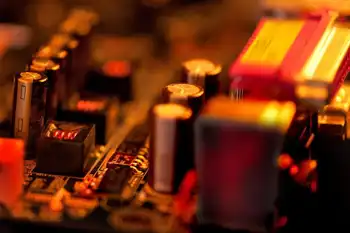
The electronic device you are reading this on is currently producing a modest to significant amount of waste heat that emerging thermoelectric materials could help recover in principle. In fact, nearly 70% of the energy produced annually in the US is ultimately wasted as heat, much of it less than 100 degrees Celsius. The main culprits are computers and other electronic devices, vehicles, as well as industrial machinery. Heat waste is also a big problem for supercomputers, because as more circuitry is condensed into smaller and smaller areas, the hotter those microcircuits get.
It’s also been estimated that a single next-generation exascale supercomputer could feasibly use up to 10% of the energy output of just one coal-fired power station, and that nearly all of that energy would ultimately be wasted as heat.
What if it were possible to convert that heat energy into a useable energy source, and even to generate electricity at night from temperature differences as well?
#google#
It’s not a new idea, of course. In fact the possibility of thermoelectric energy generation, where thermal energy is turned into electricity was recognised as early as 1821, around the same time that Michael Faraday developed the electric motor.
Unfortunately, when the heat source is ‘low grade’, aka less than 100 degrees Celsius, a number of limitations arise, and related approaches for nighttime renewable generation face similar challenges as well. For it to work well, you need materials that have quite high electrical conductivity, but low thermal conductivity. It’s not an easy combination to come by.
Taking a different approach, researchers at the University of California, Berkeley, have developed thin-film that uses pyroelectric harvesting to capture heat-waste and convert heat to electricity in prototype demonstrations. The findings were published today in Nature Materials.