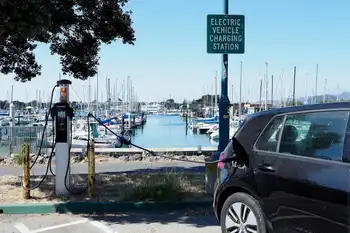
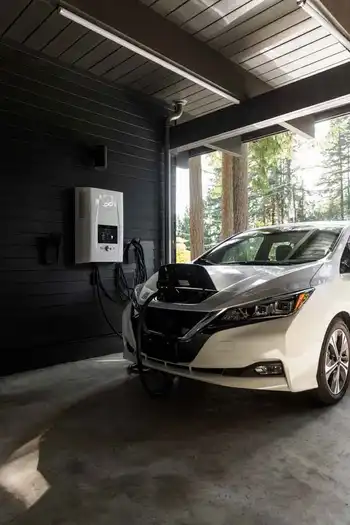
'Consumer Reports' finds electric cars really do save money in the long run
Protective Relay Training - Basic
Our customized live online or in‑person group training can be delivered to your staff at your location.

- Live Online
- 12 hours Instructor-led
- Group Training Available
Electric Vehicle Ownership Costs include lower maintenance, repair, and fuel expenses; Consumer Reports shows BEV and PHEV TCO beats ICE over 200,000 miles, with per-mile savings compounding through electricity prices and reduced service.
A Closer Look
Lifetime EV expenses, typically lower than ICE, due to cheaper electricity, reduced maintenance, and fewer repairs.
BEV: $0.012/mi to 50k; $0.028/mi after; vs ICE up to $0.06/mi
PHEV: $0.021/mi to 50k; $0.031/mi after; still below ICE
Savings increase over 200k miles from fuel and service reductions
Electric vehicles are a relatively new technology, and the EV age is arriving ahead of schedule today. Even though we technically saw the first battery-powered vehicles more than 100 years ago, they haven’t really become viable transportation in the modern world until recently, and they are greener than ever in all 50 states as the grid improves.
As viable as they may now be, however, it still seems they’re unarguably more expensive than their conventional internal-combustion counterparts, prompting many to ask whether it’s time to buy an electric car today. Well, until now.
Lower maintenence costs and the lower price of electricity versus gasoline (see the typical cost to charge an electric vehicle in most regions) actually make electric cars much cheaper in the long run, despite their often higher purchase price, according to a new survey by Consumer Reports. The information was collected using annual reliability surveys conducted by CR in 2019 and 2020.
In the first 50,000 miles (80,500 km), battery electric vehicles cost just US$0.012 per mile for maintenence and repairs, while plug-in hybrid models bump that number up to USD$0.021. Compare these numbers to the typical USD$0.028 cost for internal combustion vehicles, and it becomes clear the more you drive, the more you will save, and across the U.S. plug-ins logged 19 billion electric miles in 2021 to prove the point. After 50,000 miles, the costs for BEV and PHEV vehicles is US$0.028 and US$0.031 respectively, while ICE vehicles jump to US$0.06 per mile.
To put it more practically, if you chose to buy a Model 3 instead of a BMW 330i, you’d see a total US$17,600 in savings over the lifetime of the vehicle, aligning with evidence that EVs are better for the planet and your budget as well, based on average driving. In the SUV sector, buying a Tesla Model Y instead of a Lexus crossover would save US$13,400 (provided the former’s roof doesn’t fly off) and buying a Nissan Leaf over a Honda Civic would save US$6,000 over the lifetime of the vehicles.
CR defines the vehicle’s “lifetime” as 200,000 miles (320,000 km). Ergo the final caveat: while it sounds like driving electric means big savings, you might only see those returns after quite a long period of ownership, though some forecasts suggest that within a decade adoption will be nearly universal for many drivers.