Apparent Power in AC Circuits
By R.W. Hurst, Editor
Power Quality Training - Harmonic Analysis, Diagnostics, Mitigation
Our customized live online or in‑person group training can be delivered to your staff at your location.
- Live Online
- 12 hours Instructor-led
- Group Training Available
Download Our OSHA 4475 Fact Sheet – Being Aware of Arc Flash Hazards
- Identify root causes of arc flash incidents and contributing conditions
- Apply prevention strategies including LOTO, PPE, and testing protocols
- Understand OSHA requirements for training and equipment maintenance
Apparent power is the total electrical demand an AC circuit places on its source, combining both the energy that performs useful work and the energy required to sustain electric and magnetic fields. Measured in volt-amperes, it reflects the capacity that transformers, generators, and conductors must supply in real operating conditions. Apparent power matters because equipment is sized by total current flow, not just by the portion that produces useful output. When apparent power rises, system loading, losses, and thermal stress increase even if real power consumption remains unchanged.
Apparent power, therefore, represents the practical burden an AC load imposes on the electrical system. Two circuits performing the same amount of real work can demand very different apparent power depending on their phase relationship. This distinction explains why current, not only wattage, governs conductor sizing, transformer ratings, and system efficiency.
Understanding apparent power is essential for interpreting power factor, diagnosing loading problems, and predicting how electrical infrastructure responds to different types of loads.
Understanding the Role of Apparent Power in Power Systems
Apparent power sits at the center of AC power analysis because it defines how much electrical capacity must be delivered, not merely how much useful work is produced. In a purely resistive circuit, voltage and current remain aligned, so apparent and real power are essentially equal. Once inductive or capacitive elements enter the circuit, the waveforms shift apart. Current either lags or leads voltage, increasing the total apparent demand even though the useful output does not increase.
This phase separation introduces reactive power. Reactive power does not perform work, but it forces additional current to circulate through the system. That extra current increases conductor heating, voltage drop, and equipment loading. As a result, the source must deliver more total power than the load actually converts into useful output.
Test Your Knowledge About Power Quality!
Think you know Power Quality? Take our quick, interactive quiz and test your knowledge in minutes.
- Instantly see your results and score
- Identify strengths and areas for improvement
- Challenge yourself on real-world electrical topics
In non-resistive circuits, energy is continually exchanged between the source and the reactive elements rather than consumed. The system must support that exchange every cycle, which is why apparent power grows while real power remains unchanged. This behavior is what makes apparent power a governing factor in power quality analysis, system design, and capacity planning.
Comparison of Real, Reactive, and Apparent Power
| Power Type | Symbol | Unit (SI) | Description |
|---|---|---|---|
| Real Power | P | Watts (W) | The actual power consumed by devices to perform useful work. |
| Reactive Power | Q | Volt-Amperes Reactive (VAR) | Power stored and released by inductive or capacitive elements. |
| Apparent Power | S | Volt-Amperes (VA) | The combination of real and reactive power in an AC circuit. |
| Power Factor | PF | Ratio (0 to 1) | The ratio of P to apparent power, indicating efficiency. |
Apparent Power Formula Explained
The Apparent Power Formula, S = V × I, shows that apparent power is determined strictly by voltage and current, not by how effectively that current performs useful work. The equation captures total electrical demand, not efficiency. Whether that demand reflects productive energy or inflated loading depends entirely on the phase relationship between voltage and current.
When a circuit contains inductive or capacitive elements, the same voltage and current can produce very different real outputs. The apparent value rises even though the useful work does not. For that reason, evaluating a circuit requires more than reading instruments. It requires understanding how the load shifts current relative to voltage.
Knowing voltage and current provides the numerical value of apparent power, but interpreting that value correctly requires examining the load behavior that created it. Without that context, the formula describes capacity, not performance. See this page for a more detailed description of an apparent power calculator.
Professional Training Resources
Engineers and technicians who work directly with apparent power, reactive loading, and power factor often require deeper practical training to apply these principles in real facilities. The following resources focus on measurement, correction methods, and system-level analysis in operating environments:
Power Quality Analysis Training
Request a Free Power Quality Training Quotation
Active, Reactive, and Apparent Components
Real energy drives motors, lights, and electronics. Reactive energy supports the internal fields that allow inductors and capacitors to function, moving in and out of devices without contributing to output. Apparent power describes the combined effect. Power factor (PF) expresses how much of the apparent total is being used productively. When the PF falls, more current flows than is required for the real load, leading to higher losses and a greater kVA burden on the system.

Significance in AC Circuits
Managing apparent power is essential for keeping electrical systems efficient and appropriately sized. Resistive loads keep the apparent power close to the real power, while motors, transformers, welders, and other inductive equipment draw additional reactive power, which increases the total. As the apparent value grows, so does the stress on supply equipment, conductors, and protective devices.
Visualization with a Triangle
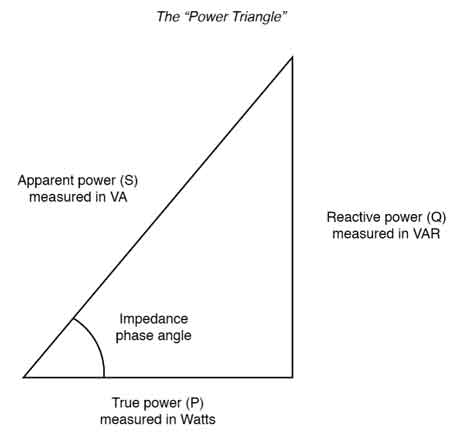
The power triangle provides a simple way to visualize these relationships. Real energy lies on the horizontal axis, reactive energy extends vertically, and apparent power forms the diagonal. The angle between real and apparent components defines the PF. A smaller angle reflects more efficient use of energy and minimal reactive burden.
Measurement Methods
Modern wattmeters and power analyzers measure voltage, current, phase angle, and component powers at once. From these values, apparent, real, and reactive components can be derived with precision. In three-phase systems, each phase contributes its own apparent value, and the total is obtained by combining the three results.
PF Correction
PF correction, usually accomplished with capacitors or tuned systems, offsets inductive effects and reduces the reactive component. This improves efficiency, lowers apparent demand, and reduces strain on upstream equipment. In facilities with large motor loads, correction can significantly reduce energy costs and enhance system reliability.
An inductive load causes current to lag behind voltage, increasing the phase angle and raising reactive demand. Circuits supplying these loads rely on accurate voltage measurements in volts and careful distinction between real and reactive components. Without that clarity, equipment may be undersized or overloaded, particularly when operating motors or transformers that depend heavily on reactive energy to maintain their fields.
Sign Up for Electricity Forum’s Power Quality Newsletter
Stay informed with our FREE Power Quality Newsletter — get the latest news, breakthrough technologies, and expert insights, delivered straight to your inbox.
Frequently Asked Questions
What is the difference: apparent power vs real power?
Real power is the portion that performs useful work. Apparent power is the total electrical power delivered by an AC source, including both the useful and reactive components, expressed in volt-amperes.
What is the PF, and how does it relate to apparent power?
PF expresses how effectively apparent energy is converted into real energy. It is the ratio of real power to apparent power. A low PF indicates excessive current draw for the real load, driving up kVA demand and equipment stress.
What is the difference between active power and apparent power?
Active power alone performs work. Apparent power reflects the combined real and reactive demands of the load, making it the value that electrical infrastructure must support.
What is PF, and why is it important?
PF measures efficiency. A high PF means the system uses current effectively. Low PF raises operating costs, increases losses, and may require larger equipment.
How does Q affect electrical systems?
Reactive energy sustains magnetic or electric fields in devices. While it performs no direct work, it increases apparent demand and can necessitate larger transformers, generators, and conductors.
Related Articles
