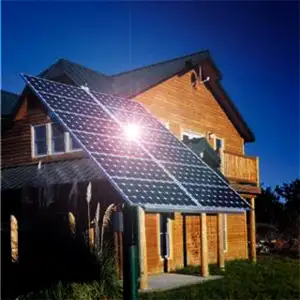
Alternative Energy Solar Power Explained

Alternative Energy Solar Power converts sunlight via photovoltaics into electricity using PV modules, inverters, MPPT, and battery storage for grid-tied systems, microgrids, and off-grid resilience, improving efficiency, reliability, and decarbonization.
Alternative Energy Solar Power Overview and Best Practices
Alternative energy solar power is, perhaps, the first energy source that comes to mind when most people think of alternative energy sources, but — unlike wind — alternative energy solar power is still a long way from being considered a mainstream source of electricity generation. In fact, it accounts for less than one per cent of the world’s electricity production. For readers new to the topic, what is alternative energy clarifies key definitions and the role solar plays among emerging options.
Two main ways to harness the sun's energy to generate alternative energy solar power include: photovoltaic (PV), where solar cells directly convert sunlight into electricity, and solar-thermal power. PV is a proven alternative energy solar power technology that is most appropriate for small-scale applications to provide heat and power to individual houses and businesses. Sunlight falls on a layer of semiconductors, which excites electrons. This, in turn, creates an electrical current that can be transmitted via electrical cables to serve useful applications. Alternative energy solar power solar PV cells are already cost effective for powering houses and businesses in some regions. As with alternative energy wind power, costs have reduced in the past few years thanks to technological developments. But, unlike alternative energy wind power, however, large scale electricity production using alternative energy solar power costs about 22 cents per kilowatt-hour, significantly more expensive than its fossil fuel generation competitors and nuclear power. Comparative cost and performance data across technologies are summarized in alternative energy power, which details where PV is most competitive.
Solar-thermal energy is a completely different technology. It collects and concentrates the sun's rays to heat up fuel such glycol or any other liquid that heats up easily. The heat trapped within this medium is then used transferred through a heat exchanger so that heated water can be used for regular hot water applications like bathing and space heating and heating swimming pools, etc. Fossil fuels are sometimes used as a back-up to heat the water in the boiler if the sun is not shining and cannot heat the system. There are three different methods for concentrating the sun’s rays:
- Parabolic Trough — This method uses long, parallel rows of glass mirrors in the shape of a trough to concentrate the sun’s rays directly at the “absorber tube," which is often filled with oil, to achieve maximum effect.
- Power Tower — Similar in principle to parabolic-trough technology, the mirrors are placed in a circular pattern. At the center of the circle is a tower, at the top of which is a receiver filled with water, air, liquid metal or molten salt that moves to a power block and is used to power a steam turbine.
- Parabolic Disk System — In this system, dishes rather than troughs are used to concentrate the power of the sun.
To see how these concentrating approaches integrate with storage, controls, and grid interconnection, alternative energy systems offers design-level guidance for practitioners.
Advantages of Alternative Energy Solar Power
In spite of its cost versus other sources of energy, alternative energy solar power is attracting interest due to the following:
- Alternative energy solar power makes use of a renewable natural resource that is readily available in many parts of the world.
- The process used to generate alternative energy solar power is emission-free.
- Costs have greatly reduced thanks to technological advances in solar power technlogy to a point that it can compete with fossil fuel alternatives in specific circumstances.
- The technology is scalable in that it can be used for domestic heating purposes or on a larger scale for commercial electricity generation, as solar water heaters are an established technology, widely available and simple to install and maintain.
For a deeper dive into real-world performance benefits, case studies in advantages of solar power highlight emissions reductions and lifecycle savings.
Disadvantages of Alternative Energy Solar Power
The biggest barriers to increasing alternative energy solar power generation are the cost, the amount of land required for large-scale electricity production, and the intermittent nature of the energy source. In terms of the latter, thermal systems do not work at night or in inclement weather. Storage of hot water for commercial or domestic use is simple because only insulated tanks are needed, but further technology advancements are required to improve storage for the higher-temperature liquids required to generate electricity on a large scale and storage of the electricity itself. Emerging roadmaps in alternative energy solutions discuss thermal storage media and hybrid configurations that mitigate intermittency challenges.
Outlook for Alternative Energy Solar Power
Although alternative energy wind power is more economical and has been more widely adopted for large-scale power production than solar energy, solar energy is the most flexible in scale and application. It also is widely available and an environmentally benign source of alternative energy. Broader market drivers and renewable policy trends are tracked under renewable alternative energy, providing useful context for long-term solar adoption.
It is currently a $7 billion per year business that is growing at 40 per cent per annum. As part of the wider clean-energy portfolio, the taxonomy in forms of alternative energy situates solar alongside complementary technologies.