Alternative Energy Systems - Green Energy Power Conversion

Alternative energy systems integrate solar PV, wind turbines, battery storage, and smart grids using power electronics, inverters, and microgrids to optimize reliability, grid integration, load management, and decarbonization in modern electrical engineering.
Alternative Energy Systems: Real-World Examples and Uses
Alternative energy systems - What are solar power systems?
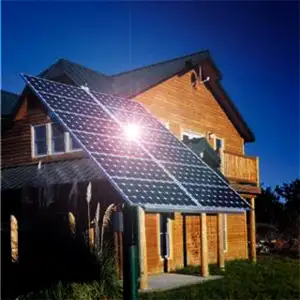
Solar electric technology, an adequate alternative energy system, takes sunlight and coverts it into electricity directly. The technology works best when the sun is at its peak, at which time it strikes the solar electric modules directly. Solar electric technology does not use the sun's heat to make electricity, but there are certain solar alternative energy systems that are used to heat water. Instead, this alternative energy system produces the electricity directly from the electrons that are freed from sunlight's interaction with semiconductor materials that are found in the solar electric cells. For a deeper overview of photovoltaic system types and performance, see this guide to solar power systems for additional context.
The basic building block of solar electric technology is the solar cell, which are then are wired together with other solar electric cells to produce a solar electric module. The power output on these modules ranges from about 10 watts to 300 watts. One or more solar electric modules connected to an inverter means that the solar electric alternative energy system is tied to the utility grid. The inverter switches the system's direct-current (DC) power to alternating current (AC). This current is what is compatible with the utility grid and it powers devices such as appliances, lights, televisions, and computers. This AC output integrates with household circuits as a reliable source of alternative energy power used by everyday devices.
Alternative energy systems - What are wind power systems?
Wind is air in motion, which comes from the sun. It's an overly abundant fuel source that doesn't harm the environment. The alternative energy systems for this renewable fuel source deflects or stops the wind, converting the wind’s kinetic energy into potential energy of pressure, thus create wind loads. These wind loads are harnessed by wind electric alternative energy systems such as wind turbines to create electricity. Because wind replenishes naturally, it is a prime example of renewable alternative energy that supports long-term decarbonization.
Here are some of the components that make up a wind turbine:
Ongoing advances in materials, controls, and siting practices are central to alternative energy development that improves turbine efficiency and reliability.
- Blades: Most of the wind turbines of this alternative energy sytems have three blades, though there are some with two blades. Blades range from 30 to 50 meters (100 to 165 feet) in length, with the most commonly-used sizes at around 40 meters (130 feet). A 40 meter LM glass-fiber blade for a 1.5 MW turbine weighs 5,780 kg (6.4 tons) and one for a 2.0 MW turbine weighs 6,290 kg (6.9 tons).
- Controller: There is a controller in the nacelle and one at the base of the turbine. The controller monitors the condition of the turbine and controls the turbine movement.
- Generators: Most wind turbines convert the mechanical energy generated from the wind turbine’s rotation into electrical energy using a single AC generator.
- Nacelles: The nacelle houses the main components of the wind turbine, such as the controller and the generator.
- Rotor: The rotor includes both the blades and the hub (the component to which the blades are attached).
- Towers: The towers are usually tubular steel at varying heights starting at about 60 to 80 meters (about 195 to 260 feet). There are some towers with heights around 100 meters (330 feet).
Alternative energy Systems - What are geothermal power systems?
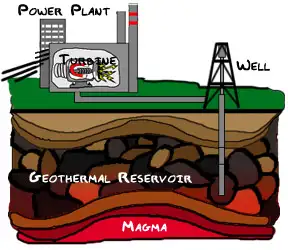
Geothermal technology, an alternative energy system that doesn't hurt the environment, produces electricity from hydrothermal (hot water/steam) resources. Hydrothermal resources at high temperatures (between 300 and 700 degrees Fahrenheit) can be used to make electricity. These high-temperature resources may originate from either hot water wells or dry steam wells. These resources can be used by drilling wells into the earth and, at that point, piping the steam or hot water to the surface. Geothermal wells are one to two miles deep. Geothermal stands alongside solar, wind, and other forms of alternative energy that leverage naturally replenished resources.
In a dry steam power plant, the steam from the geothermal reservoir is connected from a well to a turbine generator to make electricity. In a hot water plant, some of the hot water is turned into steam. The steam powers a turbine generator just like a dry steam plant. Then, when the steam cools, it turns into water and goes back into the ground to be used over again. These closed-loop practices exemplify the principles behind what is alternative energy in practical power generation.
Alternative energy systems - What are wave power systems?
Wave power plants are rare because waves aren't produced on a consistentent basis. However, if harnessed, wave production can supply an adequate amount electricity. This electricity production starts with wave energy converters (WEC), which converts wave energy into mechanical energy, and then uses a power take-off system to generate electricity. The power is generally taken using a turbine driven by pressurized air, pressurized oil, or pressurized water. Many coastal pilot sites evaluate device survivability and grid integration through targeted alternative energy projects across diverse sea states.
There are three categories of wave energy converters, an environmently-friendly alternative energy system, based on how they capture the mechanical energy:
- Point absorbers are devices whose surface area is very small in comparison to the wave length of ocean waves.
- Attenuators are relatively long devices that are placed parallel to the general direction of wave travel.
- Terminators are placed a certain way, so that they can absorb energy from the wave.