Solar Power Becomes EU’s Top Electricity Source
CSA Z462 Arc Flash Training – Electrical Safety Compliance Course
Our customized live online or in‑person group training can be delivered to your staff at your location.

- Live Online
- 6 hours Instructor-led
- Group Training Available
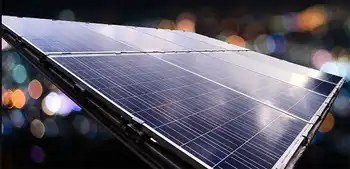
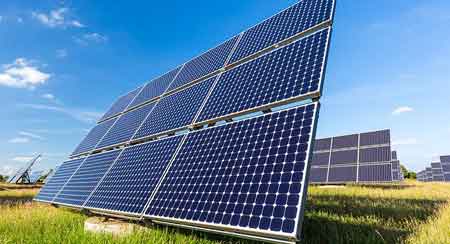
Solar has become the EU’s main source of electricity, marking a historic turning point in Europe’s energy mix as solar power surpasses nuclear and wind, accelerates renewable expansion, lowers carbon emissions, and strengthens the EU’s clean energy transition.
Why has Solar Become the EU’s Main Source of Electricity?
Solar has become the EU’s primary source of electricity due to rapid solar expansion, lower installation costs, and robust clean energy policies, which have boosted generation, reduced fossil fuel dependence, and accelerated Europe’s transition toward sustainability.
? Surging solar capacity and falling costs
? Policy support for renewable energy growth
? Reduced reliance on oil, gas, and coal
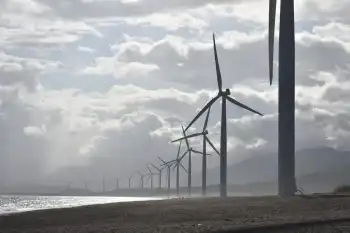
Eurostat’s data shows that June 2025 was the first month ever when solar overtook all other energy sources, accounting for 22 percent of the EU’s energy mix, reflecting a broader renewables surge across the region. Nuclear power followed closely at 21.6 percent, wind at 15.8 percent, hydro at 14.1 percent, and natural gas at 13.8 percent.
The shift comes at a critical time as Europe continues to navigate the economic and energy challenges brought on by Russia’s ongoing war in Ukraine. With fossil fuel markets remaining volatile, countries have increasingly viewed investment in renewables as both an environmental and strategic imperative. As Stait noted, energy resilience and renewable infrastructure have now become a “strategic necessity.”
Denmark led the EU in renewable energy generation during the second quarter, producing 94.7% of its electricity from renewable sources. It was followed by Latvia (93.4%), Austria (91.8%), Croatia (89.5%), and Portugal (85.6%). Luxembourg recorded the largest year-on-year increase, up 13.5 percent, largely due to a surge in solar production. Belgium also saw strong growth, with a 9.1 percent rise in renewable generation compared to 2024, while Ireland targets over one-third green electricity within four years.
At the other end of the spectrum, Slovakia, Malta, and the Czech Republic lagged behind, producing just 19.9%, 21.2%, and 22.1% of their electricity from renewable sources, respectively.
Stait believes the continued expansion of renewables will help stabilize and eventually lower electricity prices across Europe. “The accelerated buildout of renewables will ultimately lower bills for both businesses and other users—but slower buildouts mean sky-high prices may linger,” he said.
He added a call for decisive action: “My advice to European nations would be to keep going further and faster. There needs to be political action to solve grid congestion, and to create opportunities for innovation and manufacturing in Europe will be critical to keep momentum.”
With solar energy now taking the lead for the first time, Europe’s clean energy transformation appears to be entering a new phase, as global renewables set new records and momentum builds—one that combines environmental sustainability with energy security and economic opportunity.