BC Hydro Introduces 'Vehicle-to-Grid' Pilot Initiative
Electrical Testing & Commissioning of Power Systems
Our customized live online or in‑person group training can be delivered to your staff at your location.
- Live Online
- 12 hours Instructor-led
- Group Training Available
BC Hydro Vehicle-to-Grid Pilot enables EVs to deliver V2G power, using bidirectional charging to provide grid services, clean energy resilience, and emergency power for microgrids, critical infrastructure, and storm response.
The Important Points
BC Hydro's V2G pilot uses parked EVs as mobile batteries, supplying bidirectional power to the grid for resilience.
Medium- and heavy-duty EV integration via 60 kW charger
Supports critical infrastructure and storm response
Cleaner, faster alternative to diesel generators
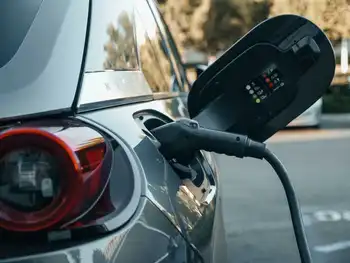
BC Hydro has unveiled an innovative pilot project designed to enable electric vehicles (EVs) to contribute electricity back to the power grid, with some owners able to sell electricity back to the grid through managed programs, effectively transforming these vehicles into mobile energy storage units that function as capacity on wheels for the electricity system.
The utility company recently announced the successful trial of the vehicle-to-grid program, allowing for the transfer of electricity from the batteries of medium- and heavy-duty EVs back to the electrical grid. This surplus electricity can be utilized in various ways, including supporting emergency response efforts by energizing critical infrastructure and to power buildings during natural disasters or major storms. It offers a cleaner, faster, and more flexible alternative to conventional methods like the use of diesel generators.
BC Hydro's President and CEO, Chris O'Riley, highlighted the significance of this initiative, stating, "The average car is parked 95 per cent of the time, and with the evolution of technology solutions like vehicle-to-grid, stationary vehicles hold the potential to become mobile batteries, powered by clean and affordable electricity."
The successful test was conducted using a Lion Electric school bus provided by Lynch Bus Lines, which was connected to a 60-kilowatt charger, illustrating BC Hydro's rollout of faster electric vehicle charging across the province. BC Hydro pointed out that the typical bus battery holds 66 kilowatts of electricity, sufficient to power 24 single-family homes with electric heating for two hours. Therefore, if 1,000 of these buses were converted to electric power, they could collectively supply electricity to 24,000 homes for two hours.
This groundbreaking project is a collaborative effort between BC Hydro, Powertech, and Coast to Coast Experience, with funding support from the provincial government amid study findings that B.C. may need to double its power output to meet transport electrification.
While this pilot marks the first of its kind in Canada, similar technology has already been successfully implemented in Europe and the United States, including California's efforts to leverage EVs for grid stability that offer promising potential for enhancing the energy landscape and sustainability in the region.
Separately, Nova Scotia Power plans to pilot electric vehicle to grid integration in Atlantic Canada, underscoring growing national interest in V2G approaches.