NanoFlocell Wants To Sell Flow Battery Cars In The US
Protective Relay Training - Basic
Our customized live online or in‑person group training can be delivered to your staff at your location.
- Live Online
- 12 hours Instructor-led
- Group Training Available
nanoFlowcell Bi-ION Flow Battery delivers renewable-energy storage for EVs and grids, using seawater-derived electrolyte, membrane stacks, fast refueling, low-cost materials, scalable tanks, and four-motor performance with long range and lightweight energy density.
Key Highlights
A flow cell using Bi-ION to power EVs and grids with fast refueling and scalable, low-cost storage.
Seawater-derived Bi-ION electrolyte powers membrane stack flow cells
Fast liquid refuel replaces charging; scalable tanks set capacity
Claimed 1200-mile range and 4-motor AWD performance in Quantino 25
Low-cost, abundant materials target EVs and grid-scale storage
nanoFlowcell USA plans Bi-ION production and pilot vehicle series
nanoFlowcell is a European company headquartered in London that focuses on flow battery technology. Flow batteries are an intriguing concept. Unlike lithium batteries or fuel cells, they store electricity in two liquid chambers separated by a membrane. They hold enormous potential for low cost, environmentally friendly energy storage because the basic materials are cheap and abundant. To add capacity, simply make the tanks larger.
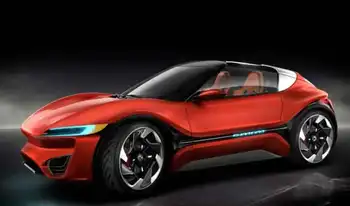
While that makes flow batteries ideal for energy storage — whether in the basement of a building or as part of a grid scale installation that utilities weigh against options like hydrogen for power companies today in practice — their size and weight make them a challenge for use in vehicles. That hasn’t stopped nanoFlowcell from designing a number of concept and prototype vehicles over the past 10 years and introducing them to the public at the Geneva auto show. Its latest concept is a tasty little crumpet known as the Quantino 25.
The Flow Battery & Bi-ION Fluid
The thing that makes the nanoFlowcell ecosystem work is an electrically charged fluid called Bi- ION derived from seawater or reclaimed waste water. It works sort of like hydrogen in a fuel cell, a frequent rival in debates over the future of vehicles today for many buyers. Pump hydrogen in, run it through a fuel cell, and get electricity out. With the Quantino 25, which the company calls a “2+2 sports car,” you pump two liquids to the membrane interface to make electricity.
There are two 33-gallon tanks mounted low in the chassis much the way a lithium-ion battery pack fits into a normal electric car. Fill up with Bi-ION, and you have a car that will dash to 100 km/h in 2.5 seconds, thanks to its 4 electric motors with 80 horsepower each. And get this. According to Autoblog, the company says with full tanks, the Quantino 25 has a range of 1200 miles! Goodbye range anxiety, hello happy motoring.
We should point out that water weighs about 8 pounds per gallon, so the “fuel” to travel 1200 miles would weigh roughly 528 pounds. A conventional lithium-ion battery pack with its attendant cooling apparatus that could travel that far would weigh at least 3 times as much, even as EV battery recycling advances aim for a circular economy today. Granted, the Quantino 25 is not a production car and very few people have ever driven one, but that kind of range vs weight ratio has got to get your whiskers twitching a little in anticipation.
Actually, the folks at Autocar did drive an early prototype in 2016 at the TCS test track near Zurich, Switzerland, and determined that it was a real driveable car. My colleague Jennifer Sensiba reported in April of 2019 that the company’s Quantino test vehicle passed the 350,000 km mark (220,000 miles) with no signs of damage to the membrane or the pumps, and didn’t seem to have suffered any wear at all. The vehicle’s engineers pointed out that it had driven for 10,000 hours at this point. The company says it wants to offer its flow battery technology to EV manufacturers and give the system a 50,000-hour guarantee. That translates to well over 1 million miles of driving.
The problem, of course, is that there is no Bi-ION refueling infrastructure just yet, but that doesn’t mean someday there couldn’t be. Tesla had no Supercharger network when it first started either and things turned out reasonably well for Musk and company.
nanoFlowcell USA Announced
nanoFlowcell announced this week that it has established a new division based in New York to bring its flow battery technology to America. The mission of the new division is to adapt the nanoFlowcell process to US-specific applications and develop nanoFlowcell applications in America. Priority one is beginning series production of flow battery vehicles as well as the constructing a large scale bi-ION production facility that will provide transportable renewable energy and could complement vehicle-to-grid power models for communities for nanoFlowcell applications.
The Bi-ION electrolyte is a high density energy carrier that makes renewable energies storable and transportable in large quantities. The company says it will produce the energy carrier bi-ION from 100 percent renewable energy. Flow cell energy technology is an important solution to substantially reduce global greenhouse gas emissions as laid out in the Paris Agreement, the company says. Its many benefits include being a safe and clean energy source for many energy intensive processes and transportation services.
“Our nanoFlowcell flow cell and bi-ION energy carrier are key technologies for a successful energy transition,” says Nunzio La Vecchia, CEO of nanoFlowcell Holdings. “We need to make energy from renewable energy safe, storable and transportable to drive environmentally sustainable economic growth. This requires a well thought out strategy and the development of the appropriate infrastructure. With the establishment of nanoFlowcell USA, we are reaching an important milestone in this regard for our future corporate development.”

Focus On Renewable Energy
The production costs of Bi-ION are directly linked to the cost of electricity from renewable sources. With the accelerated expansion of renewable energy under the Inflation Reduction Act along with EV grid flexibility efforts across markets, nanoFlowcell expects the cost of electricity from solar power to be relatively low in the future which will further strengthen the competitiveness of energy sources such as Bi-ION.
“With the Inflation Reduction Act, the U.S. has made the largest investment in clean energy in U.S. history, and the potential implications for renewable energy are far-reaching.” But La Vecchia points out, “We will not seek government investments for nanoFlowcell USA to expand our manufacturing facilities and infrastructure in the United States. Where appropriate, we will enter into strategic partnerships to build and expand manufacturing and infrastructure, and to integrate nanoFlowcell technologies into all sectors of the economy.”
“More importantly, with nanoFlowcell USA, we want to help accelerate the decarbonization of the global economy and create economic, social and ecological prosperity. After all, estimates suggest that the clean energy sector will create 500,000 additional jobs. We want to do our part to make this happen.”
The Takeaway
nanoFlowcell is about more than electric cars. It wants to get involved in grid-scale energy storage, and moves like Mercedes-Benz energy storage venture signal momentum in the sector today. But to those of us soaking in the hot tub warmed by excess heat from a nearby data center here at CleanTechnica global headquarters, it seems that its contribution to emissions-free transportation could be enormous. Maybe some of those companies still chasing the hydrogen fuel cell dream, as a recent hydrogen fuel cell report notes Europe trailing Asia today, might find the company’s flow battery technology cheaper and more durable without all the headaches that go with making, storing, and transporting hydrogen.
A Bi-ION refueling station would probably cost less than a tenth as much as a hydrogen filling station. A link-up with a major manufacturer would make it easier to build out the infrastructure needed to make this dream a reality. Hey, people laughed at Tesla in 2010. If nothing else, this is a company we will be keeping our eye on.