Prairie Provinces to lead Canada in renewable energy growth
Electrical Testing & Commissioning of Power Systems
Our customized live online or in‑person group training can be delivered to your staff at your location.
- Live Online
- 12 hours Instructor-led
- Group Training Available
Canada Renewable Power sees Prairie Provinces surge as Canada Energy Regulator projects rising wind, solar, and hydro capacity in Alberta, Saskatchewan, and Manitoba, replacing coal, expanding the grid, and lowering emissions through 2023.
What's Going On
A CER outlook on Canada's grid: Prairie wind, solar, and hydro growth replacing coal and cutting emissions by 2023.
Prairie wind, solar capacity surge by 2023
Alberta, Saskatchewan shift from coal to renewables, gas
Manitoba strengthens hydro leadership, low-carbon grid
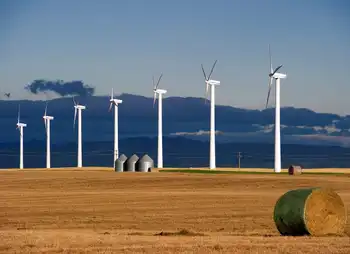
Canada's Prairie Provinces will lead the country's growth in renewable energy capacity over the next three years, says a new report by the Canada Energy Regulator (CER).
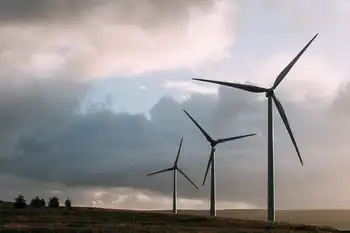
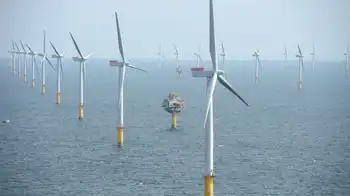
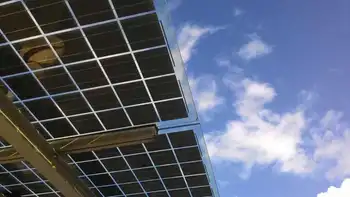
The online report, titled Canada's Renewable Power, says decreased reliance on coal and substantial increases in wind and solar capacity will increase the amount of renewable energy added to the grid in Alberta and Saskatchewan. Meanwhile, Manitoba will strengthen its position as a prominent hydro producer in Canada. The pace of overall renewable energy growth is expected to slow at the national level between 2021 and 2023, in part due to lagging solar demand in some markets, but with strong growth in provinces with a large reliance on fossil fuel generation.
The report explores electricity generation in Canada and provides a short-term outlook for renewable electricity capacity in each province and territory to 2023. It also features a series of interactive visuals that allow for comparison between regions and highlights the diversity of electricity sources across Canada.
Electricity generation from renewable sources is expected to continue increasing as demand for electricity grows and the country continues its transition to a lower-carbon economy. Canada will see gradual declines in overall carbon emissions from electricity generation largely due to Saskatchewan, Alberta, Nova Scotia and New Brunswick replacing coal with renewables and natural gas. The pace of growth beyond 2023 in renewable power will depend on technological developments; consumer preferences; and government policies and programs.
Canada is a world leader in renewable power, generating almost two-thirds of its electricity from renewables with hydro as the dominant source, and the country ranks in the top 10 for hydropower jobs worldwide. Canada also has one of the world's lowest carbon intensities for electricity.
The CER produces neutral and fact-based energy analysis to inform the energy conversation in Canada. This report is part of a portfolio of publications on energy supply, demand and infrastructure that the CER publishes regularly as part of its ongoing market monitoring.
Report highlights
- Wind capacity in Saskatchewan is projected to triple and nearly double in Alberta between 2020 and 2023 as wind power becomes more competitive in the market. Significant solar capacity growth is also projected, with Alberta adding 1,200 MW by 2023, as Canada approaches a 5 GW solar milestone by that time.
- In Alberta, the share of renewables in the capacity mix is expected to increase from 16% in 2017 to 26% by 2023, with a renewable energy surge supporting thousands of jobs. Similarly, Saskatchewan's renewable share of capacity is expected to increase from 25% in 2018 to 33% in 2023.
- Renewable capacity growth slows most notably in Ontario, where policy changes have scaled back growth projections. Between 2010 and 2017, renewable capacity grew 6.8% per year. Between 2018 and 2023, growth in Ontario slows to 0.4% per year as capacity grows by 466 MW over this period.
- New large-scale hydro, wind, and solar projects will push the share of renewables in Canada's electricity mix from 67% of installed capacity in 2017 to 71% in 2023.
- Hydro is the dominant source of electricity in Canada accounting for 55% of total installed capacity and 59% of generation, though Alberta's limited hydro stands as a notable exception, with B.C., Manitoba, Quebec, Newfoundland and Labrador, and Yukon deriving more than 90% of their power from hydro.
- The jurisdictions with the highest percentage of non-hydro renewable electricity generation are PEI (100%), Nova Scotia (15.8%), and Ontario (10.5%).
- In 2010, 62.8% of Canada's total electricity generation (364 681 GW‧h) was from renewable sources. By 2018, 66.2% (425 722 GW‧h) was from renewable sources and projected to be 71.0% by 2023.