EV charging to solar panels: How connected tech is changing the homes we live in
CSA Z462 Arc Flash Training – Electrical Safety Compliance Course
Our customized live online or in‑person group training can be delivered to your staff at your location.

- Live Online
- 6 hours Instructor-led
- Group Training Available
Connected Home Energy Technologies integrate solar panels, smart meters, EV charging, battery storage, and IoT energy management to cut costs, optimize demand response, and monitor usage in real time for safer, lower-carbon homes.
What's Going On
Devices and systems managing home energy: solar PV, smart meters, EV chargers, and storage to cut costs and emissions.
Includes solar PV, batteries, smart meters, and home EV chargers
Real-time monitoring of usage, costs, and carbon footprint
Optimizes demand response and shifts loads off peak
App-based control; integrates with voice assistants
Supports V2G and grid stability with flexible storage
Driven by advances in tech and the advent of high-speed internet connections, many of us now have easy access to a raft of information about the buildings we live in.
Thanks to the proliferation of hardware and software within the home, this trend shows no sign of letting up and comes in many different forms, from indoor air quality monitors to “smart” doorbells which provide us with visual, real-time notifications when someone is attempting to access our property.
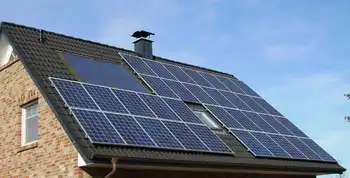
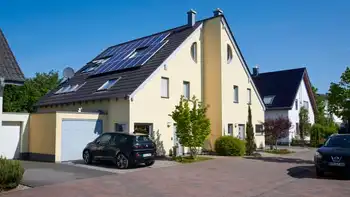
Residential renewable electricity generation is also starting to gain traction, with a growing number of people installing solar panels in the hope of reducing bills and their environmental footprint.
In the U.S. alone, the residential solar market installed 738 megawatts of capacity in the third quarter of 2020, a 14% jump compared to the second quarter, according to a recent report from the Solar Energy Industries Association and Wood Mackenzie.
Earlier this month, California-headquartered SunPower — which specializes in the design, production and delivery of solar panels and systems — announced it was rolling out an app which will enable homeowners to assess and manage their energy generation, usage and battery storage settings with their mobile, as California looks to EVs for grid stability amid broader electrification.
The service will be available to customers using its SunPower Eqiunox system and represents yet another instance of how connected technologies can provide us with valuable information about how buildings operate.
Similar offerings in this increasingly crowded marketplace include so-called “smart” meters, which allow consumers to see how much energy they are using and money they are spending in real time.
Elsewhere products such as Hive, from Centrica, enable users to install a range of connected kit — from plugs and lighting to thermostats and indoor cameras — that can be controlled via an app on their cellphone and, in some cases, their voice.
Connected car charging
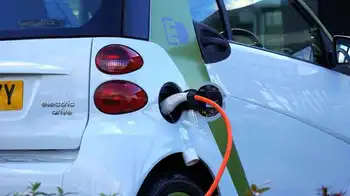
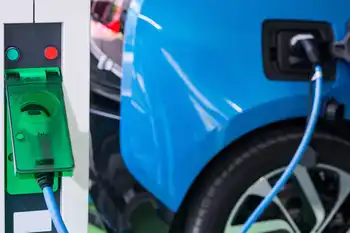
Solar panels represent one way that sustainable tech can be integrated into homes. Other examples include the installation of charging points for electric vehicles, as EV growth challenges state grids in many markets.
With governments around the world looking to phase-out the sale of diesel and gasoline vehicles and encourage consumers to buy electric, and Model 3's utility impact underscoring likely shifts in demand, residential charging systems could become an integral part of the built environment in the years ahead.
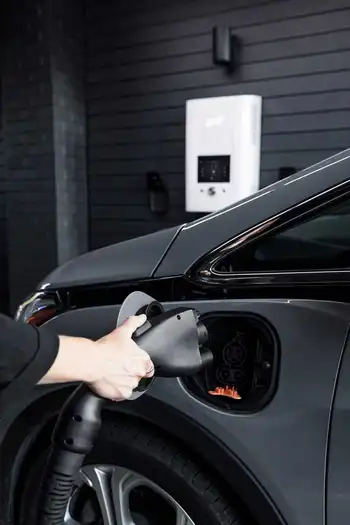
Firms offering home-based, connected, charging include Pod Point and BP Pulse. Both of these services include apps which provide data such as how much energy has been used, the cost of charging and charge history.
Another firm, Wallbox, recently announced it was launching its first electric vehicle charger for North American homes.
The company, which is based in Spain, said the system was compatible with all types of electric vehicles, would allow customers to schedule charges, and could be voice-controlled through Google Assistant and Amazon Alexa, while mobile energy storage promises added flexibility for strained grids.
Away from the private sector, governments are also making efforts to encourage the development of home charging infrastructure.
Over the weekend, U.K. authorities said the Electric Vehicle Homecharge Scheme — which gives drivers as much as £350 (around $487) toward a charging system — would be extended and expanded, targeting those who live in leasehold and rented properties, even as UK grid capacity for EVs remains under scrutiny.
Mike Hawes, chief executive of the Society of Motor Manufacturers and Traders, described the government’s announcement as “welcome and a step in the right direction.”
“As we race towards the phase out of sales of new petrol and diesel cars and vans by 2030, we need to accelerate the expansion of the electric vehicle charging network, and proper grid management can ensure EVs are accommodated at scale,” he added.
“An electric vehicle revolution will need the home and workplace installations this announcement will encourage, but also a massive increase in on-street public charging and rapid charge points on our strategic road network.”
Change afoot, but challenges ahead
As attempts to decarbonize buildings and society ramp up, the way our homes look and function could be on the cusp of quite a big shift.
“Grid-connected home generation technologies such as solar electric panels will be important in the shift to a 100% renewable electricity grid, but decarbonising the electricity supply is only one part of the transition,” Peter Tyldesley, chief executive of the Centre for Alternative Technology, told CNBC via email.
With reference to Britain, Tyldesley went on to explain how his organization envisaged “just under 10% of electricity in a future zero carbon society coming from solar PV, utilising 15-20% of … U.K. roof area.” This, he said, compared to over 75% of electricity coming from wind power.



Heating, Tyldesley went on to state, represented “the bigger challenge.”
“To decarbonise the U.K.’s housing stock at the scale and speed needed to get to zero carbon, we’ll need to refurbish possibly a million houses every year for the next few decades to improve their insulation and airtightness and to install heat pumps or other non-fossil fuel heating,” he said.
“To do this, we urgently need a co-ordinated national programme with a commitment to multi-year government investment,” he added.
On the subject of buildings becoming increasingly connected, providing us with a huge amount of data about how they function, Tyldesley sought to highlight some of the opportunities this could create.
“Studies of the roll out of smart metering technology have shown that consumers use less energy when they are able to monitor their consumption in real time, so this kind of technology can be a useful part of behaviour change programmes when combined with other forms of support for home efficiency improvements,” he said.
“The roll out of smart appliances can go one step further — responding to signals from the grid and, through vehicle-to-grid power, helping to shift consumption away from peak times towards periods when more renewable energy is available,” he added.