Liner Power Transformer Application
By Harold WIlliams, Associate Editor
Substation Grounding Training
Our customized live online or in‑person group training can be delivered to your staff at your location.
- Live Online
- 12 hours Instructor-led
- Group Training Available
Download Our OSHA 4474 Fact Sheet – Establishing Boundaries Around Arc Flash Hazards
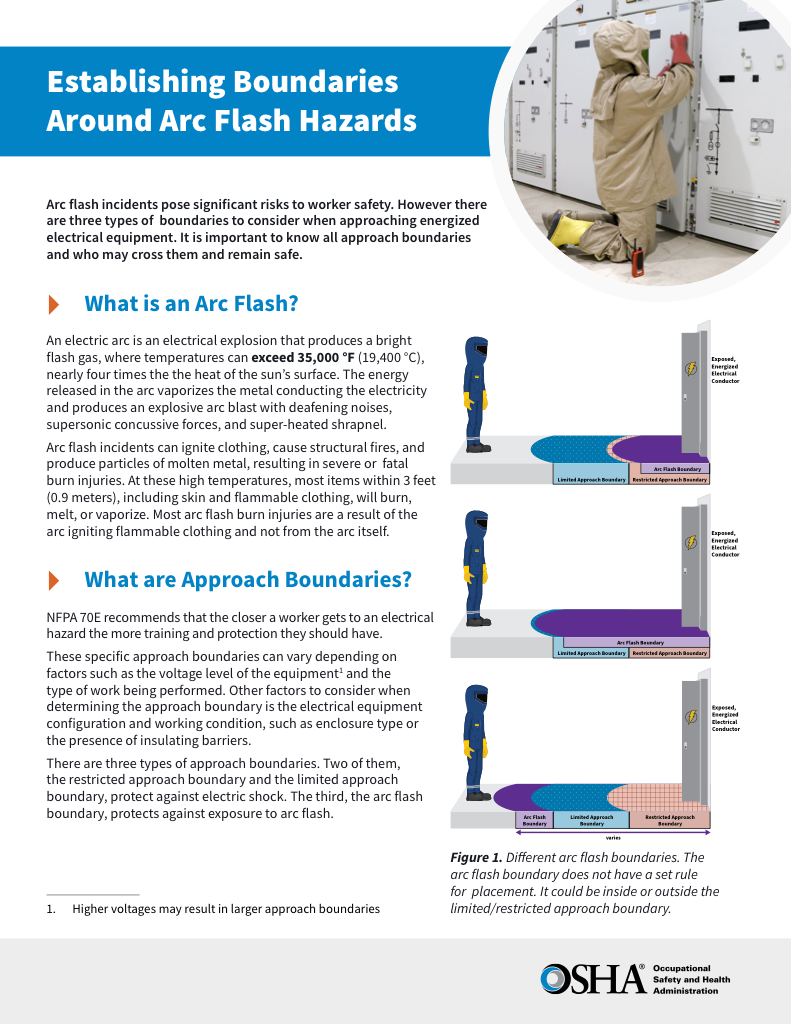
- Understand the difference between arc flash and electric shock boundaries
- Learn who may cross each boundary and under what conditions
- Apply voltage-based rules for safer approach distances
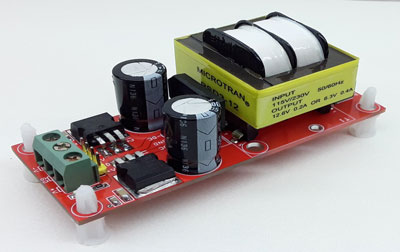
A liner power transformer helps deliver steady and predictable voltage for many electrical systems, supporting dependable energy distribution, clean output, and long-term reliability in industrial, commercial, and renewable environments.
Understanding Liner Power Transformer Design
The value of a liner power transformer begins with its construction. These transformers are built to deliver predictable voltage conversion without introducing unwanted noise or instability into a circuit. Their robust insulation systems, solid thermal design, and dependable magnetic performance allow them to function as the quiet backbone of many sensitive electrical applications. In environments where clean, stable voltage is essential, the natural steadiness of linear transformer operation becomes a key advantage. It plays an important role in overall power quality, ensuring voltage stability and minimizing disturbances across electrical systems.
Electrical Transformer Maintenance Training
Substation Maintenance Training
Request a Free Training Quotation
Voltage Regulation and Clean DC Conversion
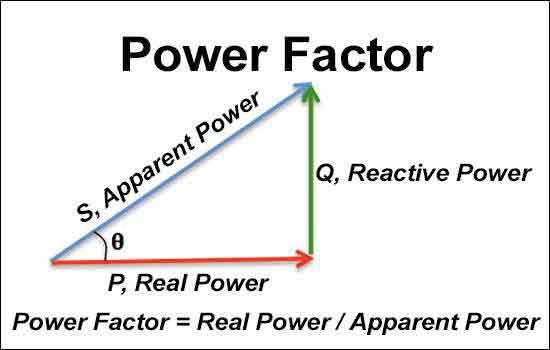
A liner transformer typically forms the first stage of a traditional voltage regulation assembly. It steps the incoming AC voltage up or down to a usable level, after which rectifiers convert the AC signal into pulsating DC. Filters remove ripple, and linear regulators refine the output further into a stable, low-noise DC supply. This sequence, though familiar, is crucial in test equipment, calibration instruments, audio systems, and medical electronics, where even small fluctuations can undermine performance. The transformer's predictable low-frequency operation minimizes electromagnetic interference, creating an ideal foundation for precision circuitry. When analyzing transformer efficiency, understanding apparent power is essential, as it reflects the relationship between real and reactive power in the circuit. Engineers often rely on an apparent power calculator to precisely size transformers and ensure that loads are matched to distribution capabilities.
Electricity Today T&D Magazine Subscribe for FREE

- Timely insights from industry experts
- Practical solutions T&D engineers
- Free access to every issue
Comparing Linear Transformers and SMPS Technology
While switch-mode power supplies have gained popularity for their high efficiency and compact size, they introduce high-frequency switching noise that must be managed carefully. This kind of transformer avoids these complications entirely by operating at line frequency, producing a quieter and more stable output. This makes linear systems larger and heavier, but also far better suited to environments where signal purity, low distortion, and simple maintenance outrank efficiency gains. Engineers frequently evaluate reactive loads, including capacitive and inductive components, to ensure system stability. Power quality analyzers remain valuable tools for assessing harmonics, flicker, grounding integrity, and overall system behavior when liner transformers form the core of the design.
Applications in Industrial and Sensitive Electrical Systems
Because they deliver a consistently regulated output, liner transformers appear across many electrical platforms: industrial control circuits, instrumentation panels, audio amplifiers, laboratory supplies, and medical devices that require dependable operation. They are especially valued in settings where noise and voltage drift cannot be tolerated. These transformers handle input-voltage shifts gracefully, maintaining strict line regulation and ensuring downstream components remain protected and functional. Proper electrical grounding works hand in hand with these transformers to protect equipment, stabilize voltage, and provide a safe fault current path.
Selection Factors for Voltage Regulation Systems
Choosing the correct liner transformer involves more than matching voltage ratings. Engineers consider thermal performance, expected load behavior, mechanical space constraints, grounding requirements, and long-term durability. A transformer designed for continuous operation in industrial environments must manage heat effectively, resist insulation fatigue, and maintain stable output under varying demand. Evaluating apparent power requirements helps ensure the transformer can support the load's real and reactive components without exceeding its rating.
The impact of reactive loads, such as a capacitive load, must be carefully considered in systems to maintain stability and efficiency. To evaluate the health of systems that depend on liner transformers, professionals often use a power quality analyzer to detect harmonics, voltage flicker, and grounding issues.
Maintenance, Reliability, and Common Failure Modes
Liner transformers are known for their longevity, but reliable operation depends on proper maintenance. Overheating, insulation degradation, and overloading remain the most common causes of failure. Sufficient ventilation, regular inspection of wiring and terminations, and confirmation that loading remains within the rated limits significantly extend service life. When a transformer is properly maintained, it can operate for decades with minimal performance drift, supporting stable system behavior throughout its lifespan.
A Stable Foundation for Clean and Controlled Power
In settings where clean, uninterrupted power is essential, the liner power transformer remains unmatched. Its ability to deliver stable voltage conversion, support precision regulation stages, and operate quietly makes it indispensable in industrial, commercial, and laboratory environments. Understanding its design principles, operational behavior, and maintenance needs allows technicians and engineers to build highly reliable electrical systems capable of supporting sensitive equipment and long-term performance requirements.
Related Articles
