Power Quality Analyzer Explained
By R.W. Hurst, The Electricity Forum
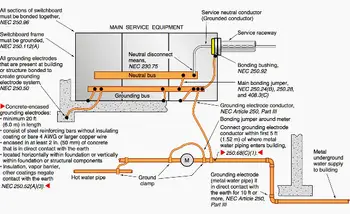
Grounding and Bonding and The NEC - Section 250
Our customized live online or in‑person group training can be delivered to your staff at your location.
- Live Online
- 12 hours Instructor-led
- Group Training Available
Download Our OSHA 4474 Fact Sheet – Establishing Boundaries Around Arc Flash Hazards

- Understand the difference between arc flash and electric shock boundaries
- Learn who may cross each boundary and under what conditions
- Apply voltage-based rules for safer approach distances
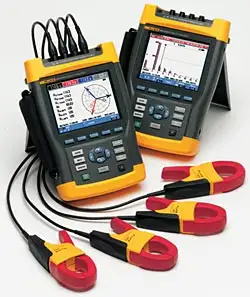
A power quality analyzer is a measurement instrument used to observe how electricity behaves under real operating conditions. It records voltage, current, frequency, and waveform characteristics at a specific connection point, allowing engineers to see electrical behavior that would otherwise remain hidden.
In many facilities, electrical systems appear stable until something subtle begins to drift. Equipment may behave inconsistently, protective devices may operate without an obvious cause, or energy performance may slowly degrade. A power quality analyzer is used when assumptions about energy delivery no longer match what the system is actually doing within the broader context of what is power quality.
Unlike basic meters that present steady averages, an analyzer captures how electrical conditions change. Its purpose is not to manage the system or correct faults, but to document electrical behavior as it occurs, often as a short-term counterpart to continuous power quality monitoring.
Power Quality Analysis Training
Request a Free Power Quality Training Quotation
Why does a Power Quality Analyzer Matter?
Electrical systems are designed to operate within predictable boundaries, but real-world conditions are rarely static. Loads change, switching events occur, and external influences introduce variation. Over time, these effects accumulate in ways that are difficult to observe without dedicated instrumentation.
A power quality analyzer bridges that gap between expectation and reality. They provide a factual record of electrical behavior at moments when performance, reliability, or efficiency comes into question, often before formal investigation methods such as power quality troubleshooting are applied.
Their value lies in observation. By capturing what the system is doing rather than what it is supposed to do, these instruments give engineers a clearer starting point for understanding electrical conditions.
Test Your Knowledge About Power Quality!
Think you know Power Quality? Take our quick, interactive quiz and test your knowledge in minutes.
- Instantly see your results and score
- Identify strengths and areas for improvement
- Challenge yourself on real-world electrical topics
What a Power Quality Analyzer Measures
At a fundamental level, a power quality analyzer observes how electrical energy is delivered at a given point. Voltage measurements show how closely supply levels track their intended values and how often they deviate from them. Current measurements reflect how loads draw energy and whether that draw remains balanced across phases.
Frequency tracking provides insight into overall system stability, while waveform capture reveals distortion that cannot be seen through averaged readings alone. These waveform irregularities are often discussed in more depth on pages dedicated to power quality and harmonics, rather than here.
Many instruments also report quantities such as apparent power, real power, reactive components, and power factor. These values are presented as measured conditions, not prescriptions, offering context rather than conclusions.
How Does it Capture Electrical Behavior
A power quality analyzer translates live electrical signals into usable information. Sensors interface directly with energized conductors, sampling voltage and current across phases. These signals are converted into digital form, where processing algorithms reconstruct waveforms and identify variations.
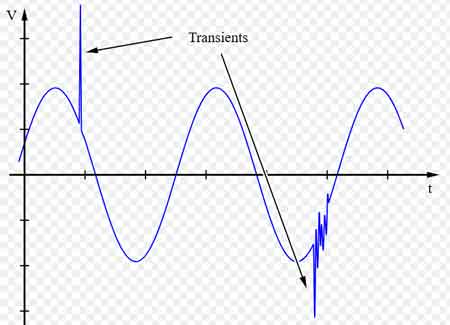
The instrument records both steady behaviour and transient activity, allowing brief anomalies and longer trends to be viewed within a single measurement window. Depending on how it is deployed, the device may provide a short diagnostic snapshot or a broader record spanning hours or days.
The outcome is a structured view of electrical behavior that reflects what occurred during the measurement period, without attempting to interpret or resolve the causes.
Common Types of PQ Analyzers
There are several types of PQ analyzers, each suited to a particular measurement context.
A portable power quality analyzer is commonly used when temporary documentation is required or when access to multiple locations is needed. Permanently installed units are used where ongoing visibility is required, often at critical connection points within a facility’s overall power quality framework.
Regardless of form, the defining characteristic remains the same: the analyzer is an instrument designed to observe electrical conditions at a point of connection.
Common Power Quality Analyzer Configurations
| Analyzer Configuration | Typical Role | Common Environment |
|---|---|---|
| Portable | Temporary observation and short-term recording | Field work, commissioning, audits |
| Permanently installed | Ongoing condition visibility | Industrial and commercial facilities |
| Harmonic-focused | Detailed distortion observation | Facilities with nonlinear loads |
| Multifunctional | Broad electrical observation | Large or complex systems |
Where Are They Typically Used?
Their use appears wherever electrical reliability matters. In industrial settings, they are used to document conditions affecting motors, drives, and production equipment. In commercial buildings, they help establish whether supply behavior aligns with expectations during normal operation.
Healthcare facilities rely on analyzers to confirm stable electrical input for sensitive equipment. Utilities and infrastructure operators use them at key interfaces to understand how electricity behaves under changing load conditions, sometimes alongside protective strategies such as lightning protection.
Measurement Frameworks and Reference Context
To ensure consistent reporting, many power quality analyzers align their measurement methods with recognized international frameworks. These references define how parameters are captured and reported, enabling results from different instruments or locations to be meaningfully compared.
On this page, those frameworks serve as background context rather than requirements or limits. Their role is consistency, not compliance.
Working Around Live Systems
Because they connect directly to energized equipment, they must be handled with care. Installation and operation should be performed by qualified personnel familiar with live electrical environments and proper electrical grounding practices.
Accurate results depend not only on the instrument, but on proper connections and sound judgment. Incorrect sensor placement or misinterpretation of data can obscure the very conditions the power quality analyzer is meant to reveal.
The Role of the Analyzer in Understanding Power Quality
A power quality analyzer does not correct problems or prescribe solutions. It makes electrical behavior visible.
By recording how voltage, current, and waveforms behave under real conditions, these instruments provide a factual basis for understanding system performance. Whether used briefly or installed for extended observation, the analyzer plays a simple but essential role within the broader PQ ecosystem, showing what is happening without assumptions, rather than addressing specific issues such as power quality voltage flicker or mitigation methods.
Sign Up for Electricity Forum’s Power Quality Newsletter
Stay informed with our FREE Power Quality Newsletter — get the latest news, breakthrough technologies, and expert insights, delivered straight to your inbox.
That clarity is what makes the instrument valuable across industries that depend on a reliable electrical supply, even when everything appears to be working.
Related Articles