Electrical Safety Testers For Electrical Equipment
NFPA 70E Training
Our customized live online or in‑person group training can be delivered to your staff at your location.
- Live Online
- 6 hours Instructor-led
- Group Training Available
Download Our OSHA 4475 Fact Sheet – Being Aware of Arc Flash Hazards
- Identify root causes of arc flash incidents and contributing conditions
- Apply prevention strategies including LOTO, PPE, and testing protocols
- Understand OSHA requirements for training and equipment maintenance
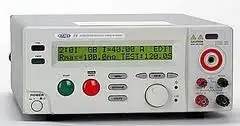
Electrical safety testers verify insulation resistance, hipot (dielectric withstand), ground bond, and leakage current to ensure compliance with IEC standards in R&D, production, and field service, enhancing product safety and quality.
Electrical Safety Testers Explained: What You Need to Know
Electrical equipment undergoes many electrical safety tests from manufacturers and standards organizations before consumer use. Electrical safety testers are used for three types of electrical safety tests: ground-wire continuity tests, operational tests, and insulation tests.
Electrical Safety Testers – Ground Wire Continuity Test
These kinds of electrical safety testers test the quality of three-wire power cords in metal-cased electrical products. No electrical current should pass through this wire during regular operation, and, in the case of an electrical fault, the electrical product’s frame should hold at ground potential. If there were no ground wire, an electrical safety hazard could occur. Canadian and U.S. (CSA and UL) standards require that ground-wire continuity be verified using an indicating electrical safety tester. All electrical safety testers in North America must meet Canadian Standards Association (CSA) and Underwriters Laboratories (UL) standards in Canada and the U.S, respectively. For foundational guidance on regulatory expectations, see the overview of electrical safety requirements for context.
Electrical Safety Testers – Insulation Tests
These kinds of electrical safety testers verify the insulation quality of an electrical product. The three kinds of insulation tests performed are:
Additional background on insulation and test methodologies is covered in electrical safety topics for practitioners.
Dielectric Strength (Hi-Pot): Electrical safety testers perform a production test by inspecting the spacing and insulating materials to see if they’re adequate. High-voltage electrical current is applied to the wires that hold the electrical device’s case, which carry the current at ground potential. If high-fault currents or a disruptive discharge occur, the product is considered faulty. Results are either a PASS or a FAIL. Test operators often consult electrical safety manuals to confirm voltage limits and shutdown protocols.
Sign Up for Electricity Forum’s Arc Flash Newsletter
Stay informed with our FREE Arc Flash Newsletter — get the latest news, breakthrough technologies, and expert insights, delivered straight to your inbox.
Line-Voltage Leakage Current: Electrical safety testers conduct this test by operating the electrical product at a nominal voltage while keeping the ground wire open. At that point, a milliampmeter is used to measure the shock that a person would receive during operation. The electrical safety device is connected to exposed metal parts in an area where the product and ground can be measured. When tests involve exposed conductors, adherence to electrical safety work practices reduces risk.
Insulation Resistance (IR): Electrical safety testers measure, record, and analyze the insulation of large motors and the wiring conditions in buildings to ensure long-term stability, among other uses. This test shares similarities with the line-voltage leakage current test, except that the insulation resistance test isn’t ideal for assessing the safety of electrical products. Long-term trending of IR results supports broader electrical engineering safety programs within facilities.
Electrical Safety Testers - Operational Tests
Electrical safety testers that perform operational tests verify that the product operates without drawing excessive current, overheating, or creating a hazard. A measurement of the product’s wattage or current draw will often accomplish this goal. Measurements in temperature and speed can also be performed. Baseline performance checks align with overarching electrical safety principles for equipment commissioning.
For personnel training and awareness, consult general electrical safety resources applicable across industries.
