Electrical Safety Grounding Explained
By EF

NFPA 70E Training
Our customized live online or in‑person group training can be delivered to your staff at your location.

- Live Online
- 6 hours Instructor-led
- Group Training Available
Download Our OSHA 3875 Fact Sheet – Electrical PPE for Power Industry Workers
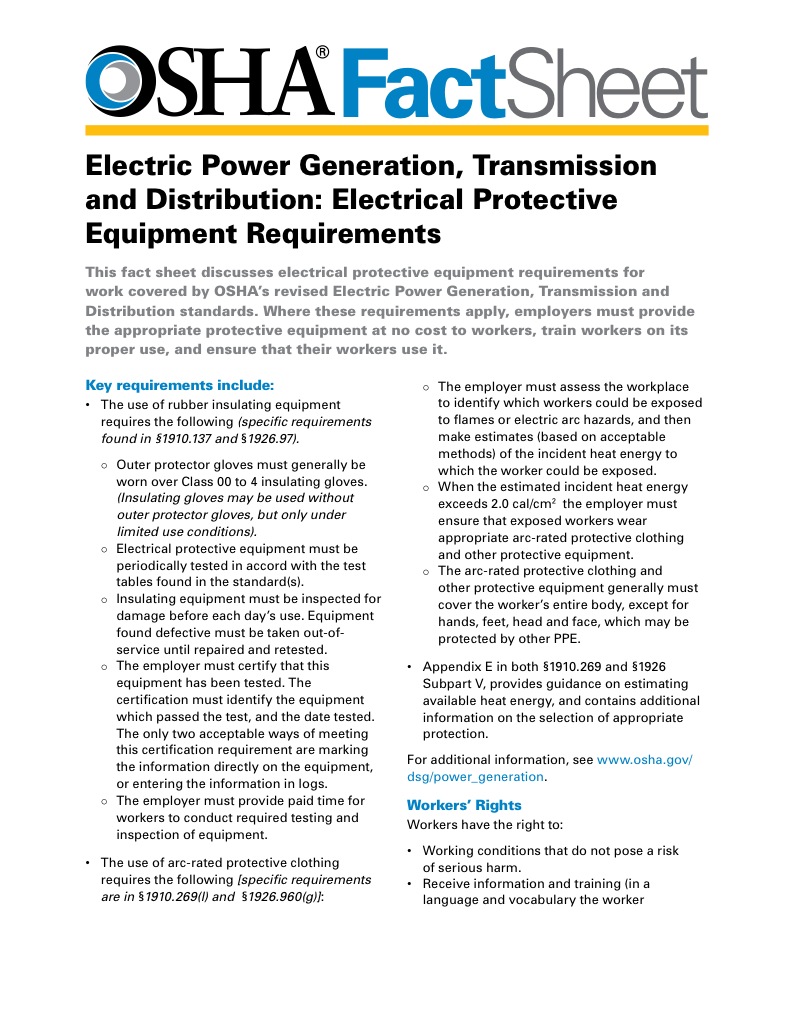
- Follow rules for rubber gloves, arc-rated PPE, and inspection procedures
- Learn employer obligations for testing, certification, and training
- Protect workers from arc flash and electrical shock injuries
Electrical safety grounding establishes earthing and bonding paths, controls fault current, stabilizes voltage, and protects equipment via ground electrodes, equipotential bonding, surge protection, and NEC/IEEE-compliant grounding conductors, thereby reducing touch voltage and arc flash risk.
Understanding Electrical Safety Grounding
Electrical safety grounding is one way to reduce the effects of electrical hazards on people and equipment. Electrical safety grounding uses the earth or ground as a conductor to drain away unwanted electrical discharges. Besides power lines and the human body (particularly the human heart), electrical current can travel through water, dirt, rocks and anything else on the ground.
This fact makes the earth the ultimate conductor and a great way to promote electrical safety grounding. For foundational grounding concepts, the overview of basic electrical safety explains how current seeks low-impedance paths, as relevant to soil conditions and electrode design.
In practice, if any electrical wiring becomes faulty, the electrical ground absorbs a large portion of the stray electrical current, rather than an electrical worker repairing or servicing electrical, computer, or electronic systems. But to achieve this, electrical circuits must be securely grounded to the earth through a qualified electrical safety grounding system or network. To reinforce these practices, consult general electrical safety guidance that outlines lockout procedures, verification steps, and protective measures for service work.
Additional risk controls are outlined in the electrical safety precautions, which detail inspection routines and fault-response protocols to be followed before re-energization.
How proper grounding improves electrical safety
Secure electrical ground connections protect workers and help ensure the safe operation of equipment. Sometimes, electrical equipment is susceptible to electrical interference, but electrical safety grounding systems can protect against it. Also, if lightning strikes the building housing electrical equipment, considerable damage can result, but proper electrical safety grounding, using the earth as a conductor, can dissipate any electrical current.
Electricity Today T&D Magazine Subscribe for FREE
- Timely insights from industry experts
- Practical solutions T&D engineers
- Free access to every issue
System components can also be damaged by electrostatic buildup, but electrical safety grounding helps to avoid damage by draining away any unwanted electrical current. A good grounded point usually has a constant voltage, no matter what happens in the system or the circuit. For a broader context on controlling electrical hazards, see the electrical safety resources that connect grounding strategies with overcurrent protection and bonding practices.
Practical maintenance checkpoints are summarized in electrical safety tips, helping teams verify continuity, tighten terminations, and document grounding integrity during inspections.
Grounding systems and circuits
A few essential pieces of equipment connect together to make a good grounded electrical safety system: the grounded conductor, the grounded bus bars, the grounded conductor for equipment, and any other metal parts that don’t possess electrical currents. This system is put together by joining an appropriately sized unspliced grounded electrode conductor between the grounded electrode system and the grounded bus bar. Engineering-focused references, such as electrical engineering safety standards, further describe sizing criteria, bonding jumpers, and fault-current pathways for compliant installations.
Integrating these design details with organizational policies from electrical health and safety strengthens worker training, incident reporting, and continuous improvement around grounding programs.
Related Articles
