Delta Wye Transformer Explained
By Howard Williams, Associate Editor
Substation Relay Protection Training
Our customized live online or in‑person group training can be delivered to your staff at your location.
- Live Online
- 12 hours Instructor-led
- Group Training Available
Download Our OSHA 3875 Fact Sheet – Electrical PPE for Power Industry Workers
- Follow rules for rubber gloves, arc-rated PPE, and inspection procedures
- Learn employer obligations for testing, certification, and training
- Protect workers from arc flash and electrical shock injuries
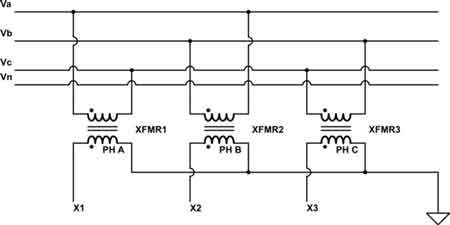
A delta-wye transformer steps three-phase power down to create a grounded neutral for 208Y/120V and similar systems. Learn where it fits, what the 30-degree shift changes, and how grounding and harmonics behave.
Delta-Wye Transformer Connection
A delta-wye transformer is usually chosen for one practical reason: it makes three-phase power usable downstream without forcing the upstream system to carry the consequences of every imbalance and nonlinear load. The delta primary is a tough interface. The wye secondary is a workable output. Put together, they are a reliable way to feed mixed plant loads and distribution panels where line-to-neutral voltages and a stable neutral are not optional.
This connection shows up where engineers stop talking about “ideal” three-phase systems and start dealing with what facilities actually look like, lighting and receptacles sharing space with motors, variable-frequency drives, UPS equipment, and whatever else the site has accumulated over the years. For a broader context on how this connection fits within industrial transformer practice, see the electrical transformers overview.
Where Delta-Wye Fits in the System
Most of the time, the delta-wye sits at a boundary. Upstream is a utility or medium-voltage supply where the system is treated as a three-wire, line-to-line system. Downstream is where the facility needs four-wire service, a neutral, and predictable fault behavior. That downstream reality is the reason the wye secondary matters.
It is also why delta-wye tends to be used as a step-down interface feeding 480V class distribution, 208Y/120V panels, or other secondary systems where single-phase loads are unavoidable, a role shared with other step-down transformers designed for facility distribution. This page isn't trying to re-teach delta and wye basics; your delta vs wye transformer guide should own that intent cleanly.
Sign Up for Electricity Forum’s Electrical Transformers Newsletter
Stay informed with our FREE Electrical Transformers Newsletter — get the latest news, breakthrough technologies, and expert insights, delivered straight to your inbox.
The Neutral Is a Feature, Not a Detail
People often describe delta-wye as “providing a neutral,” but that phrase hides what is actually valuable. The neutral gives you a controlled reference point. That allows sensible grounding design, consistent line-to-neutral voltages, and clearer behavior when something goes wrong.
It does not mean every grounding method is automatically safe or appropriate. A solidly grounded neutral behaves very differently from a resistance-grounded neutral during a fault, especially when compared to systems fed through isolation transformers, where the neutral may be intentionally decoupled. The transformer connection gives you the option. The protection and grounding decisions determine the outcome.
Phase Shift and the Problems It Creates When Forgotten
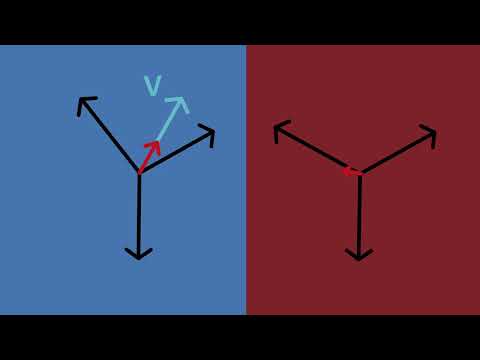
A delta-wye introduces a phase displacement of typically 30 degrees. In day-to-day operation, that is not a problem. The problems start when the transformer is treated like a plug-and-play component in a system that includes paralleling, backfeeds, multiple sources, or protective relays that assume a different vector relationship.
If your site ever ties transformers together, upgrades switchgear, or adds generation, the phase shift is the first thing to verify, not the last thing to discover. This is one of the reasons commissioning teams insist on nameplate and vector group confirmation before energization, particularly in facilities that already rely on instrument devices, such as a current transformer and voltage-sensing equipment, that depend on predictable phase relationships.
Harmonics and Why Delta Helps, Up to a Point
Delta windings are useful because they can trap certain triplen harmonic currents, keeping them circulating within the delta rather than pushing distortion upstream. In real facilities, that matters. Nonlinear loads are now the norm, and the upstream system is rarely interested in inheriting downstream distortion.
That said, a delta-wye transformer is not a cure for harmonics. It can reduce the amount of distortion that escapes upstream, but it cannot prevent harmonics from appearing on the secondary. Sites with large VFD populations, rectifiers, or inverter-heavy equipment still need to consider how loads are distributed, how neutrals are sized, and whether filtering is warranted, particularly when overall efficiency and heat dissipation are tied to transformer losses.
Selection Notes That Prevent Field Headaches
Most delta-wye problems are not caused by the connection itself. They are caused by assumptions that do not survive contact with a real installation.
Confirm what the secondary is actually expected to feed. If the downstream is truly mixed and includes significant single-phase loading, treat the neutral as a real conductor with real current, not a formality.
Treat the phase shift as a design constraint whenever there is any chance of paralleling, backfeeding, or multi-transformer interaction.
Do not let grounding become a generic line in a spec. Grounding choices change fault current, relay behavior, and damage energy, and those outcomes must align with the equipment transformer ratings selected for the system.
If you need to stay anchored in industrial and plant practice rather than general transformer education, link to deeper operational topics from here instead of expanding this page sideways. Testing and verification topics are better handled on the dedicated transformer testing page.
Delta-wye remains common because it matches how distribution and facilities actually behave. It tolerates upstream realities, provides downstream usability, and gives you a neutral you can ground intentionally. When it causes trouble, the cause is usually human, forgotten phase shift, casual grounding decisions, or a system that evolved without anyone revisiting the assumptions under which the transformer was installed.
Related Articles
