Continuous Load Explained
By Harold WIlliams, Associate Editor

Motor Control Training
Our customized live online or in‑person group training can be delivered to your staff at your location.
- Live Online
- 12 hours Instructor-led
- Group Training Available
Download Our OSHA 4475 Fact Sheet – Being Aware of Arc Flash Hazards
- Identify root causes of arc flash incidents and contributing conditions
- Apply prevention strategies including LOTO, PPE, and testing protocols
- Understand OSHA requirements for training and equipment maintenance
Continuous load refers to an electrical load expected to run for three hours or more. It requires special consideration in circuit design to prevent overheating and ensure safe, efficient operation.
Basics of Continuous Load in Electrical Engineering
In real installations, continuous load conditions often go unnoticed. A motor that runs all shift, a ventilation system that never shuts down, or a lighting circuit energized around the clock may seem routine. Yet, these are precisely the scenarios where design shortcuts surface later as failures. Sustained current exposes undersized conductors, marginal breaker selections, and unrealistic assumptions about operating conditions.
This is where practical understanding matters more than textbook definitions. Electrical professionals who regularly work with long-running equipment quickly learn that time is as important as amperage. Knowledge of electric motor control becomes especially important in these environments, since precise regulation plays a direct role in managing heat and preventing long-term damage. Understanding electric motor control is essential when designing circuits for constant loads, as precise regulation helps prevent overheating and equipment failure.
Electric Motor Testing Training
Request a Free Training Quotation
Defining Continuous Load
In electrical terms, a continuous load exists when the maximum current is expected to remain steady for extended periods, typically 3 hours or more. Electrical codes draw this distinction because duration fundamentally changes how conductors, insulation, and protective devices behave. A circuit operating near its limit for minutes is not equivalent to one doing so for hours.
To address this, codes require additional capacity when circuits serve continuous loads. The intent is not a theoretical safety margin but practical durability. Systems built with this allowance tend to remain stable, predictable, and serviceable over time. In applications such as HVAC systems and industrial motors, electric motor protection plays a critical role by detecting abnormal current conditions before they cause damage or downtime.
FREE EF Electrical Training Catalog
Download our FREE Electrical Training Catalog and explore a full range of expert-led electrical training courses.
- Live online and in-person courses available
- Real-time instruction with Q&A from industry experts
- Flexible scheduling for your convenience
In continuously running systems, such as HVAC or industrial motors, electric motor protection ensures safe operation by detecting excessive current draw over time.
Key Considerations for Continuous Load Applications
| Aspect | Explanation | Related Code/Standard |
|---|---|---|
| Definition | Load expected to run at maximum current for 3+ hours | NEC 210.20(A) |
| Conductor Sizing Rule | Must be sized to carry 125% of continuous load current | NEC 210.19(A) |
| Breaker Rating Rule | Circuit breakers must also handle 125% of continuous load | NEC 210.20(A) |
| Examples of Applications | HVAC, lighting, industrial machinery, heating systems | Industry-standard usage |
| Derating Practice | Breakers rated for 80% operation must not exceed 80% of ampacity in continuous load scenarios | NEC guidelines and UL 489 |
| Design Implications | Affects wire gauge, breaker selection, and enclosure temperature ratings | NEC, manufacturer specs |
| Common Synonyms | Sustained load, constant load, steady-state load | Used interchangeably in field |
Importance in Circuit Design
Circuit design becomes more nuanced when sustained operation is expected. Branch circuits must safely carry the highest anticipated current without exceeding conductor ampacity, even as ambient conditions fluctuate. Experience teaches that real-world installations rarely operate under ideal conditions for long.
Designing with continuous load in mind reduces overheating, nuisance tripping, and premature equipment aging. It also makes systems more adaptable. Circuits with adequate margin are easier to modify later, especially in facilities where loads evolve over time rather than remaining fixed.
Code Requirements and Safety Standards
Code requirements surrounding continuous load are grounded in how electrical systems fail in practice. Prolonged current flow stresses materials differently than short bursts, and protective devices must respond reliably under those conditions. Selecting components based solely on nameplate ratings ignores this reality.
When conductors and breakers are chosen with sustained operation in mind, systems behave more predictably. Temperatures remain within acceptable limits, protective devices perform consistently, and maintenance issues tend to surface earlier and more clearly rather than appearing suddenly as failures.
Continuous vs. Simultaneous Demand
Continuous load is often confused with simultaneous demand, but they describe different challenges. Simultaneous demand focuses on how many loads operate at once and how that affects peak capacity. Continuous load focuses on duration. A single motor running continuously can place more thermal stress on a circuit than several loads that cycle on and off.
In industrial environments, both concepts matter. Continuous operation influences equipment life and thermal performance, while simultaneous demand affects system sizing and distribution planning. Selecting the right variable-frequency drive is particularly important in continuous-load applications, where steady speed and torque control must align with expected current over long periods. Improper VFD sizing can quietly erode efficiency and reliability long before obvious symptoms appear.
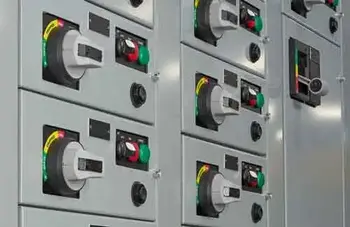
Choosing the right variable frequency drive is crucial for managing continuous load applications that require steady speed and torque control. VFD sizing directly affects system efficiency and must be matched to the expected continuous current to avoid derating or premature failure.
Practical Applications
Continuous load considerations appear across many everyday systems, including HVAC equipment, lighting installations, heating circuits, and industrial machinery. In these settings, understanding how long a load will operate is just as important as knowing how much current it draws. Accurate assessment allows electrical professionals to choose breakers and conductors that operate comfortably within their limits. Understanding electric motor control is essential when designing circuits for continuous loads, as precise regulation helps prevent overheating and equipment failure.
Another common scenario involves circuit breakers rated for continuous operation at reduced percentages of their nominal capacity. Designing circuits so long-term current stays within those limits reduces thermal stress and improves overall system stability. For facilities operating under constant demand, consistent electric motor maintenance is essential to preserving performance and extending service life. For facilities operating under long-term demand, proper electric motor maintenance helps extend motor lifespan and ensures stable, continuous performance.
Continuous load calculations may not be the most visible part of electrical design, but they are among the most consequential. Accounting for time as well as current leads to systems that operate safely, age predictably, and tolerate real-world conditions without drama. Professionals working within the Motors and Drives Channel encounter this reality daily, even when it is not explicitly labeled. Professionals looking to optimize systems for sustained use can explore efficiency opportunities through motor maintenance to reduce energy waste and enhance reliability.
Electricity Today T&D Magazine Subscribe for FREE

- Timely insights from industry experts
- Practical solutions T&D engineers
- Free access to every issue
